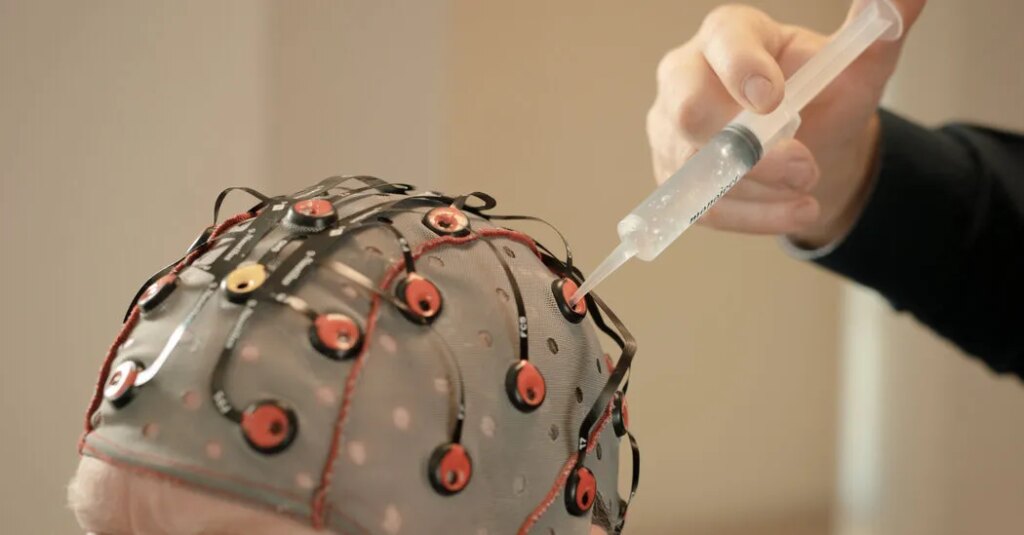
The scenarios sound like science fiction: Police officers accessing data contained in suspects’ brains to forcefully extract information, or to predict if offenders might plan to commit future crimes.
But the secretary-general of the United Nations warned on Thursday for the first time that neurotechnologies are advancing so rapidly that governments’ ability to access and manipulate people’s brains could one day pose a threat to fundamental human rights.
The abuse of future technologies, Secretary-General António Guterres warned, could lead to arbitrary detentions, the alteration of people’s mental states and infringements on privacy.
“Neurotechnology, including new and emerging forms, raises profound human rights challenges when applied to the administration of justice,” the secretary-general wrote. “Its expansion beyond clinical settings into investigative, judicial and correctional contexts introduces significant risks, alongside potential benefits.”
To address such threats, the report lists a number of recommendations, including establishing regulations consistent with international law, recognizing thoughts as “highly sensitive personal data” and requiring explicit consent for the use of neurotechnology in criminal justice settings.
Human rights officials said the document was an important step toward raising global awareness of the issue and that it could help countries develop laws to prevent the abuse of such technology.
“This gives states an opportunity to establish clear rules to regulate the use of neurotechnology, based on human rights, before they become routine in investigations, courts and prisons,” said Jeremy Laurence, a spokesman for the U.N Human Rights Office.
The report, some rights activists said, broadens the traditional understanding of freedom of thought, which has largely focused on freedom of expression, to include keeping one’s innermost ideas private.
“It’s no longer just about the classical ways through which freedom of thought is evoked,” said Marcello Ienca, a professor of ethics and neuroscience at the Technical University of Munich.
The U.N.’s interest comes amid a growing global push to protect brain data. Chile in 2012 enshrined protections for brain activity in its constitution. And several states, including California, Colorado and Montana, have passed laws protecting neural data. Similar measures have been proposed in Argentina, Brazil, Colombia and Mexico.
But while some countries are working to protect citizens’ neural data, others are already attempting to access it.
In India, the police have for two decades used a technology called Brain Electrical Oscillation Signature — or BEOS — to determine whether a suspect may have been involved in a crime.
The scientific basis for this technology, which reads brain waves, is scant. Results from BEOS tests are inadmissible as evidence in Indian courts, but the technology has been applied in hundreds of high-stakes cases, including those of murder, rape and terrorism.
BEOS has not been validated by the international scientific community. And a committee established by the Indian government to review BEOS concluded in 2008 that it was “sub-optimal.”
Not all neurotechnologies are being developed as tools of the state. Many have been brought to the consumer market as wearable health and wellness gadgets that can help users monitor their stress, sleep and focus.
But those too, experts warned, are subject to few regulations.
The Neurorights Foundation analyzed the privacy policies of 30 consumer neurotechnology companies in 2024 and found that most did not have limits on how they used customers’ brain data. More than half of those companies, the foundation said, explicitly allowed user data to be shared with third parties.
Neurotechnologies have also become powerful clinical tools for patients who have suffered severe brain or spinal cord injuries. Brain-computer interfaces have helped paralyzed patients to write sentences by imagining handwriting, as well as to move robotic limbs and to play chess online just by thinking.
The post U.N. Warns Against Technology Used to Read Citizens’ Minds appeared first on New York Times.