This is an edition of Video Village, David Sims’s newsletter that unearths cinematic gems and brings readers into his movie obsession. Sign up for it here.
Welcome to Video Village, a new space for The Atlantic’s film-loving readers. For this, my first edition, my editors challenged me to lay out my perspective on my own taste, so I’ve worked up a list of movies that I think define this strange decade thus far. These are all personal favorites, yes, but this is not precisely a “best of” list; think more an atmospheric overview of how Hollywood looks and operates today, which will be a recurring theme of this newsletter.
Let’s get two of the most obvious picks out of the way: Greta Gerwig’s Barbie and Christopher Nolan’s Oppenheimer, whose release on the same day in July 2023—and during a strike that kneecapped Hollywood—resulted in a multibillion-dollar cultural phenomenon. The industry has spent the following years trying its darndest to recapture that success—and to undo the coronavirus pandemic’s unprecedented effects on moviegoing as a whole. Those movies aside, here’s a look at 10 other great films that illustrate the spirit of the 2020s.
Da 5 Bloods (2020, directed by Spike Lee): The decade kicked off with what still has been its oddest year, defined by COVID lockdowns, theaters going out of business, and the dominance of streaming services at a moment when the only way to experience good movies (for most people) was at home. A lot of the wonderful films released that year feel like a blur; maybe the best example of a memory-holed masterpiece is Lee’s Vietnam epic, Da 5 Bloods, which I’d love to someday see on a giant screen with booming sound. It boldly ties the failures of America’s intervention in that war to the country’s struggles since, with Delroy Lindo’s troubled vet turned MAGA patriot the chief emblem of its chaotic viewpoint. Hopefully, this ambitious movie, whose production was similarly fascinating, will be rediscovered in the years ahead—ideally on a bigger screen than a television set.
The Worst Person in the World (2021, directed by Joachim Trier): The ultimate work of self-reflexive Millennial-core, the Norwegian director Trier’s sharp dramedy came just as some moviegoers were returning to theaters after lockdowns had frozen them in time and anxiety. It follows Julie (played by Renate Reinsve), a witty 30-year-old who simply does not know what to do with her life. The film charts her every stutter-step career decision and corresponding romantic entanglements with bittersweet aplomb. All of Trier’s movies are worth checking out (the most recent being Sentimental Value, a hit at this year’s Oscars). But this one remains my personal favorite.
Drive My Car (2021, directed by Ryusuke Hamaguchi): One of the best examples of William Goldman’s notorious industry adage—“Nobody knows anything”—is this three-hour, soft-spoken Japanese drama. The story of a depressed theater director’s effort to stage a multilingual production of Uncle Vanya became a surprise sensation, launching Hamaguchi to art-house fame and snagging four major Oscar nominations, including Best Picture. It’s a beautiful work of deceptive tranquility, where aloof conversations belie dark emotional storms beneath; it’s also the greatest adaptation of Haruki Murakami’s writing ever put to film. Hamaguchi has since proved to be one of the decade’s most fascinating auteurs, and his work is appointment viewing. (Next up is All of a Sudden, out this November.)
Tár (2022, directed by Todd Field): I finally became convinced that the theater experience wasn’t going anywhere while watching the titular protagonist of Tár, Lydia (Cate Blanchett), confront a child who had bullied her daughter on the playground—I felt the entire viewing audience ripple with delight. Here we all were, observing this egotistical conductor whose life was spiraling to pieces, and struggling to resist the urge to cheer for such obviously aberrant behavior. Field’s film is a fantastic portrayal of ego, power, and the kind of rapid professional disintegration that’s become more common in the celebrity sphere of late; it’s a totally unique take on a common spectacle.
Nope (2022, directed by Jordan Peele): Peele announced himself as a film director with the subversive smash that was Get Out and could have led his career in any direction from there. I love that he’s instead doubled down on original horror storytelling. Nope is his most recent movie (a new project is supposedly in the works but remains a mystery), and it’s his best and most ambitious: a sly tale of how the entertainment world can chew people up and spit them out. It also features a flying monster that can literally do that.
RRR (2022, directed by S. S. Rajamouli): This epic from India’s Telugu-language industry (known as “Tollywood”) blasted into multiplexes out of nowhere, just as the Hollywood blockbuster began truly spooling up again. RRR showed Americans how grandiose, CGI-assisted action filmmaking can still feel fun and original; the movie is a sprawling, 1920s-set musical epic of revolt and revenge designed to inspire viewers to stand and applaud throughout. The crowd-pleaser par excellence broke records around the world and even won an Oscar for Best Original Song. Rajamouli’s much-anticipated next film, Varanasi, is due for release in 2027.
Asteroid City (2023, directed by Wes Anderson): Few raves I’ve written in my time at The Atlantic have been more polarizing than my championing of Anderson’s sci-fi comedy; multiple people who had grown wary of the writer-director’s output have angrily confronted me about my review. Plenty of readers, however, agree with me wholeheartedly that it’s the director’s best film in close to a decade. Whatever other viewers make of it (and all of Anderson’s recent work, which is hermetic and tightly designed even by his standards), I think Asteroid City is one of the most profound attempts to wrestle with the odd sense of community and tragedy that emerged when most of us were unable to leave our home. It’s a very modern portrait of quarantine—albeit set in the 1950s—that doesn’t pull its punches on the darkness that its broad ensemble is struggling with.
Red Rooms (2024, directed by Pascal Plante): Looking back at 2020s cinema, we’ll find that a defining trend was contending with the spiraling madness of online life. Red Rooms is maybe the best horror movie ever made about being on your computer too much: The Canadian thriller is a freaky tale of a true crime–obsessed woman (Juliette Gariépy) fixated on a murder case that’s sparked a media circus. It’s a profoundly disturbing watch, even though it holds back on graphic visuals (like many a great horror movie, it leaves the worst to your imagination). Red Rooms was a sneaky festival hit before it trickled into cinemas, and it’s guaranteed to become a long-running cult classic.
Eddington (2025, directed by Ari Aster): This internet-horror story runs right at the bizarre experience of the pandemic lockdowns. Aster’s Eddington was profoundly divisive on release and was quickly dismissed by some critics for its sheer unpleasantness. It’s worth a watch (or, if you hated it the first time, a revisit); Aster’s got a keen eye for the type of online brain poisoning that has grown and spread across the world over the past six years, and he has a darkly humorous perspective on the way identity politics have been misappropriated by bad actors. I had barely heard of data centers when I saw Eddington last summer; now they are often at the top of political discourse. What else did Aster see coming?
Backrooms (2026, directed by Kane Parsons): I’m hardly proclaiming Backrooms the movie of the year; 2026 isn’t even over yet. But its release definitely seems to have pushed Hollywood to recognize a new frontier in filmmaking. The horror film, a bewildering adaptation of a series of YouTube videos, was directed by a 20-year-old who taught himself visual-effects technology during high school. Set in a world of eerie liminal spaces, Backrooms feels somehow beamed in from another universe while also being a slick creep-fest that could draw in young viewers on “vibes” alone. The unsettling promise of its scares just feels so unlike anything I’ve seen in theaters lately—I loved it.
An Essay I Enjoyed
Carrie, With Kid Gloves By Emma Stefansky
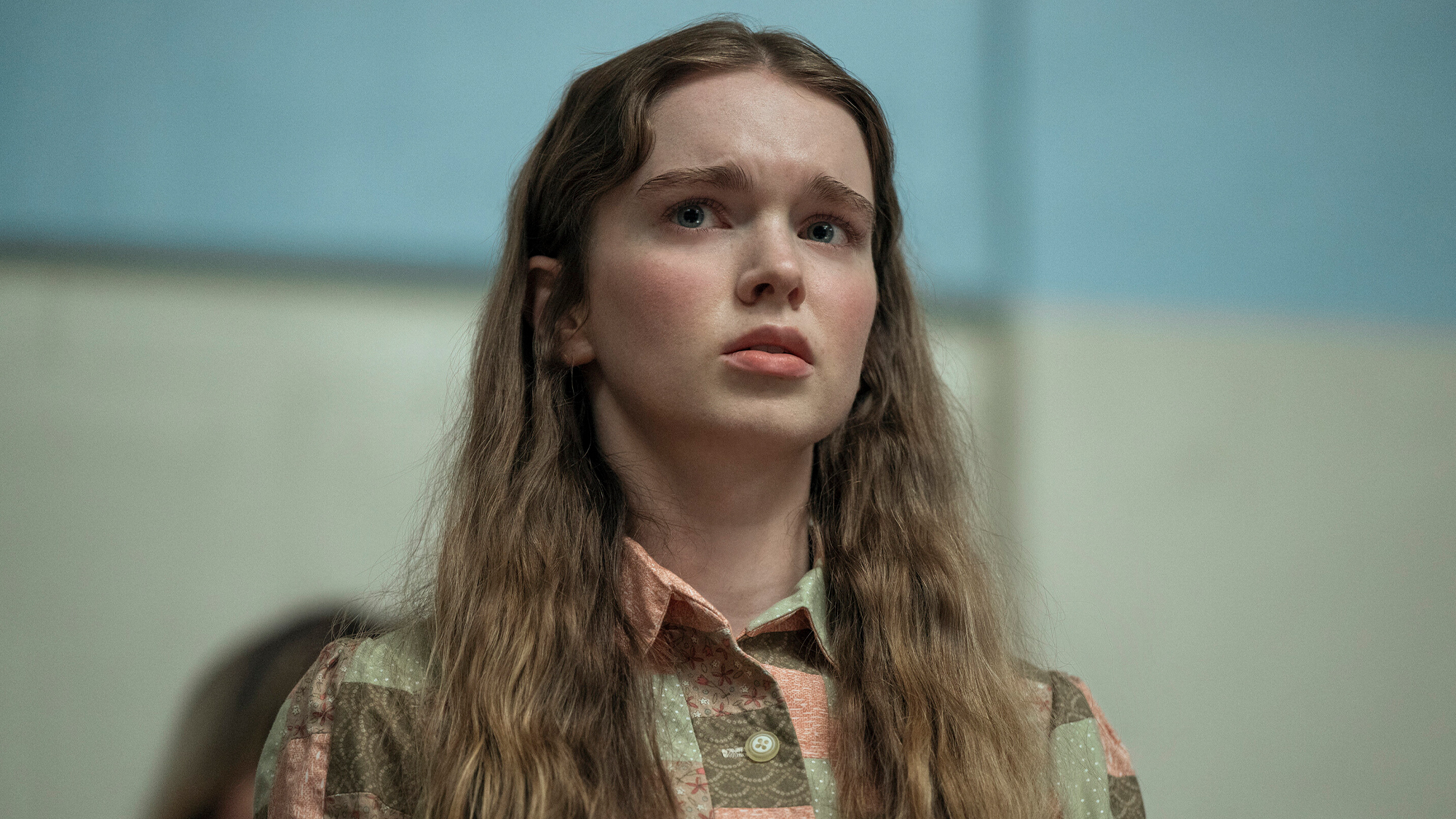
The climax of Carrie, Stephen King’s debut horror novel, is so famous that even people who haven’t read it or seen any of the numerous adaptations know the basics. The eponymous Carrie White, driven to the edge of sanity after years of abuse from her classmates and hyper-religious mother, gets drenched in a bucket of pig’s blood at her prom. She then uses her latent telekinetic powers to destroy her high school and her hometown. It’s an extreme reaction to an extreme situation, the climax of a revenge story in which vengeance is just another tragic act of violence. The line between villain and victim blurs.
Coming Attractions
October tends to mark the start of a real glut of releases: Many major premieres happen in quick succession at big fall festivals (in Telluride, Venice, Toronto, and New York), and then they come to regular theatergoers—and bring the awards race into focus. One of this year’s contenders, in theaters this week, is Fjord. Directed by the Romanian auteur Cristian Mungiu, it won him the Palme d’Or at this summer’s Cannes Film Festival—an award that has become a bit of a springboard to more mainstream success, as it did for the recent Best Picture winners Anora and Parasite. But I’m of two minds on whether Fjord will follow in their footsteps. Like all of Mungiu’s movies, it is challenging in its remoteness, asking the audience to hold some uncomfortable truths and make their own decisions about them.
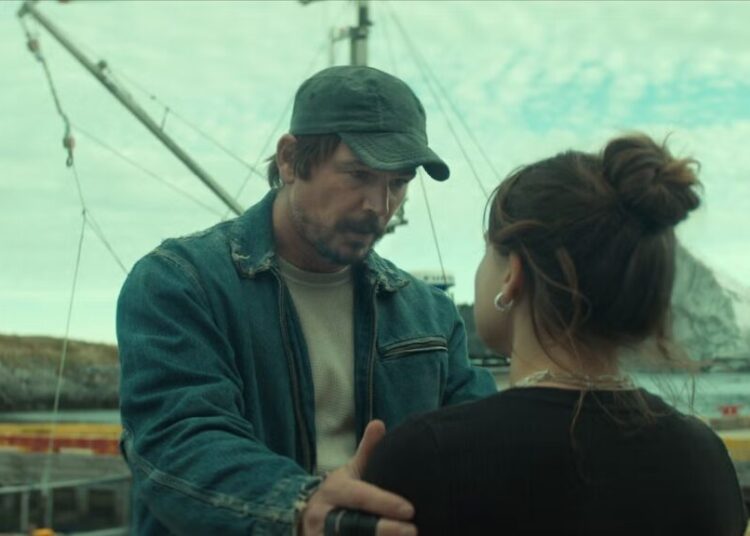
The film follows a Romanian family that has immigrated to a remote Norwegian village. The parents, played by Sebastian Stan and Renate Reinsve, are both stern and religious, placing them well outside of the country’s secular cultural norms. The couple is soon accused of abuse, and the government takes their children away while an investigation proceeds—a situation that erupts into something of an international incident. The reality of what’s happening is plain to grasp: This parenting style is at best alienating, and the seemingly tolerant society surrounding the family doesn’t quite know how to deal with it. Fjord is grim, and at 146 minutes, it’s a demanding watch—one that may be too disaffecting to break through. But it’s also an undeniably engrossing experience; no character feels truly sympathetic, and best intentions crumble in the face of internet outrage and ill-functioning bureaucracy.
What Else I’m Watching
-
I rewatched Paweł Pawlikowski’s film Cold War in preparation for the upcoming release of Fatherland, which will complete a loose trilogy about postwar Europe; it’s short, sometimes sexy, and sweetly tragic (and streaming on Prime Video).
- I’m also catching up on the filmography of another great director, Lee Chang-dong, whose Possible Love is out at the end of the month (and in November on Netflix). I watched his debut, Green Fish, which is a lovely and poetic little crime saga from 1997. (It’s available to rent on Prime Video and Apple TV, and streaming on Kanopy, though I watched it on a disc published by Vinegar Syndrome.)
- Finally, I caught up with last year’s documentary Pompei: Below the Clouds, from Gianfranco Rosi. It’s a gorgeous and fragmented portrayal of life in modern Naples in the shadow of Mount Vesuvius, and it’s streaming on Mubi.
The post 10 Movies That Define the 2020s appeared first on The Atlantic.