James Marriott is the author of “The New Dark Ages: The Death of Reading and the Dawn of the Post-Literate Society,” from which this article is adapted.
Once upon a time, the idea that the world was growing stupider was mostly confined to the realm of dyspeptic reactionary polemic. But nowadays, the idea is increasingly mainstream. The belief that smartphones are “rotting our brains” is a widely repeated cliché. Data seems to corroborate this feeling, too: Studies have shown declines in IQ over the past two decades, with the sharpest drops among age brackets that use their phones the most. Students themselves have reported since the 2010s that they have difficulty concentrating and remembering. One study found that even having a phone turned off on a table nearby may be enough to impair a student’s academic performance.
But perhaps another reason that people feel this way is that cultural output — not just short-form videos or Instagram posts but films, television, music and books — is becoming simplified, too. The smartphone’s constant distraction and hostility to complex thought is reshaping almost every aspect of culture. Entertainment and the arts are undergoing what might be termed a Great Simplification.
Take the Netflix film “Irish Wish,” which ranked No. 1 on the streaming platform following its release in 2024. The film stars Lindsay Lohan as an American book editor named Maddie, who travels to Ireland dreaming of marriage to a hunky best-selling author (a genre of person more common in films than in life). As writer Will Tavlin observed, as you watch, you may notice that the characters are explaining what is going on, as if you are too slow to understand. In one scene, Maddie says to her lover, “We spent a day together. I admit it was a beautiful day, filled with dramatic vistas and romantic rain, but that doesn’t give you the right to question my life choices. Tomorrow I’m marrying Paul Kennedy.” He replies, “Fine. That will be the last you see of me because after this job is over, I’m off to Bolivia to photograph an endangered tree lizard.”
In a world of constant distraction, scriptwriters can no longer rely on audiences to pay attention. Executives at Netflix have reportedly demanded simpler scripts in which characters repeatedly announce what they are doing, so that scrolling viewers can keep track of what is going on.
According to actor Matt Damon, filmmakers are told: “It wouldn’t be terrible if you reiterated the plot three or four times in the dialogue, because people are on their phones while they’re watching.” The result is the inverse of the traditional creative writing advice “show, don’t tell.” It is hard to sustain interiority or nuance in a film in which every action must be clearly signposted. Not every Netflix film needs to be a masterpiece of insinuation and subtext, and good, challenging films are still being made — but nonetheless, complexity seems to be rapidly draining out of culture.
The same relentless pressures toward simplification are at work in almost every creative industry. A 2024 statistical analysis of more than 350,000 songs between 1970 and 2020 found that lyrics are becoming simpler, more repetitive and less rich in their vocabulary. Another study suggests that melodies are becoming less complex, too.
Modern pop musicians are competing in a distracted, fast-paced online world in which, to have a hope of catching on, music has to appeal to consumers through 15-second videos. TikTok is a vital route to new audiences, so the listener must understand and like the song instantly. If they feel the song is taking a while to get going, a single motion of the thumb will plunge them once again into the glittering chaos of content. A war zone flies up to fill the screen, or an animal, or a political debate.
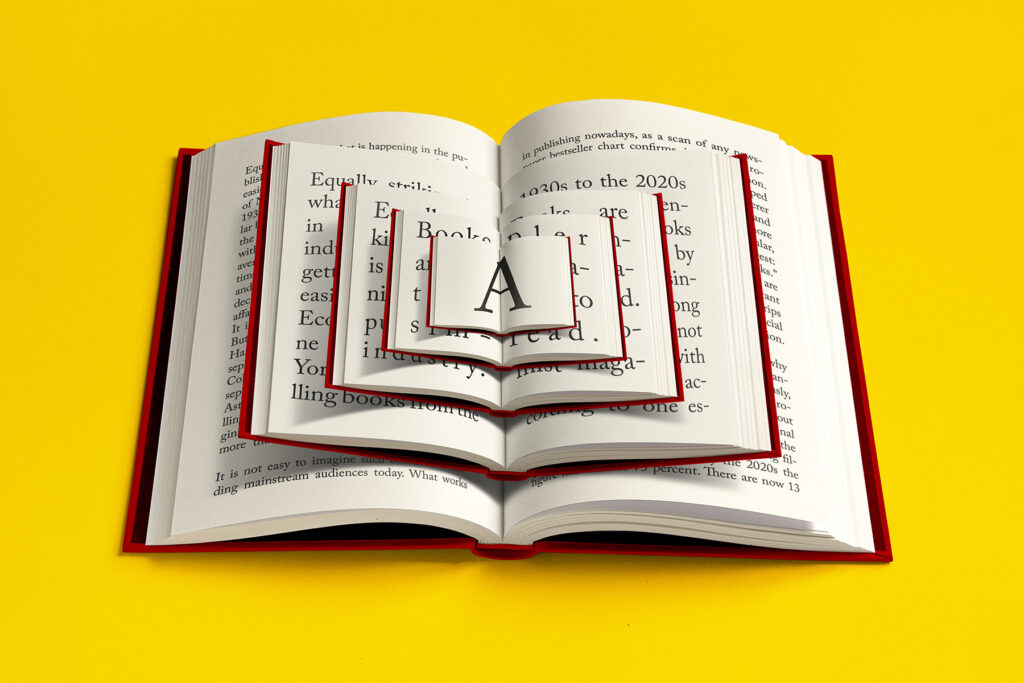
Equally striking is what is happening in the publishing industry. Books are getting simpler and easier to read. An Economist analysis of New York Times best-selling books from the 1930s to the 2020s found that “sentences in popular books have contracted by almost a third since the 1930s.” Long sentences are not easy to grapple with in an age when, according to one estimate, the average American checks his or her smartphone 186 times per day. The audiences for serious nonfiction and literary fiction have declined steeply in recent decades. Sales of books about economics, current affairs and politics have fallen particularly sharply.
By contrast, best-selling books of the 1960s included Harper Lee’s “To Kill a Mockingbird,” Truman Capote’s “In Cold Blood,” Saul Bellow’s “Herzog” and Giuseppe Tomasi di Lampedusa’s “The Leopard.” In 1950, the critic Lionel Trilling’s collection of essays “The Liberal Imagination” was a bestseller in the United States, with more than 100,000 copies sold.
It is not easy to imagine such books commanding mainstream audiences today. What tends to work in publishing is self-help, romance, thriller and fantasy. These books tend to follow clear formulas (boy meets girl meets rival; murderer meets victim meets detective) or offer simple instructions (tidy your room; smile more at work; ask for that pay raise). Lists are popular: “Twelve Rules,” “Five Lessons,” “Six Easy Hacks.”
In a world of fractured attention, people are drawn not only to the simple but also to the recognizable. Getting to grips with a new book, film or song requires a special and sometimes painful effort of concentration.
I think this attention may partly explain why studios opt for remakes, franchises and “extended universes.” Before the turn of the millennium, only about 25 percent of top-grossing films were spin-offs or sequels; by the 2020s the figure had risen to 75 percent. There are now 13 Star Wars films, plus many TV and video game spin-offs. J.R.R. Tolkien’s Middle-earth has bloated to multiple books, films, television shows and games. J.K. Rowling’s Harry Potter books became a successful film franchise and spawned spin-offs; now, the story is being refilmed as a television show. Back catalogue songs now make up more than 70 percent of the music market, driven by young consumers who increasingly listen to the familiar music of their parents and grandparents. (Perhaps this is also an indication that some audiences crave more than what recent releases offer.)
Instantly recognizable characters, plots and melodies are an easier sell to audiences who are only half paying attention. Almost everyone knows what Hogwarts is and understands roughly what goes on there. You can watch the next Harry Potter remake out of the corner of your eye without losing track of what is happening.
Of course, great books and movies are still being made. This year, with debut films by younger directors, such as “Backrooms,” breaking into the box office ranks of films such as “Spider-Man: Brand New Day,” maybe appetites for originality are reinvigorating.
Still, trends toward simplification are worth worrying about. If culture loses its capacity to sustain complexity, readers, moviegoers and music enthusiasts may find themselves with increasingly inadequate understandings of the world. Self-help books and derivative films are fine in themselves, but there are aspects of human experience that cannot be described by lists, formulaic plots or declarative sentences. Not everything can be said simply, and understanding requires sustained concentration from readers, viewers or listeners. If they are distracted and unfocused, culture risks being transformed into a smartphone wasteland. Audiences may find themselves fated to endless repetition and pastiche, song by song, remake by remake.
The post Welcome to the Great Simplification appeared first on Washington Post.