On a dirt road in a rural village in eastern Malawi, business was slow at a convenience store operating from the front of a family home.
A few miles up the road, two women sat beneath a thatched roof weaving palm leaves into mats for sale, but there were no buyers.
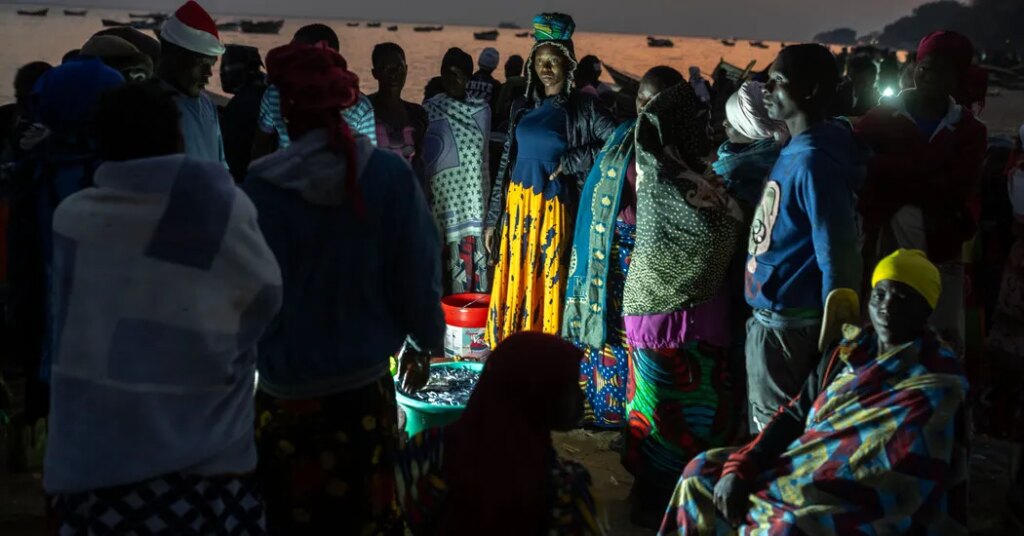
Farther away in the bustling commercial hub of this district, Mangochi, a wire transfer business had done only one transaction by lunchtime. Hundreds of boats on Lake Malawi were packed with fishermen desperate to make a buck.
Just a few months ago, life wasn’t like this, residents said. This is the fallout of the anti-immigrant violence that has consumed the nearby nation of South Africa in recent months, they say.
Tens of thousands of Malawians have fled back home from South Africa, leaving behind jobs and steady incomes that had paid for school fees, food and housing.
Around 90,000 immigrants have been deported from or fled South Africa since June, as anti-immigrant violence sweeps the country. Most of the immigrants who have left have been Malawian, according to the South African government.
Perhaps nowhere has the burden of this mass uprooting been clearer than in Mangochi, a sprawling, largely rural district that long has been a major source of migrant labor in South Africa.
To escape violent anti-immigrant protesters who were ransacking homes and businesses, many Malawians left all their belongings behind — furniture, clothes, appliances — and returned to communities where finding formal work is nearly impossible.
Local economies have been upended by the population increase and the decrease in remittances in a nation where roughly seven in 10 people live on less than $2.15 a day.
“Everything’s very hard,” said Imraan Cassim, a mechanic who had worked in South Africa for 15 years before returning to Mangochi in May.
Drivers in Mangochi don’t have money for repairs, said Mr. Cassim, 31. He has not earned any income since returning, he said, and is relying mostly on savings, which he expects to run out in October.
“I don’t know what will happen next,” he said.
In South Africa, where he had a valid work permit, he said, he earned around $1,500 a month and sent much of it back home to Malawi to support his wife, three children, mother and sister.
Now his sister, Eliza Osman, 21, has been reduced to surviving on the meager income from the convenience store she started out of the family home last year. She has fewer customers, she said, and is not earning enough to replenish her merchandise.
Many families are struggling to eat.
Returnees in Mangochi said their families were lucky if they could afford more than one meal a day. Almost every meal consists of a sticky corn porridge, known as nsima, and boiled vegetables. Meat is a luxury, though some said they occasionally buy fish from Lake Malawi. Purchasing everyday staples like soap and cooking oil has also become a challenge.
Still, many say they want to make things work in Malawi rather than return to South Africa, where the protesters and some government officials argue that foreigners are stealing jobs and using precious public resources.
Mangochi’s central hub is crowded with roadside markets. From brick-and-mortar stalls and shacks built from tree branches, traders hawk gasoline, clothes, dried fish and goat tripe. The streets are busy with bicycle taxis. Pickup trucks overloaded with passengers, snacks and furniture, shuttle essentials to outlying villages.
But the hustle and bustle belies harsh economic realities.
Malawi has very little industrial production and is heavily reliant on imports. Most families use small-scale farming to feed themselves. These factors make the country vulnerable to external shocks, such as drought, wars and fluctuating oil prices.
The government has been criticized for its lack of investment beyond agriculture and poor fiscal management. Some say government officials have not done enough to help those who returned from South Africa.
Yusuf Hafana, 24, had a full stock of bicycles to sell at his roadside stand in Mangochi, but that was because no one was buying, he said.
His stock mostly comes from Malawians who bring bikes back from South Africa. They are now charging him more for the bikes, he said, while his buyers are paying less. He now has to borrow money from friends and relatives to pay for his children’s school.
Mangochi developed a migration culture and passion for trading that dates back to when Arab merchants first came to the region. Residents have long traveled abroad to do business and sell goods in other parts of Africa and the world, said Gasiano Nicholas, who works in social development for the Catholic diocese in Mangochi.
People from the area are mostly from the Yao ethnic group, and are known as risk takers willing to venture to new places, said the Rev. Simon Mundisiye, the social services director for the diocese. Many men from Mangochi went to South Africa to work in the mines during apartheid, and subsequent generations followed in those footsteps.
Father Mundisiye now worries about the mental anguish of the workers chased from South Africa. Working there had put many of the men at the top of the socioeconomic ladder in Mangochi. Some men even looked down on those who remained home, Father Mundisiye said.
The tables have turned. Now returnees need support from the people they left behind, he said. “They have become a laughingstock,” Father Mundisiye said. “They’re anxious. They are depressed.”
In this heavily Muslim area, Mr. Nicholas, of the Catholic diocese, said he was concerned that the lack of opportunity could lead some young men to neighboring Mozambique, where militants affiliated with the Islamic State are fighting an insurgency. They have lured new recruits with anti-government rhetoric and the promise of resources, he said.
Life in Mangochi has become so dire for Jeffrey Malemia that he said he is doing whatever he can to get back to South Africa. He used to earn roughly $200 a month working at a textile factory in the coastal South African city of Durban. Now he works odd jobs, but can’t afford to feed his 9-year-old daughter.
Two brick columns are all there is of the home he had started to build in Mangochi with money he had sent from South Africa. He can no longer afford construction, he said. The main thing hindering his return is the money he needs to pay for a passport. (He had previously been in South Africa illegally.)
“I’m not scared because that’s where I need to go and make money,” said Mr. Malemia, 28, referring to the anti-immigrant violence. “I don’t mind the dangers that are there.”
Even as they struggle to survive, some Malawians are trying to find joy back home.
On a recent afternoon, hundreds of revelers crowded a dirt soccer field in a village on the outskirts of Mangochi, dancing to a fusion of Afrobeats and traditional Yao ballads. It was an annual festival that celebrates the initiation of young children into Yao culture.
This one was more packed than usual, said Yusufu Mustafa, 40, who returned from South Africa in May.
“We celebrate together now,” he said. “Of course it’s painful because we don’t have money. But we celebrate together.”
The post Driven to Leave Home by Desperation. Driven Back by Hate. appeared first on New York Times.