Photographs by Christopher Lee
The concerns about $4.14-a-gallon gas at the Lincoln Costco an hour and a half to the east? The worries about the war in Iran, the sort of Middle East conflagration this president promised to avoid? The disappointment over the Epstein files, which failed to bring down the alleged network of deep-state pedophiles?
This was not that sort of political event.
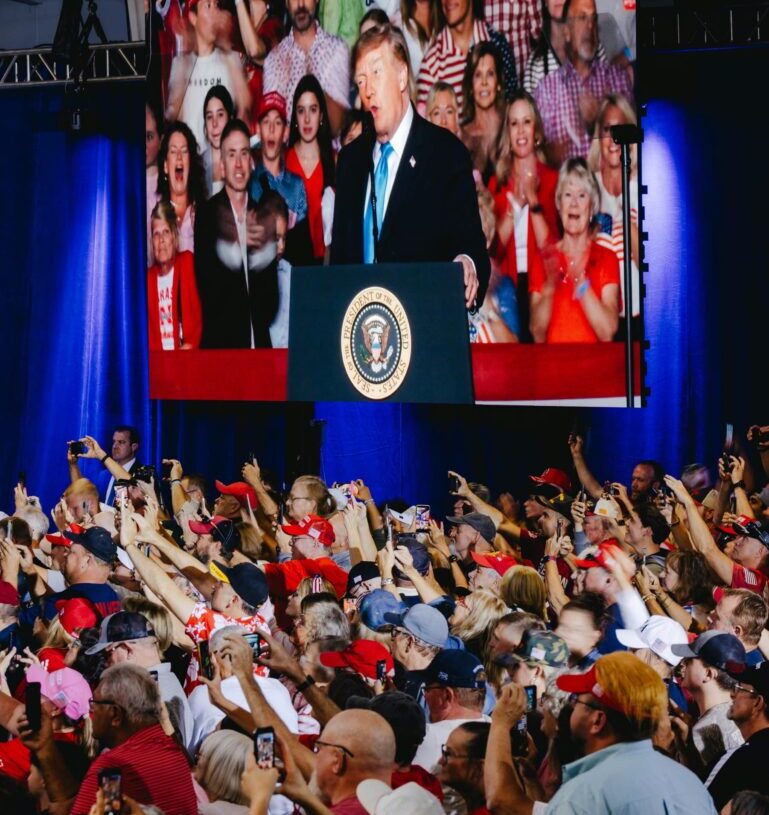
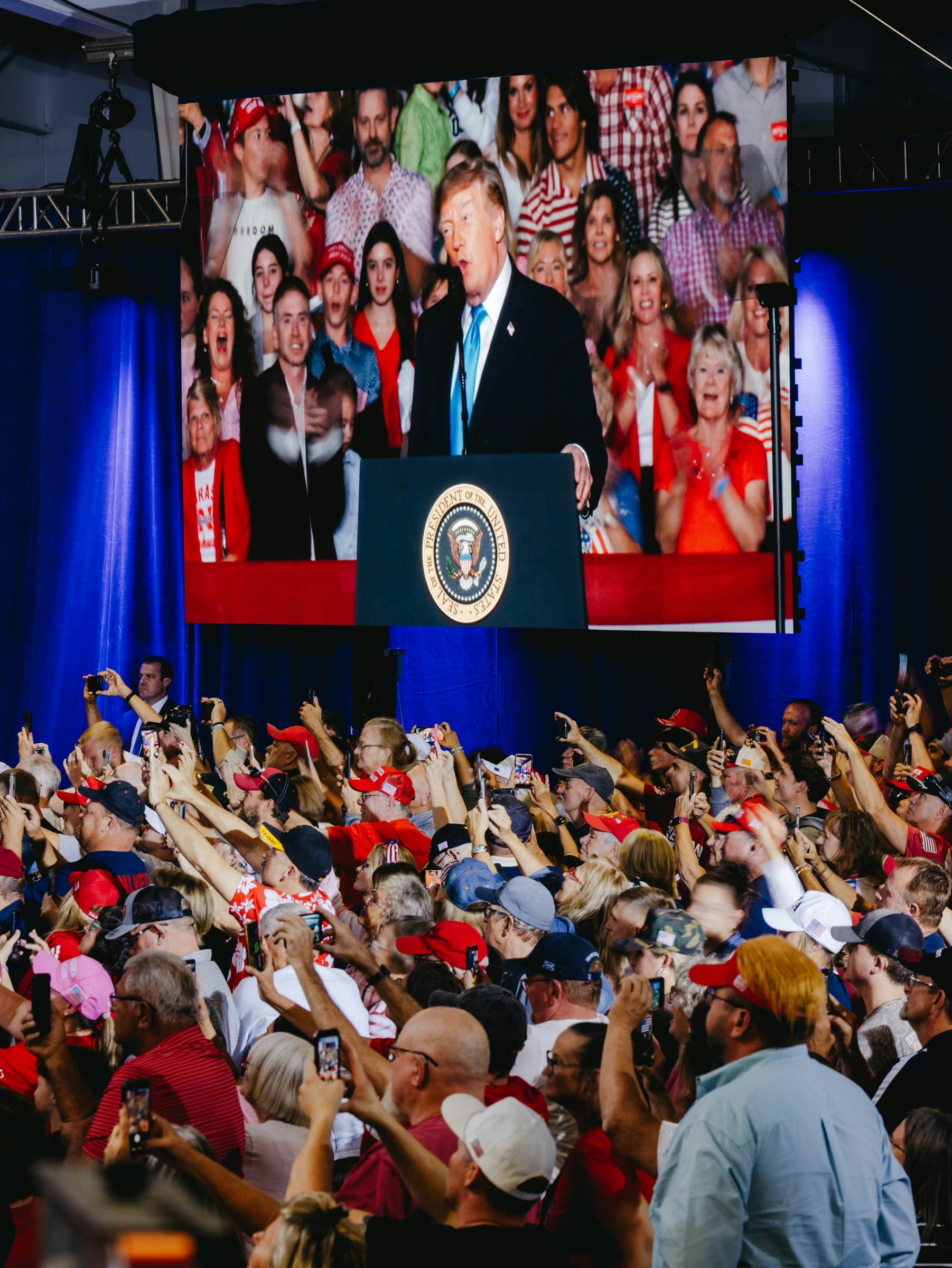
No, yesterday’s Trump rally in Grand Island, Nebraska—a raspberry-colored fleck in a jammy-red state, a couple of hours from the nearest major airport—was a distinct type of Trump rally, more 2016 than 2026. It was a Midwest way station on President Trump’s recent tour of solid Republican strongholds. And it was a chance for longtime Trump supporters to show their appreciation for the two-term president who has somehow dominated the national conversation for three terms—and, more important, for him to bask in their reflected glow.
Trump, after all, is in the middle of a rough stretch. Interest rates and gas prices—all prices, frankly—are high, and his approval is low. He doesn’t seem to really care how Republican candidates fare in the midterms, but he’d rather they win than lose, if only because it would save him the headache of congressional investigations.
Much like his midterm convention last month in Dallas—a Trump-a-palooza that few Republicans other than Trump particularly wanted—the Nebraska rally seemed to be less about helping his party and more about reminding himself of his immovable base, via yet another trip back through the good ol’ days. (Although Nebraska’s races for governor and Senate are closer than Republicans might like, the nonpartisan Cook Political Report has rated them “solid Republican” and “likely Republican,” respectively.)
“We won this state all three times by a landslide,” Trump said, moments after taking the stage, raising the question of what exactly he was doing here.
I have covered Trump, in some form or fashion, since early 2016, when he dispatched the candidate I had been following (Jeb!), the first of several purported giants he slayed on his way to the White House. The scene I found when I arrived in Grand Island midmorning yesterday was, in many ways, reminiscent of those early rallies, when the lines were long, the promises had not yet been broken, and Trump really might have shot people on Fifth Avenue without losing votes.
Deb Reeves, a row-crop (corn, soybeans) farmer, had come to the rally with her 17-year-old grandson, Lincoln, and his buddies for the honor of seeing the president, and wanted to dispel the myth that farmers like herself are upset about the higher prices. “The farmers will take the hit because we believe that balancing the trade is going to be better for America in the long run,” the 74-year-old told me. Reeves likes Trump, she said, because “he loves this country, and I love this country.”
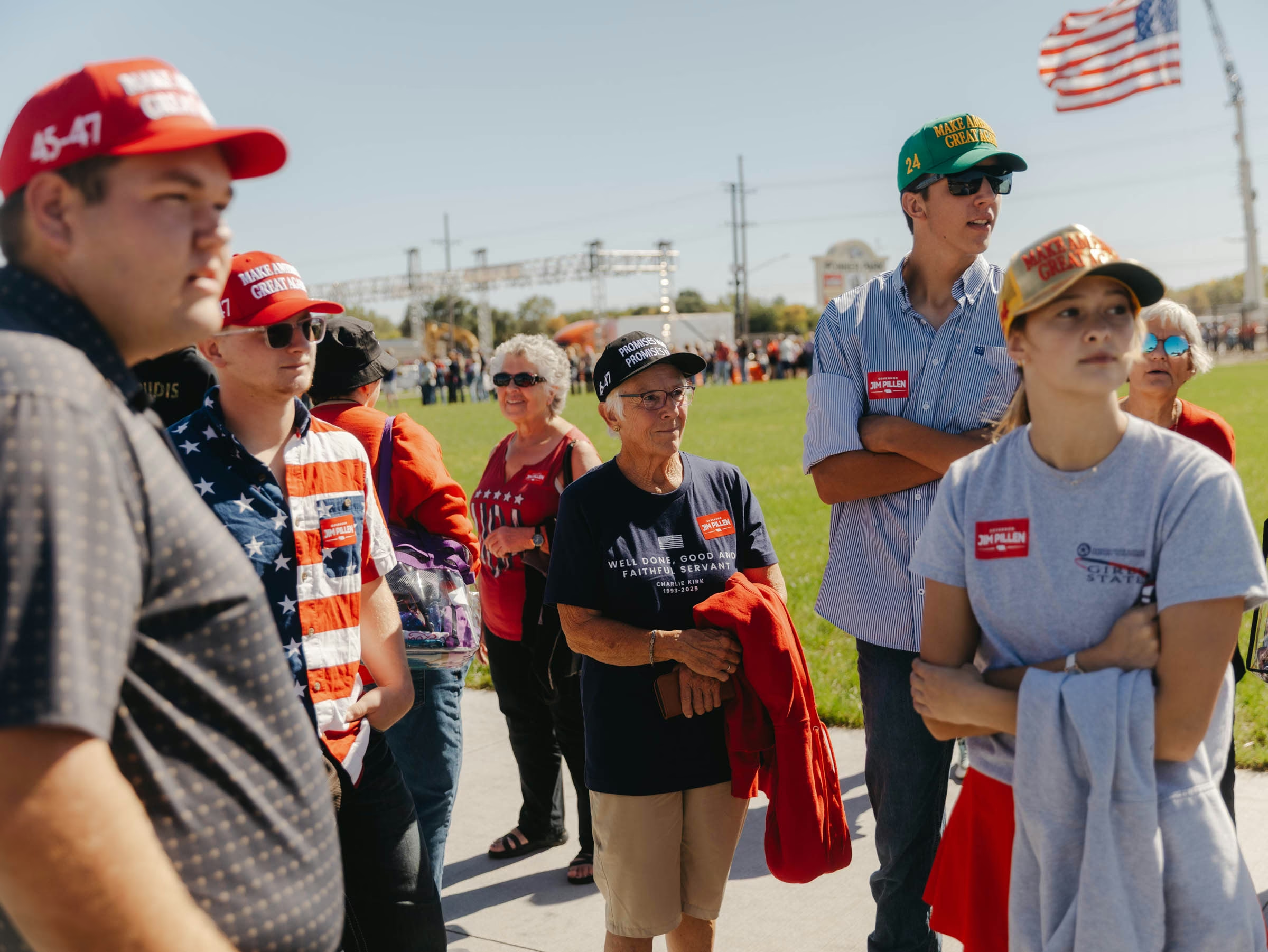
Linda Madsen, a retired nurse, told me she likes Trump because “he’s a businessman—he’s not a politician,” and dismissed the idea that “the economy is as bad as the news people make it out.” Since her husband died, she’s been doing a lot of traveling—she recently took a Disney cruise with her granddaughter—and observed, “There’s gobs of people everywhere you go.”
“People have new phones. They get tattoos. They do everything they want to do,” said Madsen, who is 75. “So I don’t know. Is it bad, or do they just make it to be bad?” Her friend, Linda Smedra, a 78-year-old cattle rancher, said she was frustrated by Trump’s decision to allow beef imports in an attempt to drive down the cost of meat—“We ought to let the market figure out where the price needs to be”—but she agreed: “He’s done more good for the country than he’s done harm for the country.”
[Read: Trump’s secret points system for Cabinet members]
And Rose Sober told me that Trump “stands for the values American was founded on,” which she said include the Constitution, free speech, freedom, and love of the military. The 64-year-old, who doesn’t work, said that President Biden began using an autopen five days into his presidency, allowing the “Democrat socialists” to make decisions for him, and concluded by praising Trump for surrounding himself with “God-fearing men who believe in the Bible.”
“Throughout history, if you look at the Bible, God has used people like President Trump to fulfill his will,” Sober said. “There’s Daniel; there’s Joseph. I could go on.”
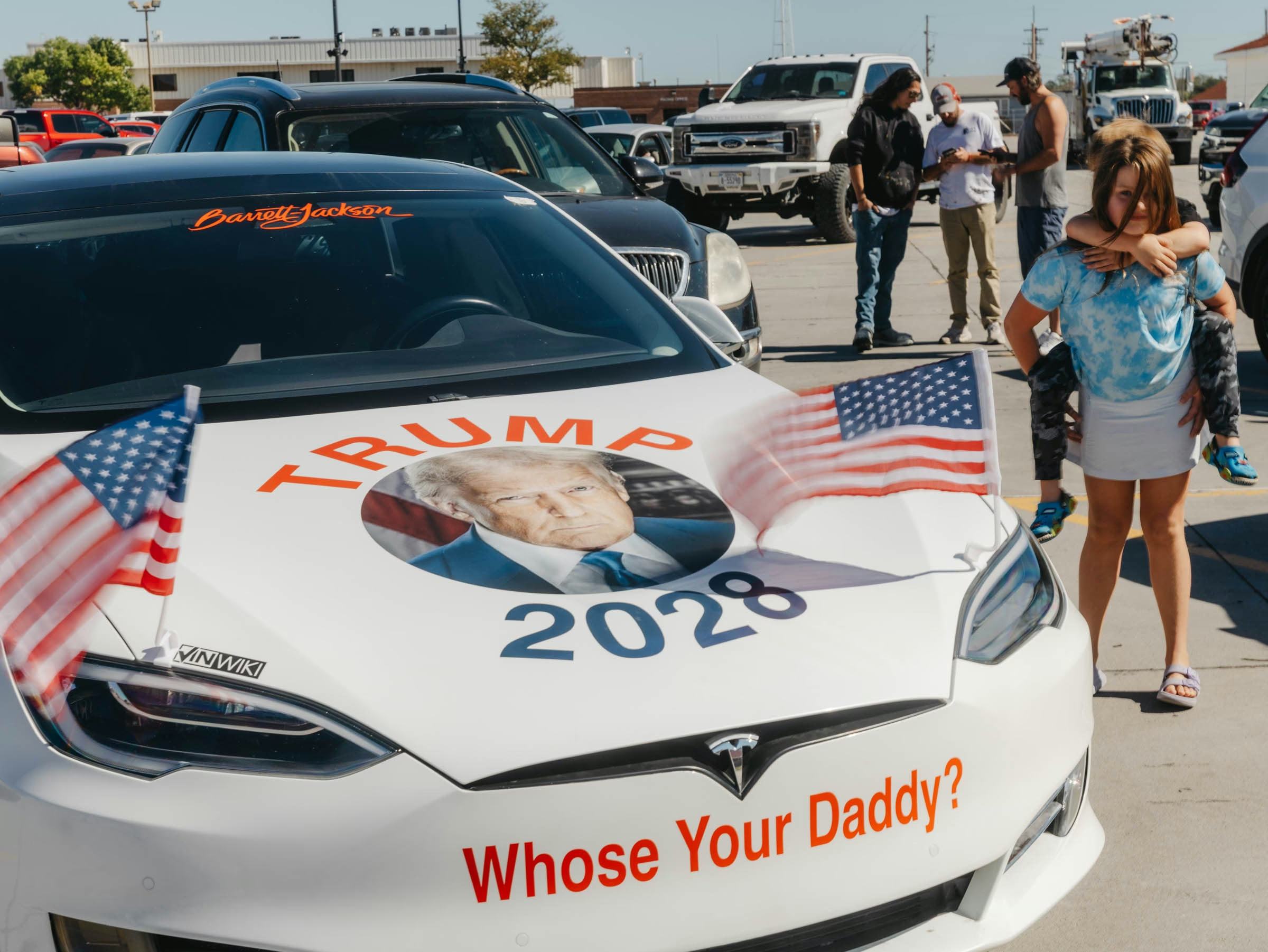
A disaffected Biden-Trump swing-voter crowd this was not. Even when I specifically asked attendees about the economy and inflation, they mainly blamed Biden, as Sober had, or Democrats dating as far back as Barack Obama and Bill Clinton. And in conversations with more than a dozen voters, everyone—with one notable exception—supported Trump’s decision to go to war with Iran, telling me the Islamic regime cannot get a nuclear weapon, that they’d rather fight Iran there than here, and that it was about damn time. “It’s a shame that it took us this long to handle what we should have handled,” Brennan Lavelle, a 54-year-old hog producer, told me. One woman wore a T-shirt that said, simply, Finish Iran.
Yet despite the crowd’s halcyon view of the president, the Trump show last night had aspects that the man himself would not have liked. He had recently complained about what he views as the media’s unfair coverage of his crowd sizes—“The Arena was totally MAXED OUT,” he wrote on social media yesterday, after his Ohio rally—but the reality in Grand Island was similar: Yes, there was a long line that started early, snaking past nearly every building of the state fairgrounds and out along a chain-link fence on the street. But the 100,000-square-foot Pinnacle Bank Expo Center was not packed, not by a long shot, with a smattering of empty chairs and some open spaces in the back and along the sides.
As the crowd filed in, premade signs of blue and red awaited them, and they were decidedly on message: No Tax on Tips, No Tax on Social Security, Lower Prices, Bigger Paychecks. The president, too, managed to accomplish the ostensible purpose of his trip; he began by touting Governor Jim Pillen, Senator Pete Ricketts, and Representative Adrian Smith, all Republicans up for reelection, and he later pulled each one onstage, allowing them to speak briefly. But he also said things that were not true, attacked the media, and strayed from the teleprompter—including when he suggested that Iran could hit a major Democratic city if the country develops a nuclear weapon. “They can take out a city,” Trump said, then seemingly shifted to imagine critics of his war displaying indifference toward that prospect: “Let them take out Los Angeles. Let them take out San Diego.” Fighting Iran, he continued, was a “very small price to pay” for avoiding such attacks.
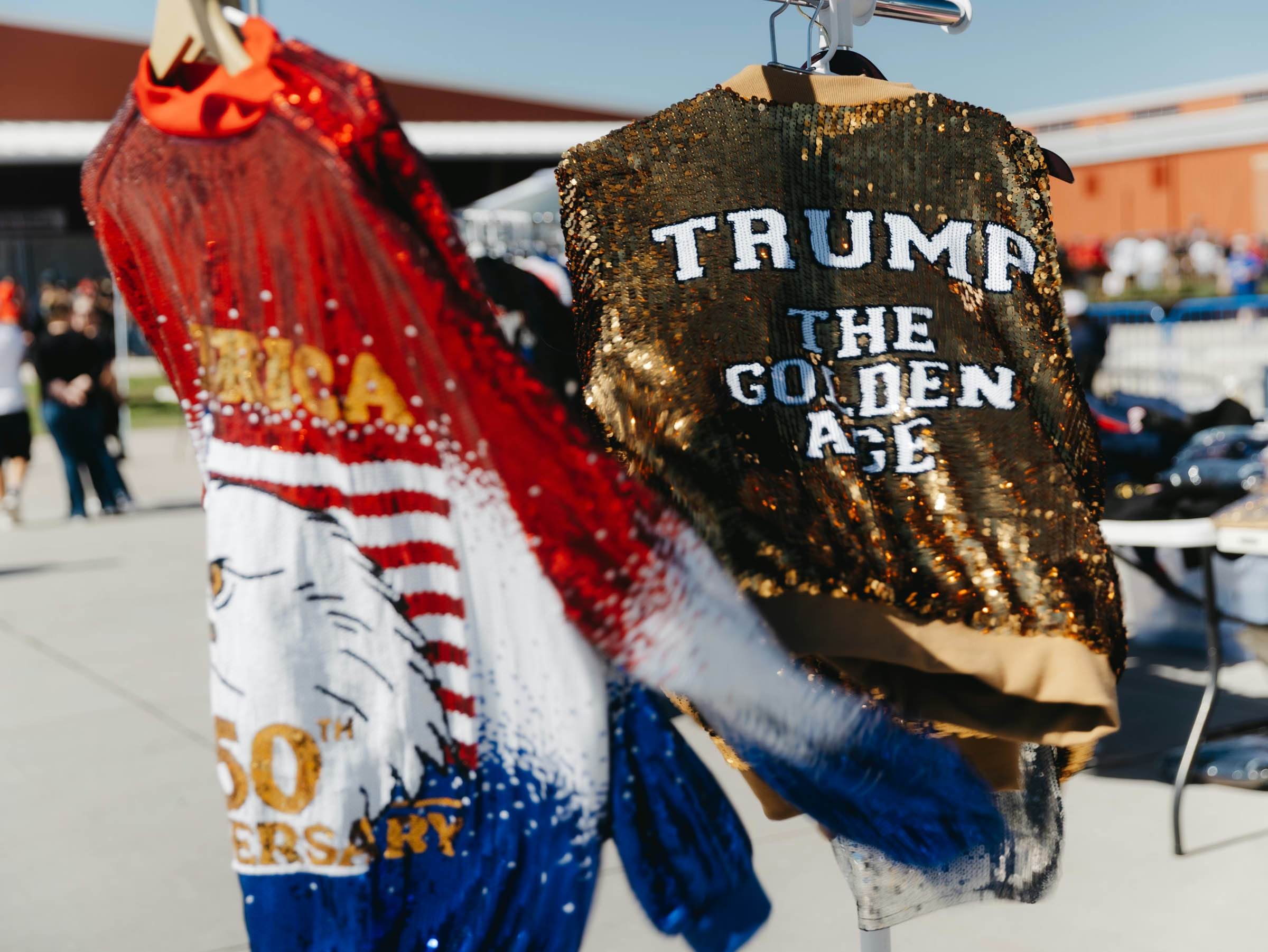
In a parking lot before the rally began, Sany Dash peddled wares from her USA Trump Store, a potent mix of razzle-dazzle and MAGA. At political fundraisers and other private events, Dash said, she sells the sequined jackets for $250 a pop, if not more, but was offering them in Nebraska for just $100. By early afternoon, she had already sold 88. Dash, a Trump supporter who urged me not to quote her out of context, said that she has seen enthusiasm for the president fluctuate because of the war and the economy, which she noted are interconnected. “Make sure to put in that we love Trump, and we understand both sides,” she told me. “We understand the wealthy, and we understand the working class. We’re in between.” After all, the Trump years have been good to Dash, who estimated that she has attended—and sold merch at—roughly 260 Trump rallies since 2016.
This particular rally was for people like Dash—or, more accurate, for Trump to be surrounded by people like Dash, those men and women who voted for him three times and would do so again if they could. (One man I spoke with fancifully suggested a Vance-Trump 2028 ticket.) The notable exception came in the form of two young men from the area, both in their early 20s and wearing black shirts that said Bibi’s favorite pawn above an image of Trump, on the front, and Good Goy on the back. The shirts, using anti-Semitic terms popular in alt-right spaces, referred to Trump’s support for Israel and, the two said, the president’s war with Iran. “We voted for Trump based on the idea of America first, right?” Creighton Mehring, an electrician, told me. “That’s what we felt that he was running for this term. And then once he got into office, we’re fighting other people’s wars.”
“It’s not our war,” his friend, Dakota Van Winkle, chimed in. “Like Charlie Kirk said, it’s not our war.”
[Read: A war of assassinations]
As we stood chatting, waiting in the long line for concessions before the rally began, a black-clad security guard approached. The young men could stay, he said, they just had to keep to the back half of the room—out of view of the cameras, the president, the main crowd.
The Nebraska rally was for Trump—his people, his vision of himself—and nothing would be allowed to intrude on that reality.
The post Trump Journeys to Where He Is Still Popular appeared first on The Atlantic.