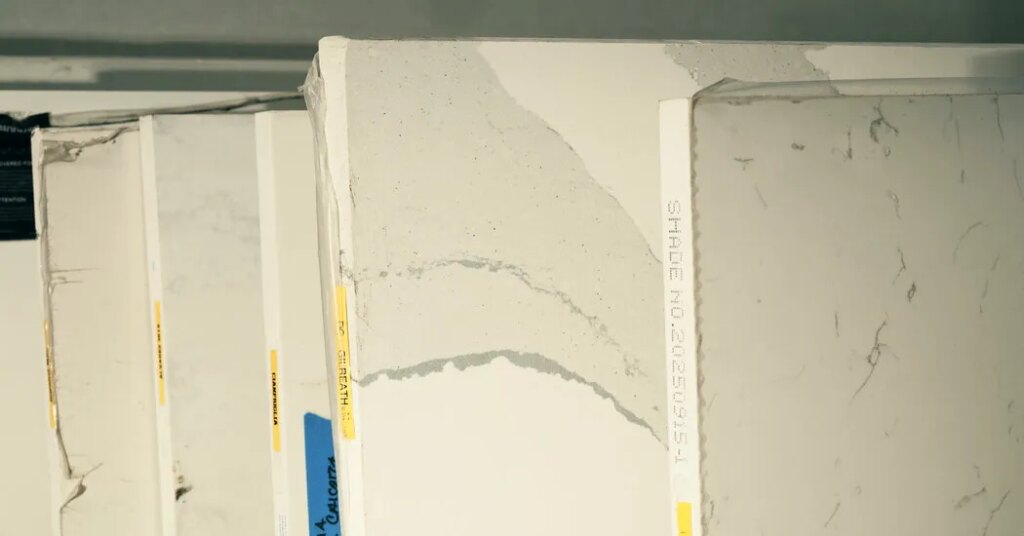
California is set to become the first state to ban the production or installation of man-made quartz, amid mounting cases of a lethal lung disease among workers who carve the material for kitchen countertops.
The emergency regulation, which California’s Occupational Safety and Health Standards Board is expected to pass in October, signals growing alarm over the ill effects of a popular alternative to granite and marble.
The board, made up of health, labor and corporate leaders, unanimously agreed in May to take up the proposed ban, which would target manufactured stone that contains more than 1 percent of crystalline silica. The rule would be subject to brief state review before taking effect.
Man-made quartz is packed with crystalline silica, which is released as dust into the air when a slab is cut. The particles lodge in the lungs, prompting an aggressive immune response; scar tissue forms, slowly killing the lung. By the time silicosis is diagnosed, patients often need a single or double lung transplant.
Representatives for manufacturers and distributors in the $30 billion engineered-stone industry say quartz is safe. They blame fabrication workshops further down the chain of production, where engineered stone slabs are cut to spec, for the surge in silicosis cases.
There are many such fabrication workshops in California. Many of the workers have tenuous immigration status. Since 2019, California has confirmed 657 silicosis cases and 35 silicosis-related deaths among countertop workers, according to the state’s Department of Public Health. The state has also recorded a rising tide of lawsuits for injuries related to stone cutting, with multimillion-dollar verdicts. The workers, along with their lawyers, doctors and occupational health experts, have said there is no safe way to cut quartz.
California’s ban would be an acknowledgment that the state’s laws requiring safer processing techniques for quartz are not enough to protect workers: Compliance is too low and the industry too fragmented, with many small shops that escape inspection, according to the California Department of Industrial Relations, which has pushed for the ban.
“The standards board’s decision reflects the urgent need to protect workers from a product that has proven uniquely hazardous,” said Denisse Gómez, a spokeswoman for the department.
“Cal-OSHA issuing this rule sends a message to other OSHA programs,” said Dr. David Michaels, an epidemiologist at George Washington University’s school of public health who ran the federal Occupational Safety and Health Administration from 2009 to 2017. “But it also sends a strong signal to the countertop markets. It tells consumers and countertop manufacturers and big-box stores that they all must shift to a safer alternative.”
Engineered stone can also be produced with recycled glass and other materials that are considered safer. Australia banned quartz countertops in 2024, with a total import ban starting in 2025.
Most quartz slabs sold in the United States come from overseas manufacturers and reach American homes through a network of home improvement stores and smaller distributors, passing through fabrication shops where they are cut for kitchens and bathrooms.
The largest U.S. manufacturer of engineered stone is Cambria, a family-owned company in Minnesota. The company has fought against the lawsuits filed by workers with silicosis, and has lobbied members of Congress for support. A quartz ban in California could hurt Cambria because of the state’s large market and because Cal-OSHA often sets the pace for other states.
In January, Cambria’s chief legal officer testified at a House subcommittee in support of a bill that would shield engineered stone from liability in lawsuits involving injuries, putting it in the same protected category as vaccines and firearms.
“The problem is the process, not the product,” Rebecca Shult, the company’s lawyer, told lawmakers.
Other states have also raised the alarm about silicosis in people working with engineered stone. Last month, New York City’s health department issued an advisory to health care workers, alerting them to recent cases in the state. In December, Massachusetts issued a public health advisory on silica dust, calling it “a respiratory hazard for stone manufacturers.”
The post California Prepares to Ban Quartz Countertop Production appeared first on New York Times.