This article is part of Overlooked, a series of obituaries about remarkable people whose deaths, beginning in 1851, went unreported in The Times.
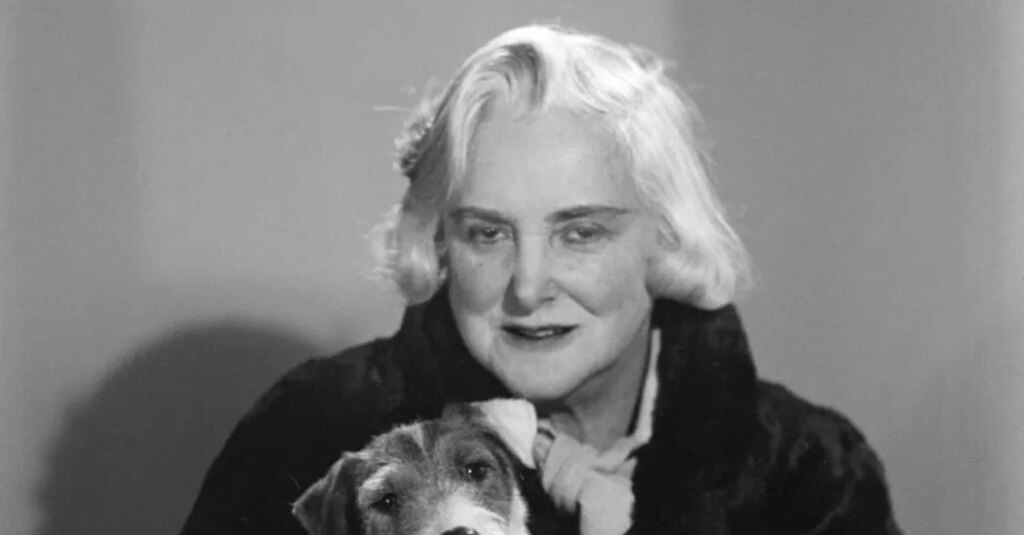
From her elegant house in Paris, Eugenia Errázuriz watched the artistic world she had helped create begin to disappear.
World War II had brought hardship across Europe, but for Errázuriz, the damage was personal. Her three children returned to Chile, where she had been raised; she stayed behind, with only one servant. Then Max, her eldest son, died unexpectedly, and the checks he had been sending from South America stopped.
There was only one solution: sell the art collection.
Errázuriz mourned each piece as it went. None grieved her more than Picasso’s painting “Homme Accoudé sur une Table” (“Man Leaning on a Table,” 1916), the last to leave.
“I have been very sad without the picture that is every day more beautiful,” she wrote to the artist in May 1947.
The collection that had once helped define her world soon vanished. Its dispersal had the fleeting quality of a galerie éphémère — except this was no temporary exhibition. It was Errázuriz’s life, emptied room by room.
For decades, she had been a catalyst for the European avant-garde: a patron, adviser, connector and tastemaker whose influence expanded beyond Picasso and Stravinsky to fashion and interior design. She had opened doors, offered criticism and used her considerable wealth to steer artists toward the work that would make them famous.
Eugenia Huici Arguedas was born in Bolivia on Sept. 15, 1860, to Manuela Arguedas and Ildefonso Huici Péon, who had made a fortune in silver mining. Eugenia was raised on the family hacienda in La Calera, near Valparaíso, Chile. As was common at the time for girls, her formal education was scant.
She became exponentially richer after her marriage in 1879 to José Tomás Errázuriz Urmeneta, whose family owned a third of the world’s copper supply. The couple had three children: Carmen, Max and Maria.
In 1882, the family moved to Europe, drawn by a love of art. Their first stop was Venice, where they became friends with the artist John Singer Sargent, who was struck by Errázuriz’s beauty. He captured her radiance in the early 1880s in “Eugenia Errázuriz” and “Madame Errázuriz,” or “The Lady in Black.” (Boldini, Blanche and other fashionable 19th-century artists also created portraits of her.)
Sargent was among the first to recognize that Errázuriz had a talent of her own. “I have never known anyone with the unfailing, uncanny taste of this woman,” he once said. “Whether in art, music, literature or interior decoration, she sees, hears, feels, smells the real value, the real beauty.”
The couple eventually moved to Paris, where Impressionism was in full flower, and became immersed in the city’s cultural life. But some accounts described an ambient prejudice toward “people who seemed different” — an undercurrent that might have complicated their place in Parisian society.
Whether as self-invention or self-protection, Errázuriz understood that presentation was power: She wore extravagant hats, towering high heels and a wardrobe that was heavy on black. She began wearing Chanel even before that designer opened her couture house in the French capital in 1918, as well as phantasmagoric Schiaparellis with surrealistic motifs.
She was adored, in part, for her idiosyncratic way of speaking — a mixture of French, Spanish and English that she referred to as her “charabia,” from the French word for gibberish.
Errázuriz and her husband separated around 1910, and she delved ever more deeply into art. She had close friendships with some of the century’s most protean artists: Picasso and Stravinsky; the poets Blaise Cendrars and Guillaume Apollinaire; the polymath Jean Cocteau; the American photographer Man Ray; and the pianist Arthur Rubinstein.
When Errázuriz spotted talent, she supported it. After hearing one of Stravinsky’s compositions, she promised him a monthly stipend of 1,000 francs “until your genius is recognized.” Her next gift to him was a baby grand piano.
Stravinsky’s work could be provocative. When the Ballets Russes premiered “The Rite of Spring” at the Théâtre des Champs-Élysées in Paris in 1913, the dancers moved in jerks and the music seemed to splinter the room. The audience hissed: “Horrible!” “Affreux!”
But Errázuriz loved it. “Your beautiful music gives me immense pleasure,” she wrote to the composer, and that opinion never changed.
She also introduced the designer Elsa Schiaparelli to the Inca-inspired hot pink that became her signature; the color was ubiquitous in South America but unfamiliar in Europe.
Errázuriz encountered Picasso’s work before she met Picasso himself. In 1909, she bought a four-panel screen depicting an ocher-colored nude against a straw-tinted background. When she met the artist, in 1916, they immediately became close friends, and Errázuriz would talk through projects and ideas with him, offering thoughts of her own.
Her correspondence — his letters to her have disappeared — had the intensity of a love story, though their relationship was platonic. “Not a day passes without me dreaming of you in my heart and my soul,” she gushed at one point.
Her love for Picasso’s art was inexhaustible. She prized his Cubist “Man Leaning on a Table” above all others. Its blocks of pattern and color seemed to shift across her whitewashed walls. In letter after letter, she told Picasso what the painting meant to her and how it appeared to change over time.
And she helped move his career forward. She introduced him to Stravinsky and brought him to meet Serge Diaghilev, the director of the Ballets Russes. That connection led to Picasso’s designs for “Parade,” the company’s dazzling 1917 production. He created sets and costumes in swirls of apricot, silver and other brilliant colors.
At La Mimoseraie, her villa in Biarritz, France, she turned hospitality into strategy. After Picasso married Olga Khokhlova in 1918, she invited the couple for an extended honeymoon, arranging for several of his canvases to be sent from Paris and hung in the villa’s reception rooms. Then she invited two of the most important art dealers in France, Paul Rosenberg and Georges Wildenstein, both of whom were vacationing in Biarritz, to stop by. The meeting helped connect Picasso with the dealers who would represent him for years to come.
Errázuriz was also known for her radically spare interior design.
“Elegance means elimination,” she liked to say. “Throw out and keep throwing out.” At her Paris apartment, at 60 Avenue Montaigne, and at La Mimoseraie, she hung paintings by Picasso and Braque on stark white walls, stripping away almost everything else.
By the 1930s, her austerity had become a cult. The Argentine writer Victoria Ocampo called it “Eugenismo,” describing Errázuriz’s sway over “a certain sector of refined Parisians” as an “absolute dictatorship.”
“Who had thought of doing it like Eugenia before Eugenia?” she asked.
Jean-Michel Frank, who would become one of Europe’s most influential decorators, made the debt explicit. “Her influence is indisputable,” he wrote in 1938 in Harper’s Bazaar. “Everything I know, more or less, I owe to her.”
Her world crashed down with World War II. She spiraled into poverty and in 1948, when she was in her late 80s, she returned to Chile, a country she had not been to for 60 years. Picasso bought her plane ticket.
She regretted the move almost as soon as she touched down in Santiago. Her homeland was unrecognizable. And she was tormented, knowing that she would never see her friends in Europe again.
Less than two years later, she hastened her end by refusing all nourishment. “I want to help God to take me out of this life,” she said. They were her last words.
She died at 89 on Nov. 26, 1949. On her own terms, as she had lived.
The post Overlooked No More: Eugenia Errázuriz, Who Opened Doors for Picasso appeared first on New York Times.