Good morning. It’s Friday. We’ll end the week by seeing where things stand in the Cornell rape investigation. We’ll also look at a century-old tomb at a landmark cemetery in the Bronx that has just been restored.
“I can say with 100 percent confidence I was raped,” the woman known as Jane Doe told two Cornell University investigators on Nov. 14, 2024.
That bombshell sentence appeared in a transcript of her conversation with the investigators about three weeks after events in a Cornell University fraternity house.
But it did not appear in a six-page “official statement,” a summary prepared by one of the investigators. And the summary was the main piece of evidence that the Tompkins County district attorney took into account before deciding not to seek criminal charges against seven young men over what happened at a drug- and alcohol-fueled party.
That decision now figures in a difficult a national conversation about sexual assault and consent, and how the case was handled at Cornell. Jane Doe ultimately accused the men of sexual assault in a lawsuit she filed last month. None of the men has been charged in the case, and all have denied wrongdoing. Four said that they had consensual sexual contact with her. The others denied participating.
What follows is a look at where things stand.
The case was, and is, complicated. It raises troubling questions: Who is to be believed? Does Title IX — which prescribes a process for investigating allegations of sexual harassment and assault — actually work? Do town-gown relationships in a college community cloud decision-making?
More than 1,000 pages of documents obtained by The New York Times show that Jane Doe came to conclude that what had played out that night was a crime. The documents indicate that her initial take was to say nothing, but within a day or two, “everyone involved in sorority and fraternity life knew what had happened,” she told the investigators.
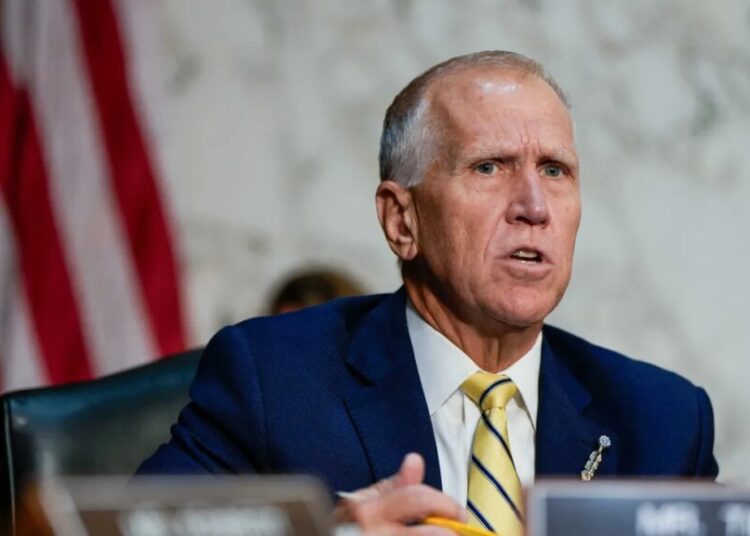
The fallout since she filed her lawsuit has been withering. Gov. Kathy Hochul appointed the New York State attorney general, Letitia James, to serve as a special prosecutor to investigate the rape allegation. Hochul said on Thursday that James had already begun a review of the way law enforcement officials had handled the case.
The governor said that “newly released information” had “undercut my faith, and the public’s faith, in the district attorney’s ability to effectively investigate and prosecute the case at this time.” She added, “The young woman at the center of this case deserves to know that every fact will be examined and justice pursued.”
The district attorney, Matthew Van Houten, had reopened the criminal investigation earlier in the week. He said on Tuesday that his decision not to bring charges in 2024 was “not even a close call,” although he also said that Jane Doe’s account had been “very specific” and “very detailed” — and credible. “Everybody across the world agrees that what happened was wrong,” he said on Tuesday, but when he reviewed the allegations in 2024, he added, he did not believe that the woman’s statements seemed to warrant criminal charges.
Hochul’s decision to name James as a special prosecutor came a day after Cornell said that it would hire outside lawyers to investigate Jane Doe’s claims.
Weather
The morning will be mostly sunny with a high near 84. Rain is expected beginning in the evening as temperatures fall to the low 60s.
ALTERNATE-SIDE PARKING
In effect until Saturday (Shemini Atzeret).
QUOTE OF THE DAY
“They see you coming and they stop in the middle of the sidewalk so they don’t hit you. With a stroller, you have to go around them, but you can’t because they’re blocking the whole sidewalk.” — Charlotte Austin, on delivery robots that have conquered the sidewalks in Jersey City.
The latest New York news
-
Where it’s hard to build housing: Some City Council members will lose their informal veto power over new projects in their districts on Jan. 1. The Department of City Planning found that in the past five years, those 12 districts built the least affordable housing.
-
Communications made public: A group of landlords seeking to overturn the rent freeze that went into effect yesterday made public dozens of pages of internal communications between city officials and members of the Rent Guidelines Board, claiming they showed improper efforts to influence an independent process.
-
Redesigning Canal Street: The Transportation Department plans to add new crossings, extended sidewalk curbs, refuge islands and more. Work is expected to begin soon.
-
Attack on a J train: A 59-year-old man was fatally stabbed in a random rush-hour attack on the train in Queens. The attacker, a 25-year-old man from the Bronx, was charged with murder and possession of a weapon.
-
What We’re Watching: On “The New York Times Close Up,” Jeffery C. Mays and Jeffrey Wice, an election-law specialist, discuss the Brooklyn Democratic Party leadership fight. The program is broadcast on CUNY TV at 7:30 p.m. Fridays, Saturdays and Sundays.
Restoring his great-great-grandfather’s tomb
Adrian Untermyer had just taken a job with the Historic Districts Council, a preservation advocacy group that was involved with a scavenger hunt at Woodlawn Cemetery in the Bronx. Susan Olsen, Woodlawn’s director of historical services at the time, took Untermyer aside and said: “You’re an Untermyer. We need to talk.”
She knew who his great-great-grandfather was and where he was buried — Lot 15806-07 in Section 54/67, one of the largest plots at Woodlawn, where notables like Duke Ellington, Herman Melville and Fiorello La Guardia are also interred.
The great-great-grandfather, Samuel Untermyer, had been a notable, too — an influential New York lawyer from the 1880s until his death in 1940. He had a hand in drafting statutes that created the Federal Reserve and the Federal Trade Commission, as well as an antitrust law that banned price discrimination and anticompetitive mergers.
He lived on a Gilded Age estate in Yonkers, where he commissioned an elaborate garden with an amphitheater, fountains and 2,000-year-old marble columns. After his death, the estate went to the City of Yonkers, which sold off some of the land and turned the rest into a municipal park that has been restored over the last 20 years by the Untermyer Gardens Conservancy.
The tomb at Woodlawn had a statue by the sculptor Gertrude Vanderbilt Whitney, who founded the Whitney Museum of American Art. Some of Samuel Untermyer’s descendants, including his son Irwin, were interred there as time passed.
But the plot had been neglected.
Restoring it became a passion project for Adrian Untermyer, who wrangled support from his relatives. The work began in 2024 and has just been completed. The cemetery has scheduled a commemorative dedication ceremony for tomorrow at 2 p.m. that will be open to the public.
Samuel Untermyer had been spectacularly wealthy, but Adrian Untermyer began the project thinking that he would have to raise money for it. Samuel Untermyer’s fortune had been “disbursed” over the ages. “Some branches of the family held onto more than others did,” he said. “I don’t own a house — I rent.”
He was unaware that Samuel Untermyer had set up a trust account, money that could be spent only on the Untermyer plot. The balance was enough to cover the roughly $250,000 needed to restore the plot — and to put a date on Irwin Untermyer’s headstone.
Somehow, when Irwin Untermyer died, the date was left off — Oct. 18, 1973.
Adrian Untermyer instructed the stone carver not to put a comma after the date, before the year. He wanted to match the way Irwin’s birth date appeared: Feb. 2 1886.
The stone mason “dutifully added the missing date with what we thought was no comma,” he said. “But if you go up to the headstone and you get down on your hands and knees, you will find the teeniest, tiniest, less-than-one-centimeter-size comma inscribed in the stone.”
The Untermyers did not send the headstone back to have the comma taken out. “You remove a tiny comma,” Adrian Untermyer said, “you’ll get a big bill.”
METROPOLITAN diary
Subway tail
Dear Diary:
I was taking the 1 train home from work and got on at 50th Street.
A man got on and stood next to me carrying a small dog in a Fairway bag.
It didn’t seem like the most comfortable arrangement, but the dog appeared unbothered.
At 72nd Street, I noticed an older woman with a cane moving toward the door.
As the train slowed down, she turned to the dog’s owner.
“At least cut a hole somewhere to let its tail out,” she said sharply.
Then she poked the man on the shin with her cane and got off the train.
— Tanveer Chabba
Illustrated by Agnes Lee. Tell us your New York story here and read more Metropolitan Diary here.
Glad we could get together here. See you Monday. — J.B.
Davaughnia Wilson and Ed Shanahan contributed to New York Today. You can reach the team at [email protected].
Sign up here to get this newsletter in your inbox.
The post Where Things Stand in the Jane Doe Investigation appeared first on New York Times.