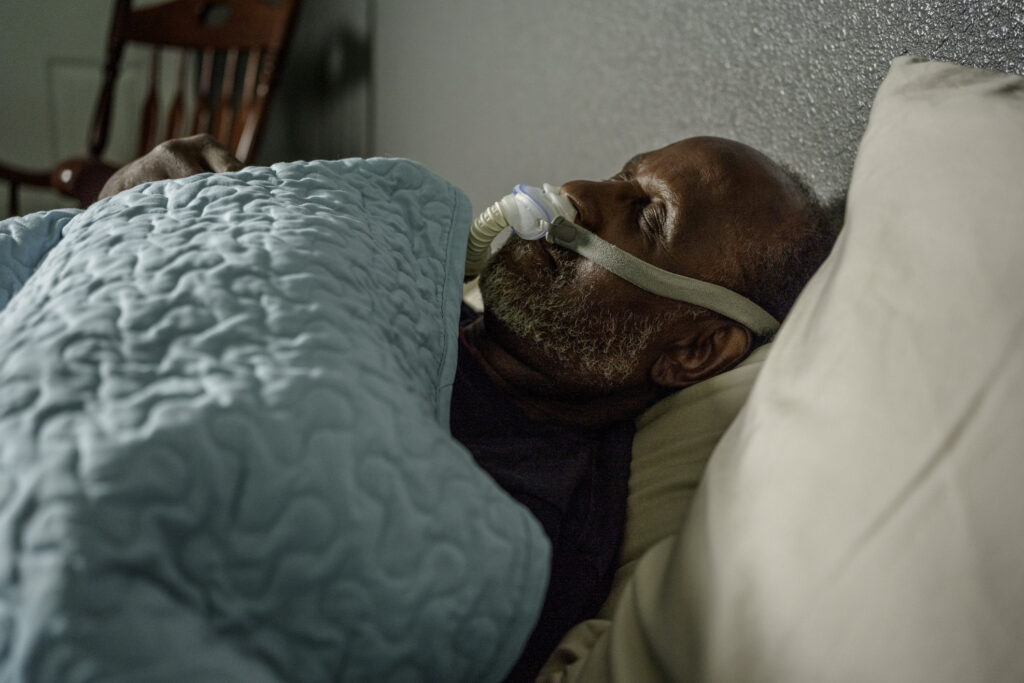
It’s not unusual to be a little forgetful or have trouble concentrating as you get older. But writing off those symptoms as “normal” signs of aging could mean missing another possible cause: obstructive sleep apnea.
The common condition causes you to briefly stop breathing throughout the night, sometimes 30 or more times an hour in severe cases. For many people with sleep apnea, feeling unusually tired during the day is what tips them off that something isn’t quite right with their sleep.
But it doesn’t happen to everyone. “There are a fair number of people who just don’t seem to get as sleepy,” said David Rapoport, an internist and director of research in integrative sleep medicine at the Icahn School of Medicine at Mount Sinai.
That may be particularly important in older adults. A 2026 review published in the journal Sleep Medicine Reviews found that people 65 and over who have sleep apnea may experience little daytime sleepiness. Instead, it can show up in less typical ways, including problems with memory and concentration that may be easier to dismiss, allowing the condition to go undiagnosed.
Recognizing sleep apnea matters because disrupted breathing can lead to low oxygen levels, high blood pressure and fragmented sleep, which “have a cascading series of consequences that can affect a variety of organs, including the brain,” said David Gozal, dean of the Joan C. Edwards School of Medicine, vice president for health affairs at Marshall University in West Virginia and a co-author of the Sleep Medicine Reviews paper.
Here are the symptoms to watch for, and when to get evaluated.
What do cognitive symptoms of sleep apnea look like?
Sleep apnea can go undiagnosed in older adults. In a 2018 survey of sleep issues in people 65 and older published in the Journal of the American Geriatrics Society, researchers found that while 56 percent of participants were at high risk for the condition, based on self-reported symptoms, only 8 percent had been tested for it.
Atypical symptoms may partly explain that gap. The recent Sleep Medicine Reviews article noted that sleep apnea has been associated with problems with attention, memory and executive function in older people. Other symptoms can include difficulty solving problems, short-term forgetfulness, irritability and even aggressiveness, added Gozal.
Even if someone with sleep apnea doesn’t seem particularly tired during the day, disrupted sleep can leave them feeling “a bit foggy,” with attention and processing speed “a bit off,” said Kristine Yaffe, a distinguished professor of psychiatry, neurology and epidemiology, and director of the Center for Population Brain Health at the University of California at San Francisco.
All this may be compounded by the fact that sleep quality often declines with age for a variety of reasons. “As we get older, people tend to not sleep as long, they toss and turn more, they have to get up to go to the bathroom,” said Yaffe. Even without sleep apnea, older adults may also get less deep and REM sleep, she said. Sleep apnea can add repeated “mini awakenings” throughout the night.
The cognitive symptoms associated with poor sleep “tend to be transient,” Yaffe said. But because they can also resemble signs of aging, they may be overlooked. Older adults who live alone might be especially at risk for a missed diagnosis since a bed partner may hear loud snoring or breathing pauses and be more tuned in to cognitive changes.
“I think what we’ve been actually finding in a lot of our studies is marital status is actually a pretty significant factor in determining whether someone has been diagnosed with obstructive sleep apnea or not,” said Christopher Kaufman, an assistant professor in the Department of Health Outcomes and Biomedical Informatics at the University of Florida College of Medicine.
Sleep apnea may have longer-term cognitive consequences
Beyond its more immediate effects on thinking and memory, sleep apnea may also contribute to cognitive decline over time and potentially Alzheimer’s disease, Yaffe and Gozal said.
The repeated pauses in breathing caused by sleep apnea can raise blood pressure and lower oxygen levels, which may trigger changes in the brain: “The theory is that over many years and many blockages, the dips in oxygen have a cumulative effect,” said Rapoport.
Sleep apnea also repeatedly interrupts sleep, which may interfere with the brain’s ability to clear toxic proteins, Yaffe said. Some of those proteins, she explained, are associated with Alzheimer’s. A 2026 randomized controlled trial supports that idea: Participants who got a normal night’s sleep showed better clearance of biomarkers associated with the disease than those who were sleep-deprived.
Research in people with sleep apnea also suggests that treating the condition could make a difference. In a recent study Kaufman co-authored, people with sleep apnea who used continuous positive airway pressure (CPAP) therapy, which keeps the airway open during sleep, experienced slower cognitive decline than those who did not use CPAP.
When to see a doctor
As Rapoport explained above, you can’t necessarily rely on daytime sleepiness to alert you to the sleep disorder, particularly as you get older. One key sign is loud snoring with pauses in breathing, which a bed partner may notice during the night.
Other signs to watch for include insomnia, fatigue, morning headaches and cognitive changes such as trouble making decisions, slower reaction times, brain fog and forgetfulness.
But these changes “are very nonspecific,” noted Rapoport, making it difficult to know whether sleep apnea is the cause. Sometimes, the connection only becomes apparent if the symptoms improve after the sleep apnea is treated, he added.
The only way to know for sure whether you have sleep apnea is through a sleep study (an overnight test where a health care provider monitors your heart, lungs, breathing and oxygen levels while you sleep). But cognitive issues may be worth flagging to your doctor, particularly if you also have other signs of sleep apnea.
Other changes in your health can add to the concern. Gozal said that if your blood pressure becomes harder to control or your cardiovascular health declines, your doctor may consider whether sleep apnea could be playing a role.
Depending on the results of your sleep study, your doctor may recommend a CPAP machine or another treatment, such as an oral device that repositions the jaw or tongue. The GLP-1 medication Zepbound is another option for some patients. It is approved to treat moderate to severe obstructive sleep apnea in adults with obesity.
Researchers still need to determine whether treating sleep problems like sleep apnea can help prevent cognitive decline or dementia. “We have a lot of good evidence showing that sleep is important for cognitive health,” said Yaffe. “I think now we have to understand how we can improve cognitive health or prevent dementia by treating sleep problems more aggressively.”
The post This common sleep disorder can be mistaken for cognitive decline appeared first on Washington Post.