As a teen, Jaweria Syed spent countless hours every day after school lying on her bed with her eyes closed, imagining herself onstage as a backup dancer for Drake, Nicki Minaj and other hip-hop artists. In reality, she hardly ever went out as her conservative Muslim family kept her from even trying out for after-school activities.
It wasn’t until she was a young adult that Syed began to see her elaborate fantasy life as a problem — and, on TikTok, found a name for it: “maladaptive daydreaming.”
“I was living in my head more than in real life,” said Syed, now 25.
The term helped Syed understand something that shaped much of her life. But it raised a more fundamental question: Where do ordinary human emotions and weirdness end and mental illness begin?
I remember I would literally spend hours in my room to immerse myself in maladaptive daydreaming. That was how I got through my days. #feminist #breakingthecycle #religioustrauma #womenshealth #generationaltrauma
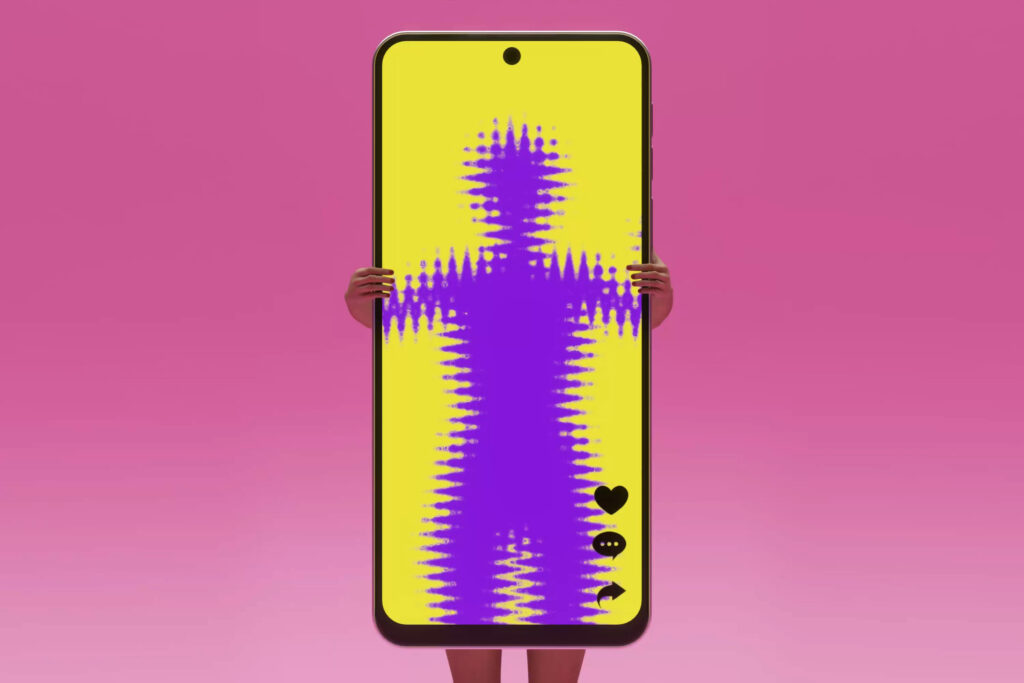
On Instagram, Reddit, YouTube and elsewhere, people are comparing symptoms and diagnosing themselves. People are creating communities around conditions, getting emotional support and identifying as sufferers before psychiatry has even decided what, exactly, they are.
Psychiatrists worry the information people encounter as they scroll has encouraged them to interpret ordinary quirks, distress or personality traits as a mental disorder.
Maladaptive daydreaming is one example. Misophonia (an intense reaction to particular everyday sounds) is another popular topic on social media, as well as pathological or obsessional jealousy (a persistent preoccupation with a partner’s suspected infidelity).
María A. Oquendo, chair of psychiatry at the University of Pennsylvania’s Perelman School of Medicine, said researchers once took notice of potential new diagnoses when enough patients began reporting similar symptoms to doctors. Social media has complicated that process, allowing reports of diagnoses and symptoms to spread in 30-second reels.
Oquendo chairs the American Psychiatric Association’s committee developing a roadmap for the next “Diagnostic and Statistical Manual of Mental Disorders,” which is weighing new scientific evidence alongside patients’ “lived experience” as it considers how psychiatric conditions are defined.
But incorporating those experiences at a time when ideas and misinformation about mental health can spread rapidly online presents a challenge.
“Providing context in that climate is difficult if not impossible,” Oquendo said.
#mentalhealthselfdiagnosis
Two studies published earlier this year provide a window into the sprawling social media world of mental health information.
A survey of 372 college students published in May in the Journal of Communication in Healthcare found that TikTok was the most commonly used channel for those seeking mental health information, followed closely by Instagram. A second analysis out in April in Health Communication analyzed 150 TikTok #mentalhealthselfdiagnosis or #mentalhealthdiagnosis videos and 1,400 comments and found that only 1 out of 5 of the content creators identified themselves as medical professionals. ADHD and autism were the most talked about conditions but many others were discussed.
Ran Ju, a professor of public relations at Mount Royal University who is a co-author of both studies, said that people are turning to online sources of information after encountering systemic barriers including long wait lists and long drives to see a doctor.
“We found frustration in getting medical diagnoses in the real world,” Ju said.
Clinicians are seeing the other side of that dynamic: Patients increasingly arrive not just with information gleaned online, but with a diagnosis already in mind.
Paul Weigle, an associate professor of psychiatry at the University of Connecticut School of Medicine, has treated children and teens for 27 years. Early in his career, patients often dreaded getting a diagnosis, he said. Now, more are coming having already diagnosed themselves. In some cases, waves of young patients identify similar conditions, such as multiple personality disorder.
Weigle, who puts on a program about young people and screens at the American Academy of Child and Adolescent Psychiatry’s annual meeting, said he likes seeing young people more interested in mental health. But he cautioned that the most popular posts tend to feature influencers who are “relatable, entertaining and attractive — not necessarily those who are giving the most accurate information.”
“Very often I’ve found in clinical practice self-diagnosis doesn’t line up with professional diagnosis,” he said.
Misophonia
Though it is not officially a disorder, misophonia occupies a peculiar place on social media: It is both a source of genuine anguish and an easy punch line. In one video, a woman describes how the sound of popcorn popping at family gatherings can make her irrationally angry. Elsewhere, an entire genre of short videos is devoted to provoking precisely that response, with creators chewing, slurping and making other noises to apparently torment people who say they cannot stand them.
Misophonia is commonly translated as “hatred of sound,” but it goes beyond that, according to M. Zachary Rosenthal, who directs Duke University’s Center for Misophonia and Emotion Regulation. Sufferers can react intensely not only to sounds, but also to visual and tactile stimuli.
Research into the condition has accelerated in recent years. In 2022, Rosenthal and other experts convened to settle on a standard definition of misophonia. They succeeded, at least partly: The group agreed on what the condition looks like, but not on what, exactly, it is. A psychiatric disorder? A problem with how the brain processes sound? A difficulty regulating emotion? A learned response? Some combination of the three?
That uncertainty can make misophonia particularly easy to dismiss. Plenty of people, after all, find the sound of someone chewing annoying. But Rosenthal argues that this misses an important distinction. Many psychological problems do not operate like a light switch, with normal on one side and disordered on the other. They are more like a dimmer: The question is how intense the experience becomes, and how much it interferes with a person’s life.
“Somebody can be anxious but not have an anxiety disorder,” Rosenthal said. “Just like someone can feel sad, down or hopeless but not have depression.”
For some people with misophonia, he said, the reaction becomes severe enough to cause significant distress or interfere with everyday life. It is at that end of the spectrum that an ordinary human irritation begins to look like something else.
Obsessional jealousy
On social media, “pathological” jealousy is often discussed in the context of intimate partner violence and coercive control. But Johan Åhlén, a psychology researcher at the Karolinska Institutet in Stockholm, argues that the phenomenon can be broader.
In February, he co-wrote a viewpoint article in JAMA Psychiatry arguing that, for some people, ordinary jealousy can become “excessive, intrusive, persistent, and uncontrollable,” suggesting such cases might constitute a distinct diagnosis. In the current DSM, it is described as a possible presentation of an obsessive compulsive disorder and some doctors refer to it as “relationship OCD.” This type of categorization can give researchers and clinicians a framework for studying emerging patterns of symptoms while they conduct more studies and assess whether these problems amount to a disorder.
Åhlén describes obsessional jealousy more as a kind of threat response, comparing it to health anxiety, or hypochondria.
“You feel something in your body and think you have a very dangerous disease,” he said. In much the same way, he said, a person may become consumed by the possibility that a partner is unfaithful.
However, he said, many of the people he has interviewed who describe obsessional jealousy “know rationally there’s nothing to be worried about.”
Maladaptive daydreaming
The term “maladaptive daydreaming” was coined by Eli Somer, a researcher at the University of Haifa in Israel who has spent years arguing that it constitutes a distinct clinical syndrome.
“It is similar to behavioral addiction in terms of craving, lack of control, and the fact that it continues even when it causes harm,” Somer said. It also involves what he calls “dissociative absorption”: becoming so immersed in an internal world that engagement with the real one recedes.
Somer said “a diagnosis should identify a disabling pattern,” adding that therapy aims to help people “regain choice over their attention and their lives while preserving an imagination they may deeply value.”
The idea has since traveled far beyond academic circles. Joe Whittington, an emergency-medicine physician in Orange County, California, has 2.2 million followers on TikTok and nearly 1 million on Instagram, where he posts as @drjoe_md. In a recent video, he took up maladaptive daydreaming, explaining that although it is not a diagnosis in the DSM, daydreaming itself is nearly universal. The distinction, he said, is what happens when it begins to interfere with daily life.
“Sometimes simply introducing people to a concept gives them a vocabulary for an experience they’ve had for years but never really knew how to explain,” Whittington said.
For Syed, that labeling proved consequential. As she spent less time retreating into fantasies, she said, she was forced to confront the life she had been avoiding. She divorced her husband from an arranged marriage and left her elementary-school teaching job to pursue her artistic interests.
She never sought professional help but says learning about the concept online gave her a starting point to recognize how unhealthy her daydreaming had become. She vetted what she found, consulting medical sources alongside first-person accounts.
While Syed can never go back and join the high school cheer or dance teams that she missed out on, she said she’s happy to be able to explore her artistic side today through her work creating social media content for weddings and other events. She is now planning to sign up for dance classes near her home in Houston.
“I guess for the longest time I thought where I was was normal,” she said. But, the daydreaming “was preventing me from making my dreams into reality and it was making my real life unproductive.”
The post Lost in daydreams? Enraged by chewing sounds? Psychiatry is taking a closer look. appeared first on Washington Post.