The alien hunters are in charge now.
Or at least President Trump has stocked a new advisory council on U.F.O.s with a number of scientists who embrace the idea that alien technology may be lurking among us.
The new panel was created this summer amid the administration’s rollout of government records about “unidentified anomalous phenomena,” or U.A.P.s, as they are now officially called. It’s tasked with helping unlock the mysteries of such objects.
“Even if one in a million happens to be of extraterrestrial technological origin, it would be the biggest discovery ever made by humanity in the context of science,” said Avi Loeb, a theoretical astrophysicist at Harvard and chairman of the administration’s new panel.
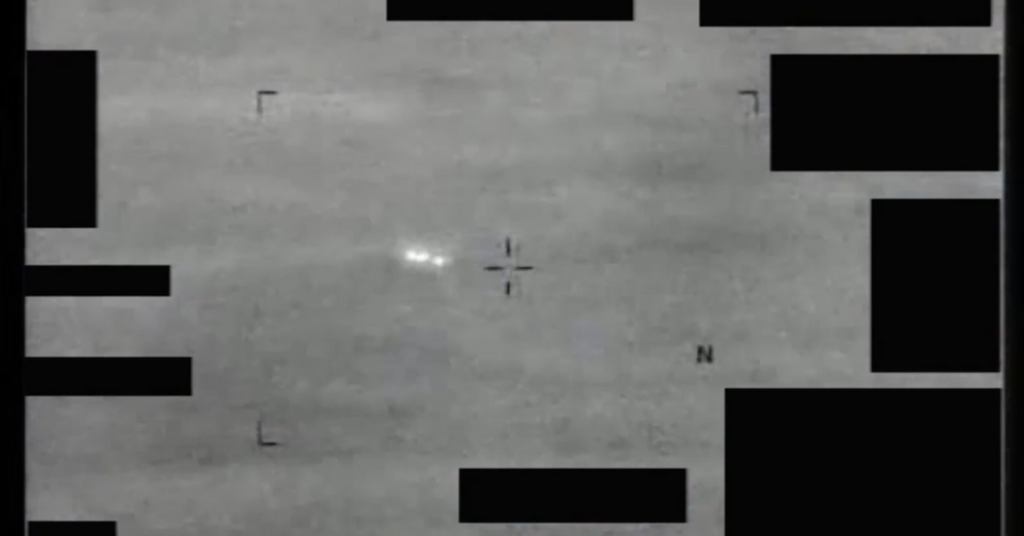
Mr. Trump has said on social media that he was releasing the records so “people can decide for themselves, ‘WHAT THE HELL IS GOING ON?’” The files, some of which have surfaced before, range from grainy military videos to the government’s thoughts on interstellar wormholes.
Critics see the government panel as diverting from the sober works of similar past groups and dovetailing with the administration’s hostility toward much of mainstream science.
Dr. Loeb is most notable for having theorized that Oumuamua, the cigar-shaped interstellar object that passed through the solar system a few years ago, was alien in origin and “the first sign of intelligent life beyond earth.” The hypothesis sparked controversy and plenty of academic pushback.
The council also includes Tim Gallaudet, a retired rear admiral and an oceanographer who has talked about the presence of nonhuman intelligence. He said in an interview with The New York Times that objects “not of our origin” were “operating in our airspace and water space with impunity.”
Another council member, Garry Nolan, a Stanford University professor of pathology, has studied anomalous materials and theorized that “there’s something nonhuman here, and it’s been here for a long time.”
Some former government officials are rolling their eyes at the new council.
“I think it’s laughable at the least and a waste of taxpayers dollars at the most. It serves absolutely zero purpose,” said Sean Kirkpatrick, who worked under the Biden administration as a director of the Pentagon’s All-Domain Anomaly Resolution Office, which leads efforts within the government to track unexplained phenomenon. He said the new council was “clearly meant to distract and push fringe theory.”
Michael Shermer, a council member, acknowledged that many sightings are “stuck in this kind of low-information zone” where “you can’t quite make out what’s going on.”
As the council dives into its work, The Times took a look at the six tranches of files released this year and asked the panel and its detractors for their takes.
Is the ‘X-Files’ Era Upon Us?
We’re about half a decade into an era of greater disclosure about U.A.P.s.
In 2022, the Pentagon took part in the first congressional hearing in more than a half-century to focus on military reports of unexplained phenomena. Top Biden-era officials did their best to tamp down excitement. Scott W. Bray, then the deputy director of naval intelligence, testified that officials didn’t “have any wreckage that isn’t explainable, that isn’t consistent with being of terrestrial origin.”
But things took a turn the next year when David Grusch, a former intelligence official, claimed that a covert government program had long been collecting materials of nonhuman origin.
Dr. Kirkpatrick, for his part, said that he never found “any evidence of either alien tech or a government conspiracy.” He added, “I told Congress and I’ve told a number of reporters, look, the best thing that could have happened in that job is that I found the aliens and I could roll them out, but I didn’t.”
Highlights From the New Files
Two federal agents were tasked in 2023 with investigating drone activity around sensitive sites in the western United States. On a clear October night, they came across a series of fast-moving lights. The agents turned off their headlights and sped toward the illuminated cluster, guided by night-vision equipment.
As they got closer, the lights converged into “one bright white/orange orb-like light with a halo-like glow,” one of the agents reported in a recently declassified document. They got within 50 yards, then the object moved rapidly in a different direction and then shifted again when they tried following, before disappearing.
The agents pulled over. The orb reappeared. This time, it spawned a collection of orange and purple lights that whizzed over “four miles of rugged terrain.” The fruitless pursuit resumed. One of the agents likened it to chasing “the flying car from the Harry Potter book series.”
They were among half a dozen agents who “reported observing ‘orbs launching other orbs’” over a two-day period, according to a recent Pentagon memorandum.
Whatever the origin, such enigmatic episodes are understandably tantalizing. So are more archival events. In February 1949, scientists held a conference in Los Alamos to discuss green fireballs sighted around research facilities. Participants, including Edward Teller, a developer of the hydrogen bomb, could not figure out what was going on, records show.
Dr. Loeb, the council chair, believes improved data collection practices could help going forward.
“We can’t go back in time and improve the data,” he said.
How Groundbreaking Are the New Documents?
Not very.
Greg Eghigian, a Penn State professor who has studied U.A.P.s, said there was “nothing especially new or earth-shattering in the materials.”
“Most longtime U.F.O. researchers I know remain unimpressed by what’s been released.”
Some are skeptical of the administration’s motives. Former Trump allies, such as Joe Rogan and Marjorie Taylor Greene, have suggested that the president was using U.F.O. files to distract from the war in Iran.
The Times has long chronicled mysterious aerial phenomena, from turn-of-the-century airship sightings to more recent unknown objects encountered by naval aviators. (The director Steven Spielberg has said the latter story inspired his recent movie “Disclosure Day.”) This year, The Times created a database of about 155,000 unique pages of U.A.P. records from seven countries but found no definitive signs that the mother ship has landed.
Peter Skafish, an anthropologist who serves on the Trump administration’s council, said he was “confident there are technologies that aren’t of human origin or human provenance and that there’s knowledge of them and some classified efforts to at least study, detect, track them in the intelligence community.”
But he called the new records “low-hanging fruit.”
“The intelligence community was not made to share information,” he said. “It exists to collect, analyze, withhold it, keep it secret.”
He was cautiously optimistic that the council could pry loose more files. But most members lack security clearances, raising doubts about what they can really do. That said, Stephen Miller, a top White House aide, is “very much in charge of the U.A.P. issue,” according to recent comments by Marco Rubio, the secretary of state.
The council also recently met at the Office of the Director of National Intelligence. Members were told that there was “a preparedness plan in place should the existence of nonhuman intelligence” be confirmed, but were not given further details, according to a Substack post by Jennice Vilhauer, a psychologist on the council.
What Are We Even Looking For?
Maybe not little green men. Or even biological creatures.
“We’re actually at an almost unique moment in time with artificial intelligence,” said Dr. Nolan, a council member with a background as a geneticist, in an interview.
Advanced civilizations, he theorized, would “have taken advantage of A.I. They might even be indistinguishable from some sort of super A.I. that we don’t understand.”
Suffice it to say, he’s not expecting aliens with two arms and two legs.
“That was just a happenstance of something that happened in the Precambrian,” he said, adding that “attributing human expectations, desires, anthropomorphizing them in a way that is almost romantic is a silly thing to do.”
A Word From the ‘Devil’s Advocate’
Dr. Loeb wrote this year that his “amazing A-team with exceptional scientists” includes “at least one member with a skeptical perspective.” This council member, whom Dr. Loeb called the “designated ‘devil’s advocate,’” is Mr. Shermer, who is, appropriately enough, the founding publisher of Skeptic Magazine.
He said the documents released so far were lots of “blurry photographs and grainy videos and just stories about weird things that people see.”
Mr. Shermer said the council has met with people who say they have not seen spaceships but “know people who know where these objects are that the government has.”
When the council asks “‘OK, well, who is that?’” the typical response it gets, he said, is “Well, I can’t tell you.”
He and Dr. Loeb have a $1,000 bet about aliens being found by 2030.
“I said they won’t, he says they will,” Mr. Shermer said. “I hope he wins.”
Duy Nguyen and Andrew Chavez contributed research.
The post Inside the Trump Administration’s U.F.O. Hunt appeared first on New York Times.