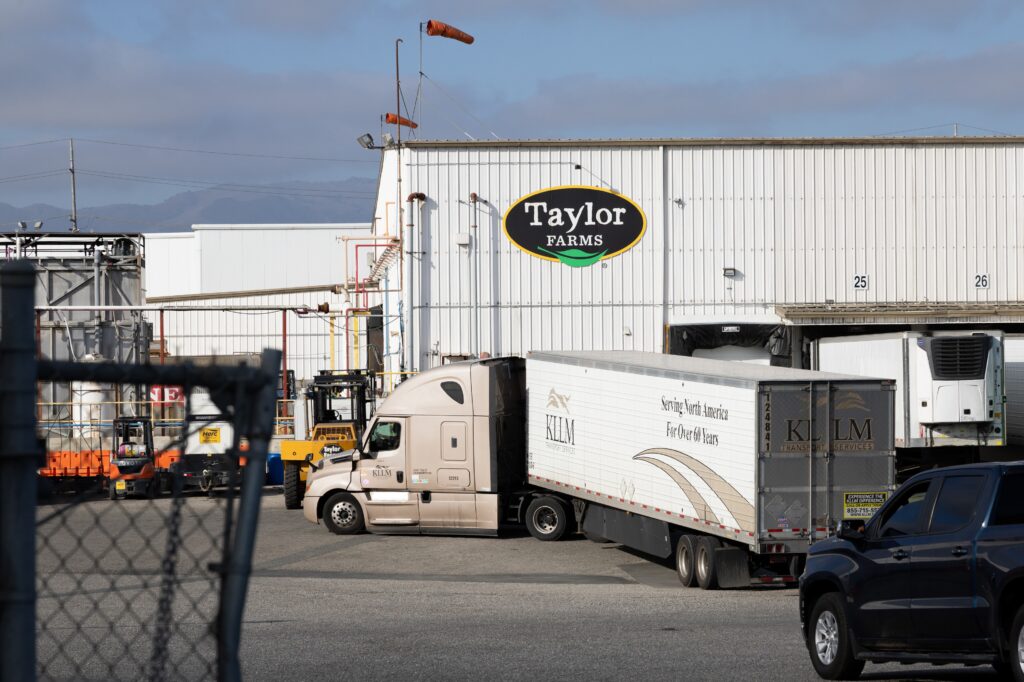
The Food and Drug Administration closed its investigation Friday into the largest known cyclosporiasis outbreak in U.S. history, saying investigators found the parasite in the environment where implicated lettuce was grown in Mexico and where it was processed by Taylor Farms de Mexico. But the agency said it could not determine how the contamination occurred.
The outbreak linked to shredded iceberg lettuce from Taylor Farms de Mexico sickened 12,883 people in 21 states, hospitalized at least 570 and was associated with two deaths in Michigan, federal authorities have said. It was the largest part of an extraordinary surge of cyclosporiasis this past summer and prompted consumers in some of the hardest-hit areas to avoid lettuce and other greens for weeks.
The FDA said investigators found the parasite in two environmental samples collected in Mexico: one from a wastewater tank at the Taylor Farms de Mexico processing facility and another from a drainage ditch of a grower of iceberg lettuce identified through the agency’s traceback investigation. The FDA did not say when the samples were taken. A Taylor Fresh Foods spokesperson said the grower is no longer part of its suppliers.
The findings provide the strongest physical evidence yet supporting the U.S. government’s conclusion that shredded iceberg lettuce from Taylor Farms de Mexico was responsible for the massive outbreak.
“While there is currently not enough evidence to conclusively determine how contamination occurred in this outbreak, the positive samples show that Cyclospora was present in the environment where lettuce was grown and processed,” the FDA wrote in its notice closing the investigation. “This adds to the strong epidemiological data and traceback convergence supporting the link between this outbreak and recalled shredded iceberg lettuce from Taylor Farms de Mexico.”
The FDA said scientists are still comparing the genetic analysis from those samples with genetic information from people who became ill.
A spokesperson for Taylor Fresh Foods said the Taylor Farms de Mexico facility remains closed as the company works with its research team to “implement enhanced safety protocols from the field.”
“The sample FDA referenced came from discharged waste and sewer water outside of our processing facility,” the statement said. “As FDA noted in its report, there is currently not enough evidence to conclusively determine how contamination occurred or how results for these samples relate to ongoing genotyping of clinical specimens.”
The company added: “We remain concerned for the people and families impacted by this outbreak. Millions of families rely on the safety of Taylor Farms produce and we take that responsibility seriously. We know trust is earned by what we do, and we will continue to learn, improve and take action to keep our food fresh and safe.”
Susan Mayne, a former director of the FDA’s center on food safety that oversees outbreak investigations, said the finding that two samples of water tested positive for the parasite is important.
“Finding the parasite in water months after the initial contamination event occurred highlights the importance of regular testing of water from the agricultural and processing site,” she wrote in an email.
But knowing the pathogen is in agricultural water “begs the question how to mitigate,” she wrote. “Research aimed at finding ways to treat ag water must be a priority, as has been done with FDA and [the Environmental Protection Agency] registering a treatment for bacteria in agricultural water.”
Cyclospora is a microscopic parasite spread when food or water becomes contaminated with human feces. It can cause severe diarrhea, cramping, fatigue and weight loss, and symptoms can persist for weeks or longer without treatment.
Cyclospora is one of the hardest foodborne pathogens to trace to its source and is hard to detect. There’s a lag between when people consume the parasite and when symptoms appear, further complicating the effort.
There were multiple outbreaks this summer, resulting in nearly 20,000 illnesses nationwide. In other parts of the country, authorities were looking at parsley and cilantro as possible culprits in smaller outbreaks, but federal investigators have not identified the sources.
The lettuce outbreak emerged in early summer, initially with thousands of illnesses concentrated in Michigan and nearby states. Investigators eventually traced shredded iceberg lettuce served at Taco Bell restaurants to Taylor Farms de Mexico. On July 17, the company recalled iceberg lettuce sourced from central Mexico.
At the peak of the outbreak, before the recall, more than 1,000 infections occurred in a single day, according to the Centers for Disease Control and Prevention, which said the outbreak was over Sept. 11.
Federal records showed that recalled lettuce went far beyond Taco Bell to major restaurant, retail and food service operations in more than 30 states. FDA enforcement records show recalled products were packaged for nine food service and retail operations. They show 236,192 cases of products sold in dozens of configurations ranging from bags of shredded and chopped iceberg lettuce to salad mixes that combined iceberg with romaine, carrots and red cabbage. Some were sold under Taylor Farms or food service brands, while others were packaged for particular customers.
At least 3.1 million pounds of lettuce linked to the farm have been recalled, compared with the largest previous cyclospora recall of nearly 31,000 pounds of parsley in September 2025, according to a Washington Post analysis of FDA enforcement data.
FDA investigators did not arrive in Mexico until nearly a month after publicly linking the outbreak to Taylor Farms, a delay criticized at the time by some former FDA officials and food-safety experts, who said evidence about the source of contamination can disappear or change with time.
The FDA said it conducted on-site inspections and sample collection at multiple iceberg lettuce growers and the processing facility in Mexico, in coordination with Mexican officials.
Although the FDA has formally closed the outbreak investigation, the agency said its work will continue. Before the 2027 growing season, the agency said it also plans additional prevention efforts focused on potential sources of contamination, including agricultural water, wastewater and worker hygiene.
Mayne said she would want to see more details about what products, how many samples, and when to initiate surveillance sampling. She also suggested that the FDA consider placing a produce safety expert in Mexico to avoid delays in getting the FDA on-site and consider testing of lettuce before it is allowed to be imported across the border next summer.
The post FDA found cyclospora at Taylor Farms Mexico site and where lettuce was grown appeared first on Washington Post.