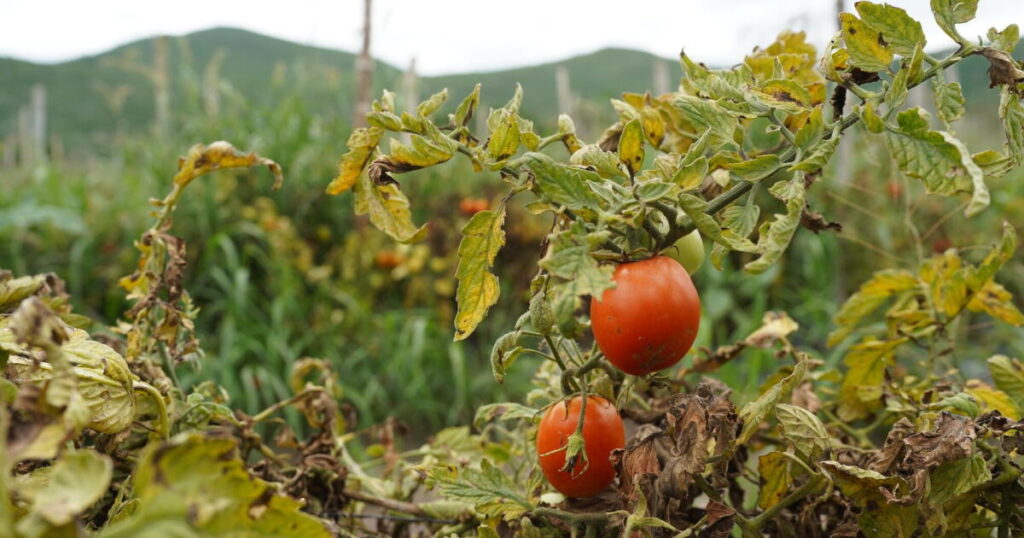
From seaweed to sirloin and tomatoes to corn, grocery items around the world are getting more expensive as climate change turns temporary weather-related price spikes into a more persistent driver of inflation, a new study shows.
Analysts at Zero Carbon Analytics, an international research firm, mapped food price spikes between 2022 and 2026, tracing them to extreme weather events they say are tied to climate change.
So far this year, they’ve connected all but one of the price jumps they documented to unprecedented temperatures, drought or rainfall, meaning the events were more extreme than any similar instance in the historical climate record. The lone exception was a winter storm that sent tomato prices soaring about 40% but wasn’t made worse by climate change.
The findings are part of the growing body of research into how climate change is reshaping inflation, a phenomenon some economists dub “climateflation.”
“Climateflation represents a permanent rise in everyday living costs driven by fossil fuel dependency and extreme weather destruction, locking in persistent inflation that strains household budgets worldwide,” Joanne Bentley-McKune, a climate scientist and lead author of the Zero Carbon Analytics briefing, said in a statement.
Broadly, 2026 has proven a difficult year for global growers. In addition to geopolitical tensions that have upended critical trade corridors in the Mideast and the Black Sea, sending input costs soaring, extreme weather has ravaged harvests and already begun to threaten the planting window for next year’s crop. A historically severe “super” El Niño is poised to be at the forefront of risks to global food supplies into 2027.
Prices of key crop staples, including wheat, corn, cocoa and sugar, have already climbed this year, helping push the United Nations’ food-commodity index to an almost four-year high in August.
“Even countries self-sufficient in staple commodities could be hit by inflation as local yields fail and El Niño disrupts global production and market prices,” the authors of the report said.
Here are a few of the price increases they identified using a method developed by researchers at the Barcelona Supercomputing Center and the European Central Bank.
Scorched French veggies
Various pockets of Europe saw their most sweltering summer ever. Temperatures surpassed 44°C in southwest France, while the UK recorded its hottest June day in history.
Scientists at World Weather Attribution found that human-caused climate change made the soil drought behind much of the crop damage about five times more likely in western Europe and 11 times more likely in eastern Europe.
The conditions ravaged farms across France, by far the EU’s biggest agricultural producer, with corn among the hardest hit. The country is now poised for its smallest corn harvest since at least 1980. Prices have climbed 16% for consumers. But the repercussions extend well beyond the dinner table: Corn is a crucial ingredient in animal feed, meaning chickens, cows and pigs may all become more expensive to raise.
The price jumps don’t stop there. Courgette prices have soared 32% year-on-year, closely followed by tomatoes, up 31%. Green beans are nearly a quarter more expensive.
Dry steaks
American beef prices, among the country’s most politically sensitive, rose to a record in April as the cattle herd shrank to its smallest in 75 years, a decline partly linked to drought and other weather pressures — and also to a deadly, flesh-eating parasite known as New World screwworm.
The U.S. recorded its hottest March on record in 2026, stripping the Mountain West states of their winter snowpack. Record heat arrived during the final days of winter, parching the region and accelerating water shortages well ahead of summer.
It was a similar story in the Great Plains. With grass scorched by record heat and mountain snowpack failing to deliver its usual melt, American beef prices climbed almost 15% more than last year, with many ranchers left culling herds early.
Pricey tomatoes
Tomato growers on both sides of the Atlantic faced different but potent weather events.
Spain started its year with the wettest January and February ever — in the Ávila–Madrid–Toledo region in the center of the country, rainfall was 175% greater than usual, flooding fields and oversaturating crops, including tomatoes. During this past summer, parts of the country were ravaged by wildfires, record-breaking temperatures and a severe drought.
Prices for tomatoes, the key ingredient in many national dishes, including pan con tomate, gazpacho and salsa brava, rose 11% year-on-year.
In the US, February’s Winter Storm Gianna brought unusually cold temperatures and snow as far south as Florida, conditions seen roughly once a decade, though not unprecedented. The freeze was particularly damaging to tomatoes, which thrive in the state’s typically warmer conditions. As a result, prices gained 40% between January and April of this year.
Asian heat
The world’s seas experienced their hottest surface temperatures on record in July, driving various types of marine species northwards into cooler waters. The higher temperatures threatened a key ingredient in various Asian dishes: seaweed.
In October 2025, the surface of the sea in areas around Japan recorded its highest on record — difficult conditions for Nori, which thrives best in water temperatures between 5 and 20 degrees Celsius. By March, prices of the key sushi ingredient had risen by about 20%.
Worrying trends
Price spikes even in a small number of foods can be enough to drive broader inflation higher, according to a separate analysis by the Energy & Climate Intelligence Unit (ECIU). The researchers found that it was a small group of foods, including butter, beef, milk, coffee and chocolate, that accounted for 30% to 40% of food price inflation in the UK, for example.
Extreme weather conditions are also upending the production and availability of key, healthy diet staples — fruit, vegetables and protein — as opposed to processed, calorie-dense foods. That in turn means that climate disruptions threaten the quality, variety and nutrition of people’s diets, according to the authors of the Zero Carbon Analytics report.
By 2035, they say projected warming is expected to add up to 3.23 percentage points annually to food inflation, and 1.18 percentage points to headline inflation, a figure many countries aim to keep at around 2%.
Still, persistent, climate-driven supply crises are causing a rethink of traditional economic policy. “Interest rate hikes cannot fix declining crop yields or protect vulnerable households,” the analysts said.
Thornber writes for Bloomberg.
The post Beef, tomatoes and seaweed are getting pricier as extreme weather hits harvests appeared first on Los Angeles Times.