Christa Pike, a Tennessee woman who was set to be executed on Wednesday, was still alive that night after two syringes of lethal drugs had been administered, according to her lawyers.
Ms. Pike, who was convicted of the 1995 murder of a classmate, is the only woman on death row in Tennessee. The apparent failure of her capital punishment, which would have made her the first woman to be executed in the state in more than 200 years, came after a lengthy delay earlier in the day.
Here’s what to know:
The case
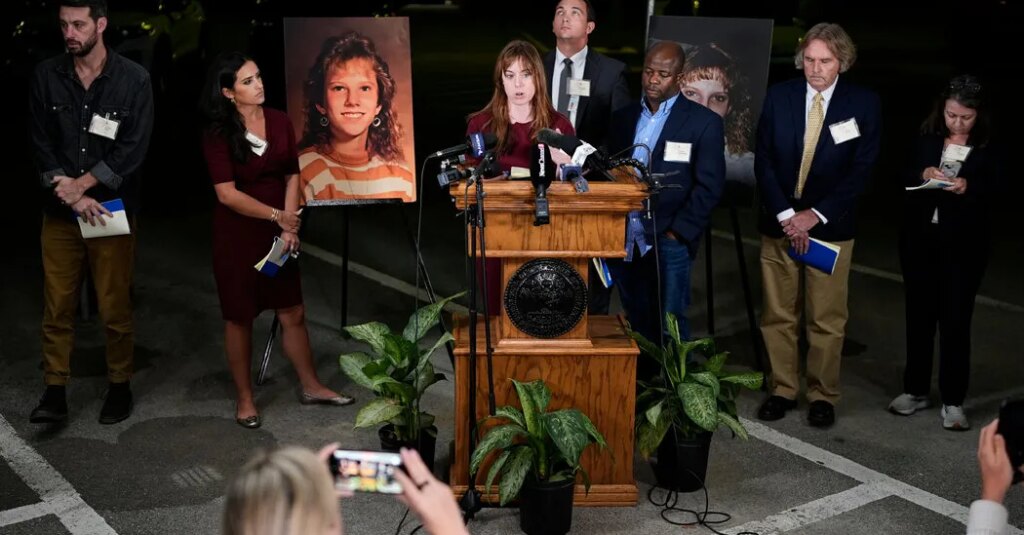
In 1996, a jury found Ms. Pike guilty of torturing and murdering a classmate, Colleen Slemmer, in an attack carried out with her boyfriend and a friend. They slashed at Ms. Slemmer with a box cutter, carved a pentagram into her chest and removed a piece of her skull.
Only Ms. Pike, who was 18 at the time of the killing, received the death penalty. Her boyfriend, Tadaryl Shipp, was 17 at the time of the crime and was sentenced to life in prison as he was too young to be eligible for capital punishment in Tennessee.
Ms. Pike, now 50, does not deny her guilt.
“I run through this execution every day in my heart,” she told The New York Times earlier in September. “Whatever happens on Sept. 30, this will not be my hell anymore.”
Some experts have questioned whether Ms. Pike would be sentenced the same way if she were tried today. Her lawyers had argued that Ms. Pike’s initial legal defense did not adequately present her history of child sexual abuse and neglect.
She was later diagnosed with bipolar disorder and post-traumatic stress disorder, which her lawyers say contributed to her mental state during the murder. She was also just above the legal threshold to be considered for the death penalty.
“Christa Pike would likely not be sentenced to death if she were tried today,” said Robin Maher, the executive director of the Death Penalty Information Center. “A lot has changed.”
Ms. Slemmer’s family has remained firmly in support of Ms. Pike’s sentence. May Martinez, Ms. Slemmer’s mother, is adamant that Ms. Pike could not atone for the murder. “Nobody could ever, ever convince me she’s changed,” Ms. Martinez told The Times.
The legal battle
Ms. Pike’s lawyers have in recent weeks tried to stop the execution, arguing that she could support other women in prison and that her crime could not be separated from her traumatic childhood.
They also questioned whether medical staff can administer lethal drugs without causing excessive pain. In an appeal to the Supreme Court to pause the execution, Ms. Pike’s lawyers argued that the execution was causing her “unnecessary agony” and that it violated the Eighth Amendment’s ban on cruel and unusual punishment.
Gov. Bill Lee of Tennessee, a Republican, said early Monday afternoon that he would not intervene to allow Ms. Pike to serve the remainder of her life in prison.
On Wednesday, a federal appeals court briefly paused the execution and said more time was needed to consider the case. After a delay of about nine hours, the Supreme Court allowed the execution to proceed, and the state raced to go ahead with the execution before the day ended and to avoid having to reschedule.
The three liberal justices on the Supreme Court dissented from the order allowing the execution. Justice Sonia Sotomayor wrote that the majority “unnecessarily prevents” the appeals court from fully considering Ms. Pike’s argument.
The botched execution
It was not immediately clear what went wrong with the administration of the lethal drugs on Wednesday.
Ms. Pike’s lawyers said that while two syringes of pentobarbital had been administered, she had not lost consciousness. She still had a heartbeat, they said, and was audibly snoring.
Reporters who witnessed the execution attempt described Ms. Pike as somewhat alert. Although curtains were closed for nearly an hour, reporters said that they could still hear breathing and steady snoring throughout that time.
The Tennessee Department of Correction later said Ms. Pike had been transported to an off-site medical facility.
This was the second time this year that Tennessee had struggled to administer the lethal drugs. In May, the state called off one of four planned executions because medical staff could not find a vein to administer lethal drugs.
Emily Cochrane and Ann E. Marimow contributed reporting.
The post What to Know About the Execution Attempt of Christa Pike appeared first on New York Times.