The Kremlin plans to sharply increase spending on the war in Ukraine, even at the cost of ballooning debt, cuts to health care and other social programs, and higher taxes, according to a draft 2027 budget made public on Wednesday.
Russia and Ukraine are engaged in a war of attrition that, beyond deadly fighting on the front lines, includes an intense battle to cripple each other’s economies. As the war approaches its fifth anniversary, both sides are finding it increasingly difficult to finance the conflict.
Ukraine has targeted Russian fuel refineries, causing lines at gas stations. As the attacks cut Russian oil output, Moscow has been unable to fully take advantage of an increase in global oil prices caused by the war in Iran. Kyiv has also been striking Russian e-commerce giants, disrupting supply chains for online retailers and wiping out inventories for many merchants.
In Ukraine, officials have said that Russia is waging “total war” against the country with assaults against ports, grocery and pharmaceutical warehouses, data centers and other targets. Relentless air raids on major cities like Kyiv, the capital, have slowed economic activity.
Judging by next year’s Russian budget, President Vladimir V. Putin is not planning to stop.
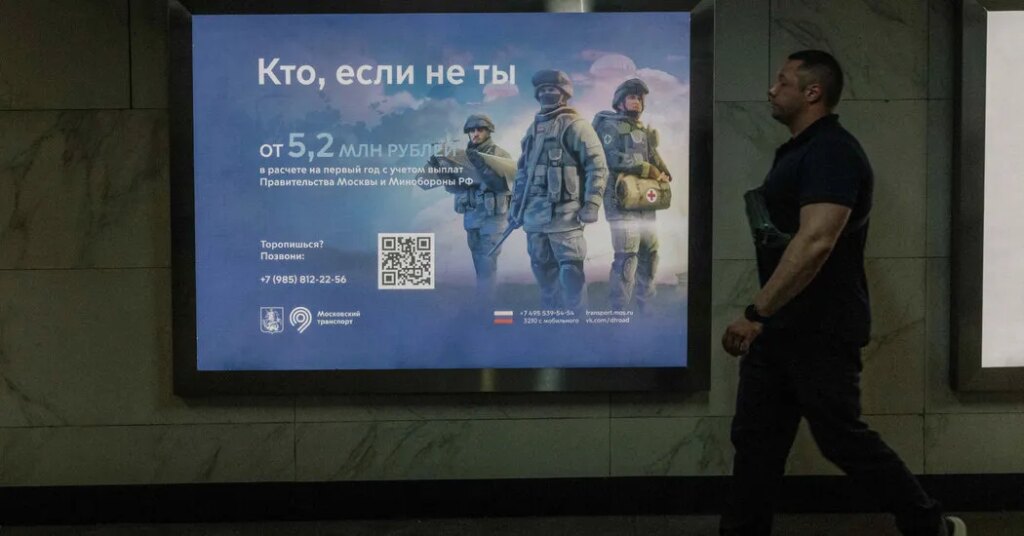
Russia intends to spend more than $200 billion on its military in 2027, an increase of more than a quarter from the sum the last budget initially provided for 2026. The new figure represents more than a third of overall federal spending planned next year.
Speaking on Wednesday at the opening session of the State Duma, the lower house of Russia’s Parliament, Mr. Putin exuded confidence.
Referring to Ukraine’s need to seek financial help from its European allies, he said that “Russia cannot go around the world, humiliatingly begging for handouts with an outstretched hand.”
“First, because, as I have said, it is humiliating,” he said. “Second, we know full well that no one is going to give us handouts. And third, and most important, we do not need them. Russia’s financial system and economy are performing well.”
The numbers tell a less rosy story.
A year ago, the Russian government projected a slight decrease in military spending for 2026 and 2027. But with peace talks foundering and the war only escalating in the past year, the Kremlin now plans to trim spending on social programs, including child and family allowances, in order to increase expenditures on the war. Such social spending will fall by 7 percent.
Allocations for education will be cut by 6 percent, including funds for new university campus construction, while spending on health care, such as cancer treatment infrastructure, will be reduced by nearly 7 percent, according to the draft budget.
Russia will also expand its national debt, with the budget deficit exceeding $60 billion next year. Though Mr. Putin often boasts about Russia’s relatively low debt — currently around 20 percent of the country’s gross domestic product — Western sanctions have forced the government to borrow almost entirely domestically, primarily from state banks at bond interest rates sometimes exceeding 15 percent.
According to the draft budget, Russia’s debt-servicing costs next year will more than double in real terms from prewar levels, surpassing expenditures on health care, education and housing combined.
Higher borrowing and expenditures mean higher interest rates.
To help offset the strain, Russia will raise taxes again. After increasing value-added taxes and levies on small businesses, the Russian finance minister announced in late September that the government would raise taxes on bank deposit interest, dividends and asset sales, including real estate.
That is expected to bring in an additional $4.6 billion. The government has also proposed a new windfall tax on mining companies.
Ukraine’s situation is even more difficult. Prime Minister Serhiy Koretsky said on Wednesday that the Ukrainian government “has entered a mode of maximum austerity and postponed all nonessential expenditures.” On Sunday, Mr. Koretsky said that Ukraine faced a $27 billion shortfall in its defense budget this year.
In the spring, the European Union finalized a loan to Ukraine of more than $100 billion. Within a few months, Kyiv said more was needed.
The post Russia to Sharply Increase War Spending and Cut to Social Programs appeared first on New York Times.