For months, Brazil’s presidential race has been consumed by concerns over U.S. meddling, a scandal embroiling the Supreme Court and the political fallout from a multibillion-dollar banking corruption investigation.
But for many Brazilians, the most pressing issue as they prepare to vote on Sunday is a crisis much closer to home: crushing personal debt.
More than 80 percent of Brazilian families are in debt, a historic high for the country, according to the National Confederation of Commerce, a retail group.
Brazil also has the highest benchmark interest rate among 40 major economies, and families spend nearly 30 percent of their income on debt payments, according to Brazil’s central bank. In the United States, that figure is about 11 percent.
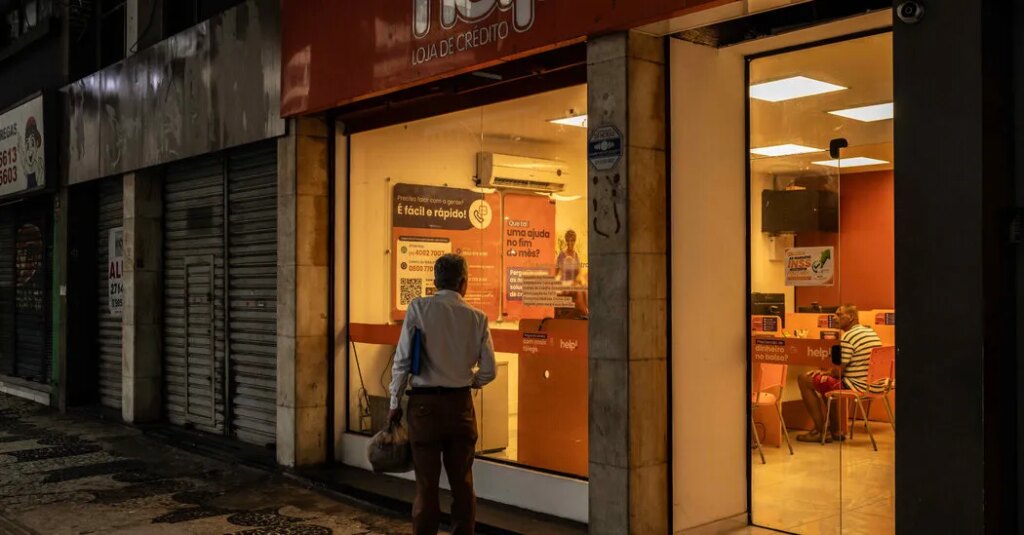
Unlike in the United States, where most household debt is driven by mortgages, in Brazil debt is fueled by credit cards, payroll loans and retail store installment plans carrying among the highest interest rates in the world.
President Luiz Inácio Lula da Silva, a leftist who is locked in a tight race against a right-wing opponent, Flávio Bolsonaro, has seized on this concern in the closing days of the campaign. On Friday, Mr. Lula signed an order banning online gambling, which was legalized in 2018 and has supercharged the household debt crisis.
Brazil is the first country, experts say, to ban online gambling after introducing and regulating the industry.
Critics, including Mr. Bolsonaro, dismissed the move as an 11th-hour electoral gambit that would barely dent the debt problem. But others praised the order as a necessary move against an industry that has destroyed families, weakened consumer spending and burdened the public health system with the consequences of gambling addictions.
“Brazil is heading toward its own version of the 2008 financial crisis,” said Maria Paula Bertran, a professor at the University of São Paulo. “People used to be poor, but now they are poor and indebted.”
Economists and banking executives point to various factors fueling household debt, including easier access to credit, much of it packaged by banks that charge extraordinarily high interest rates. Brazil, in fact, has among the highest revolving credit-card interest rates in the world, with rates topping 400 percent per year for people who fail to make even one monthly payment.
“Credit is like medicine,” said Lauro Gonzalez, a finance and debt professor at Fundação Getulio Vargas, a Brazilian research institute. “No one is against it, but in the wrong dose, it can become poison.”
Meio/Ideia, a polling firm, found in a survey published in April that about 75 percent of respondents cited cost of living and debt as decisive issues in their vote for president.
A delivery driver in Rio de Janeiro said he had accumulated $8,000 in debt from tuition, gambling, credit cards and loans that he now regretted.
He and his wife, he said, moved in with his mother to try to make a dent. The man, who said he earned $700 a month, requested anonymity because he did not want his extended family to learn of his financial problems.
Poor families like his, he said, have never been exposed to financial literary classes and he did not realize how risky credit could be.
The growth of Brazil’s online gambling sector, one of the five largest betting markets in the world, has only exacerbated the debt problem. Brazilians lost about $7 billion to licensed betting sites last year, compared with $4 billion in 2024.
Betting platforms — and their advertising — have been ubiquitous, sponsoring carnival parades, television channels, Wi-Fi on public buses, most top-tier soccer clubs and even parks.
The gambling industry’s stranglehold on Brazilian society was no more evident than during the recent World Cup, often seeming to overshadow the tournament itself.
When the soccer icon Neymar posted a video after his selection to Brazil’s World Cup squad, he promptly marked the moment on social media by urging fans to visit a betting platform that sponsors him.
During soccer match broadcasts, betting QR codes were a fixture, with commentators offered betting tips — nevermind that 60 percent of their picks were wrong, according to one report.
The use of a government digital tool allowing Brazilians to irreversibly block themselves from getting access to gambling sites spiked during the World Cup. Lower-income households in Brazil gambled on average 196 percent of their monthly income during the tournament, according to Klavi, a financial technology analytics firm.
An aggravating debt factor is the longstanding Brazilian “buy now, pay later” purchases, which online marketplaces push even to those who don’t have credit cards.
And since the coronavirus pandemic, tens of millions of poor Brazilians have gotten bank accounts for the first time, lured by easy access to credit from banks or loosely regulated financial apps.
For millions of Brazilians who rely on informal incomes — as delivery drivers or food vendors on the street — a single missed payment can trap them in exorbitant payments many cannot make.
The high interest rates burdening many Brazilians, including from credit cards and payrolls loans, Ms. Bertran said, “would make an American loan shark blush.”
Facing financial headwinds, many have resorted to betting apps, experts say, hoping to earn quick cash to pay off loans, only to sink deeper into debt.
Gamblers Anonymous sessions across the country have swelled with desperate members. The largest public hospital in São Paulo offers a clinic dedicated to compulsive gambling, where today 67 percent of its patients are online gambling addicts, compared with 1 percent in 2020.
“If gambling were a virus, we could call it a pandemic,” said Dr. Hermano Tavares, a psychiatrist who runs the clinic.
Since the beginning of Mr. Lula’s term in 2023, he has struggled to address household debt, which has worsened even as other economic indicators have improved, including wages and unemployment. Campaign officials fear the debt crisis will obscure the positive financial signs at the ballot box.
Mr. Lula’s administration has launched various debt-relief programs, capped revolving credit interest rates and introduced regulations, including requiring betting platforms to pay taxes.
The ban on online gambling was part of his latest and most drastic salvo.
“Either we put an end to this, or it will end Brazil,” Mr. Lula said. “It’s the poor who bet, who get sick, who kill themselves because they’re in debt.”
The measure took effect immediately and lasts up to 120 days, after which Congress must vote to make it law or it expires.
Critics say the ban will lead to the loss of several billion in annual tax revenue. But others say financial losses would be balanced by other social and economic gains. A Brazilian health policy institute estimates that problems caused by gambling, including addiction treatment, job and housing losses and incarceration from gambling-related crimes, cost the nation $7 billion per year.
Online betting companies reacted angrily to the ban.
The move “annihilates constitutional principles such as free enterprise,” said the National Association of Games and Lotteries, an industry group. A coalition of prominent football clubs even warned that lost revenue from sponsorship would kill the national sport, an outcome experts say is unlikely.
Mr. Lula said clubs had no right to survive at the expense of their impoverished fans.
Mr. Bolsonaro criticized the ban as “populist, hypocritical electioneering” designed to lift Mr. Lula’s standing with voters. He said he did not support online casinos, but opposed a ban on sports betting. He blamed Mr. Lula for allowing the debt crisis to spin out of control.
Still, Mr. Lula inherited an unregulated gambling industry from his predecessor, Mr. Bolsonaro’s father, Jair Bolsonaro.
While Mr. Lula’s ban has set off a political firestorm in the waning days of the campaign, it may sway some voters.
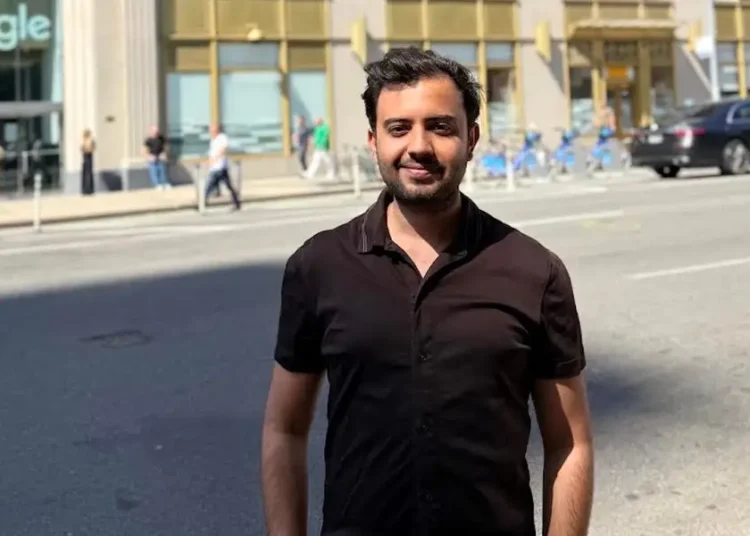
Luighor Bittencourt, 33, who once served as treasurer for his hometown’s chapter of Mr. Bolsonaro’s Liberal Party, said he had accrued $400,000 in debt within a year after starting to bet on soccer. He sold his house and his businesses, he said, and after defaulting on more than a dozen credit cards, he twice tried to take his life.
Now in recovery and an activist against online betting, he said he recently met with Mr. Lula as he was weighing a ban.
“I don’t think I’ve ever felt as heard as I did talking to him,” said Mr. Bittencourt, who celebrated the ban with a fireworks display in front of his house.
Isabela Cruz contributed reporting from Rio de Janeiro.
The post Online Gambling and Crushing Debt Are Transforming Brazil appeared first on New York Times.