The Justice Department filed judicial misconduct complaints against all but one of Minnesota’s active federal judges Wednesday, calling recent media interviews they gave discussing the impact of the Trump administration’s immigration enforcement crackdown in their state evidence of partisan bias and a “threat to the rule of law.”
The complaint, filed with the U.S. Court of Appeals for the 8th Circuit, based in St. Louis, targets judges appointed in both Democrat and Republican presidencies, including at least one whom President Donald Trump appointed during his first term. Officials also called for the judges to recuse themselves from any pending or future litigation involving the Department of Homeland Security.
One of the judges immediately defended his comments, saying it was “well within the ethical rules” for the jurists to speak out.
The move marks the latest escalation in a conflict that has dominated the administration’s relationship with a coequal branch of government since the start of Trump’s second term. The president and others have repeatedly verbally attacked judges who have ruled against them or halted aspects of the White House’s agenda, prompting rare public statements from Chief Justice John G. Roberts Jr., who recently said such personal invective “has got to stop.”
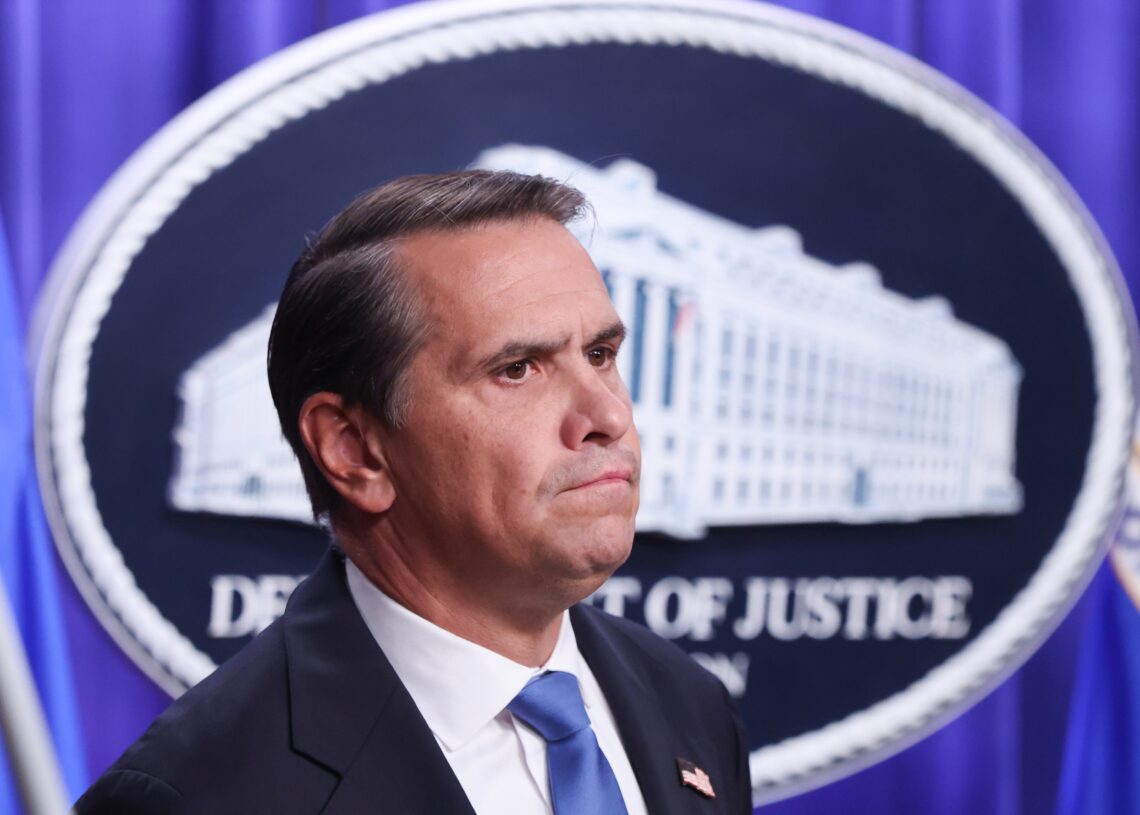
Outlining the Justice Department’s complaint against the Minnesota’s judges at a news conference Wednesday, Attorney General Todd Blanche pointed to a Sept. 17 article in the New York Times, in which seven members of the state’s federal bench gave rare interviews on the impact of last winter’s immigration crackdown, known as Operation Metro Surge.
The operation inundated Minnesota’s courthouses with lawsuits from migrants alleging that they had been unlawfully detained and cases charging protesters with crimes based on evidence that, in some cases, courts later found to be faulty. Judges accused administration officials of ignoring court orders in dozens of cases, with one saying the strain the administration’s policies had put on the courts constituted “a grave threat to the rule of law.”
Blanche called the judges’ participation in that story a violation of the judicial code of conduct, alleging that their statements in the story were overtly political and involved cases that, in some instances, still remained before the courts.
Two of the judges — John R. Tunheim, an appointee of President Bill Clinton, and Patrick J. Schiltz, an appointee of President George W. Bush — were quoted by name in the article discussing their views on the surge.
Schiltz, who served as the district’s chief judge during that immigration crackdown before taking a form of semi-retirement this summer, complained of what he described as widespread noncompliance of judicial orders by federal agencies during the crackdown. He told the Times he believed many of those violations were inadvertent, the result of incompetence and a lack of planning to ensure adequate resources ahead of the surge.
Tunheim was quoted as saying many of those detained appeared not to pose any immediate threat. “They weren’t arresting, in my view, people who were dangerous criminals on the streets,” he said.
Blanche seized on those remarks Wednesday.
“There’s an obvious bias against the Department of Homeland Security and immigration authorities in Minnesota,” Blanche said. “These judges are commenting on pending cases and making political statements on matters which have been before them.”
A third judge, Trump appointee Nancy E. Brasel, was also quoted in the story defending her and her colleagues’ decision to speak publicly.
“We are allowed to speak out about judicial independence. And so we should in order to keep it,” she told the Times in the Sept. 17 story. The news outlet said it also spoke to four other judges from the district as part of its story.
Schiltz, in a statement Wednesday, echoed those remarks. Judicial ethics codes bar judges from engaging in political activity or speaking publicly about cases before them. However, they are permitted to publicly address matters of judicial independence or the integrity of the courts.
“In February of this year, the Committee on Codes of Conduct issued an advisory opinion to emphasize that federal judges may ‘speak and write on core judiciary matters such as advocacy for the rule of law and judicial independence,’” Schiltz said. “That is exactly what I did.”
Tunheim and Brasel did not immediately respond to requests for comment on the Justice Department complaint Wednesday afternoon.
A Times spokesperson said in a statement that the news outlet’s reporting “highlights the importance of public officials stepping up to shed light on governmental actions.”
“Seeking to punish or silence those who speak up to journalists about any administration’s agenda undercuts democratic accountability and the public’s right to know,” the statement read.
The Justice Department filing, addressed to the 8th Circuit’s chief judge, Steven Colloton, a Bush appointee, was signed by acting deputy attorney general Trent McCotter and Stanley Woodward, the department’s No. 3 official.
Blanche on Wednesday acknowledged the unusual nature of the department’s request.
“This is not something that the department does typically,” he said. “We took great care in determining this was the appropriate course of action.”
Though Blanche maintained that the department has “total respect for the judiciary” and the concept of judicial independence, he has not shied away from openly criticizing courts that rule against the administration.
At a conservative legal event last year, Blanche, who was then the deputy attorney general, described the department as being “at war” with “rogue activist judges” who have restrained key planks of Trump’s agenda.
Acknowledging those earlier comments, Blanche maintained Wednesday that he, as attorney general, is not restricted in his public statements in the same way that judges are given the strict rules around their public conduct.
“When you have judges who blatantly don’t follow the law, knowing that sometimes the court of appeals or the Supreme Court is going to reverse them,” he said, “I should complain about that publicly.”
Last year, department officials filed similar ethics complaints against two federal judges in D.C., James E. Boasberg and Ana Reyes, over comments they made while hearing challenges to administration actions. Both complaints have since been dismissed.
The department also sued the entire federal bench in Maryland, challenging an order in that district that slowed the administration’s ability to quickly remove immigrants challenging their deportations. That lawsuit has also been thrown out.
correctionAn earlier version of this article misspelled the name of Judge Patrick J. Schiltz.
The post DOJ files complaint against Minn. judges for criticizing immigration surge appeared first on Washington Post.