As fresh details emerged on Thursday about Cornell University’s internal investigation into allegations of a 2024 campus sexual assault, some students, alumni and victims’ advocates called into question the handling of the case by university and law enforcement authorities.
“I’m reading through all of these things, and all of the steps she’s taken to report this, and my thought is, Has the system failed yet another survivor?” said Alet Haywood, director of the Domestic Violence Law Unit at the New York Legal Assistance Group, which represents sexual violence victims in court.
The new details are contained in more than 1,000 pages of documents compiled for Cornell’s Title IX administrative hearing process that were obtained by The New York Times. They describe the accuser, who is identified in court filings as Jane Doe, gradually concluding over the course of several weeks that what had happened between her and seven young men at a drug- and alcohol-fueled party at the Chi Phi fraternity house was not only not OK, but a crime.
The documents include the 120-page transcript of Jane Doe’s hourslong interview, conducted nearly a month after the party, with a Cornell police investigator and an investigator from the university’s Title IX office, which ensures the school’s compliance with federal sex discrimination rules.
During the interview, she states, “I can say with 100 percent confidence I was raped” and, at another point, “There was really no escape.” Cornell summarized the interview in a six-page report to prosecutors that omitted the rape allegation.
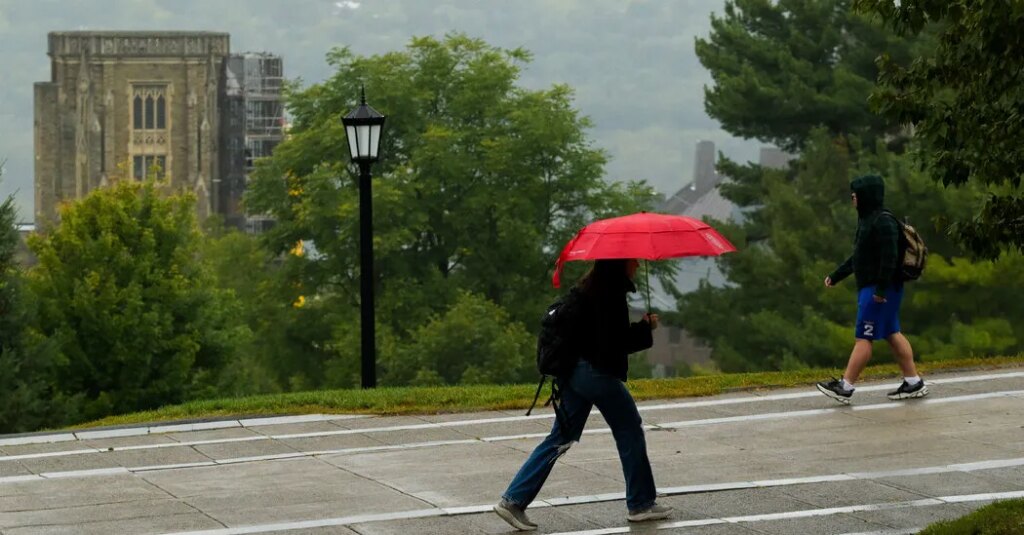
On Cornell’s campus in Ithaca, N.Y., on Thursday, Oliver Physioc-Fox, 19, a freshman, said the allegations had been a constant topic of conversation among friends and classmates. Nearly everyone he had spoken to, he said, was surprised that Cornell had not seemed to do more to discipline the accused, who the university said received a range of punishments, including suspensions and expulsions.
“One hundred percent of people I’ve talked to have been pretty disappointed and want a lot more from the administration,” he said. “I had a sense of security that wasn’t warranted.”
None of the accused men has been charged with a crime, and all have denied wrongdoing. Four said that they had consensual sexual contact at the party with the woman, and the others denied participating.
The Tompkins County district attorney’s office, which declined to pursue a criminal case in 2024, said this week that it was reopening its investigation into the episode after the men were named in a lawsuit filed by Jane Doe last month against the university, the Chi Phi fraternity, seven of its members and her sorority.
Cornell announced on Wednesday that it would hire outside lawyers to investigate her claims.
Ms. Haywood said that the fact that it had taken Jane Doe weeks to conclude that she had been raped, and that she initially exchanged friendly texts with some of the men she later accused of assaulting her, were normal responses to the shock of sexual assault.
“We know that it’s not uncommon for someone to experience something traumatic, something abusive, some form of assault, and still be in a position where they are engaging with the person who has harmed them, or they don’t immediately come to the conclusion that what they have experienced is a traumatic event or is something that would constitute a crime,” she said.
Sami Sage, a Cornell alumna who graduated in 2011 and helped start a women-run media company called Betches, said of Jane Doe’s delayed reaction to the assault, “In my mind, I can see exactly how the situation went down. All of this is explained by standard trauma responses.”
On Thursday, fallout from the accusations continued and spread beyond the campus. Representative Nancy Pelosi, Democrat of California, canceled a planned Oct. 15 event in New York City with the university’s Institute of Politics and Global Affairs because of concerns about Cornell’s response to the assault allegations, a person close to Ms. Pelosi said on Thursday. The cancellation was first reported by The Cornell Daily Sun, a student newspaper.
Another freshman walking through campus on Thursday, Ryan Medina, 18, said that he and some friends shared a sense, reading new developments about Jane Doe’s case, that more should have been done to discipline the men she accused.
“We thought the consequences would be different,” he said, adding that it was a relief to see that so many students shared the same perspective. “I have not met one person defending the action. Everybody, whether they are in Greek life or not, is against this.”
Ava Farkash, a senior, said the news of Jane Doe’s lawsuit unnerved some students who were on campus in 2024 and remember receiving the crime alert about the alleged assault.
“Reading the statement from Jane Doe, I was shocked the D.A. didn’t proceed with having a case,” Ms. Farkash said.
Ms. Farkash also said that students were growing increasingly concerned by the lack of information from university administrators, especially as members of the national news media blanket the campus.
“Cornell keeps saying, ‘We can’t disclose information,’” she said. “You have an entire student body incredibly frustrated.”
The post Cornell Documents Raise Questions About Handling of Rape Allegations appeared first on New York Times.