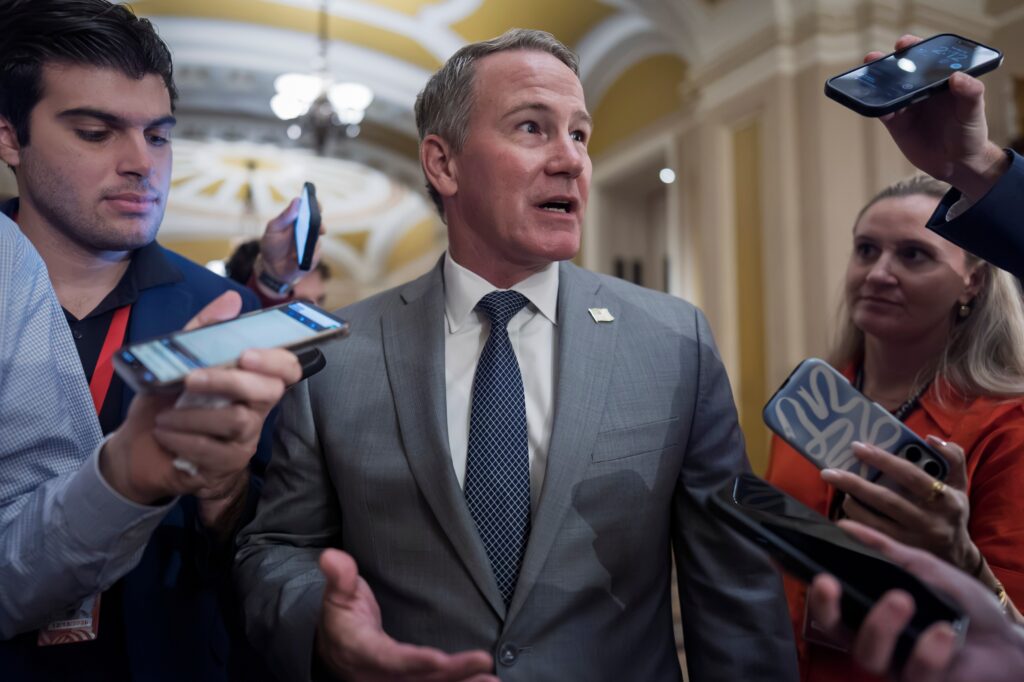
For the next month, members of Congress won’t be in D.C. making laws. Most lawmakers are instead back home campaigning for reelection.
Congress has left town until after November’s midterm elections. The Senate was the last to leave, having departed Wednesday. The House left two weeks earlier.
Republicans are at risk of losing control of both chambers of Congress and increasingly anxious about it. Voters have a low opinion of Congress these days anyway, say political strategists, but without legislating, it’s much harder for either side to seriously sway how voters feel.
“We’re on the edge of taking back the Senate,” Senate Minority Leader Chuck Schumer (D-New York) declared this week.
Here’s how Congress being effectively done until after the election shapes the midterms.
Get The 5-Minute Fix in your inbox
Republicans left without doing much on prices or data centers
Republicans certainly aren’t happy about high gas prices, health care costs, grocery costs and stubborn inflation. But they struggled to pass last-minute bills to do much about them before November’s midterm elections.
With the war in Iran ongoing, they didn’t suspend a federal gas tax to tick down prices, as some in the party advocated, and Senate Republicans tried and failed this week to pass a bill promoting the idea of data centers shouldering utility costs. (Democrats blocked it because the requirements were only voluntary.)
Republicans maintain they have a lot to campaign on around affordability: They passed a tax bill last year designed primarily to extend tax cuts from President Donald Trump’s first term. The legislation also cut taxes on tips and overtime.
Congress also passed a bill designed to make housing more available and less expensive. Trump is working, mostly through executive orders, to try to lower the prices of commonly used prescription drugs. Republicans in tough elections in New Jersey and New York can campaign on securing higher deductions for residents who pay high state and local taxes.
But that hasn’t seemed to translate to voters’ confidence. Polls suggest the electorate is downright angry at the Republican Party. Trump’s approval rating continues to drag down Republicans, and there’s evidence that key voter groups like White women and Latinos are turning away from the party. Democrats seem significantly more motivated to vote than Republicans.
“If you’re not worried, you’re living in a cave,” Sen. Jim Justice (R-West Virginia) told Semafor. “There’s no question that there’s people out there that are hurting.”
He and other Republicans warned that conservatives who can’t make ends meet might just not vote in November because there’s little to motivate them.
There won’t be a SAVE America Act
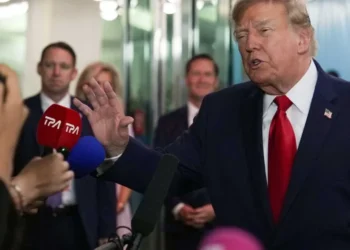
Trump has spent nearly a year trying to get Congress to pass a strict voter ID law that would also limit mail voting and require proof of citizenship to register to vote. But he has failed to change the way Americans vote, at least for these midterm elections.
A version of his Save America Act passed the House earlier this year. On their way out the door, Senate Republicans tried to pass legislation requiring a photo ID to vote. It was wrapped up in a piece of legislation to ban lawmakers from buying stocks. Democrats blocked that bill, too.
Democrats oppose strict, national standards for voter ID, arguing it makes it harder for people to vote. And they say the stock-buying ban doesn’t limit lawmakers from selling stocks, a potentially more lucrative aspect of insider trading.
There won’t be a $5,000 check if Republicans win
When Republicans gathered in Dallas last month to try to rally their voters for November, Trump sprung a controversial idea on them: a $5,000 payout to every American adult if Republicans retain control of Congress — “very much like a successful company will do a cash distribution to its shareholders,” he said.
It would take an act of Congress to approve sending out those checks, and Republican lawmakers pretty quickly recoiled from the idea. In addition to sounding to some election-law experts like a potentially illegal bribe, the idea, according to some estimates, would cost the U.S. government more than $1 trillion and contribute to inflation.
They left town without taking action on it, and lawmakers don’t seem inclined to act on it upon returning, even if Republicans keep both the House and Senate.
Amber Phillips writes The 5-Minute Fix newsletter, a quick analysis of the day’s biggest political news. Send her an email here, or ask a question that could be featured in an upcoming newsletter.
The post Congress just left town until after the midterm elections appeared first on Washington Post.