
“There is the everyday nastiness baked into reality shows that manipulate cast members into bad-mouthing and backstabbing each other, and then there is The Swan.” That’s how TIMEintroduced an indelible early aughts series in its list of the 50 most influential reality TV seasons ever, and there’s no mistaking it: The Fox show was as much of a sensation as it was a locus of controversy.
The Swan was premised on the kind of concept you’d expect from a Black Mirror episode: Women undergo extreme physical transformation to shed their identities as “ugly ducklings” and become beautiful swans, at least in accordance with conventional beauty standards. The first season, which premiered in 2004, averaged more than 9 million viewers an episode. Media critic Jennifer L. Pozner called it “the most sadistic reality series” in her book Reality Bites Back. The show received countless extremely negative reviews received during its run, too. Gone Girl author Gillian Flynn, then a critic for Entertainment Weekly, called it “a misogynistic mix of TV’s twin vices: commercialism and conformity.” All of this was perhaps a harbinger for it cancellation, after just two seasons.
More than two decades later, a new documentary from Erin Lee Carr (Britney vs Spears, Murdaugh: Death in the Family),The Swan: Behind the Mirror, is shining a new light on not just the reality series but its aftermath. As the doc arrives on Hulu and Disney+, Carr and two participants from both The Swan and Behind the Mirror, Season 1’s Kristy Garza and Season 2’s Kari Bravata, spoke to TIME about the most notorious reality show ever made.
How the Swans opened up
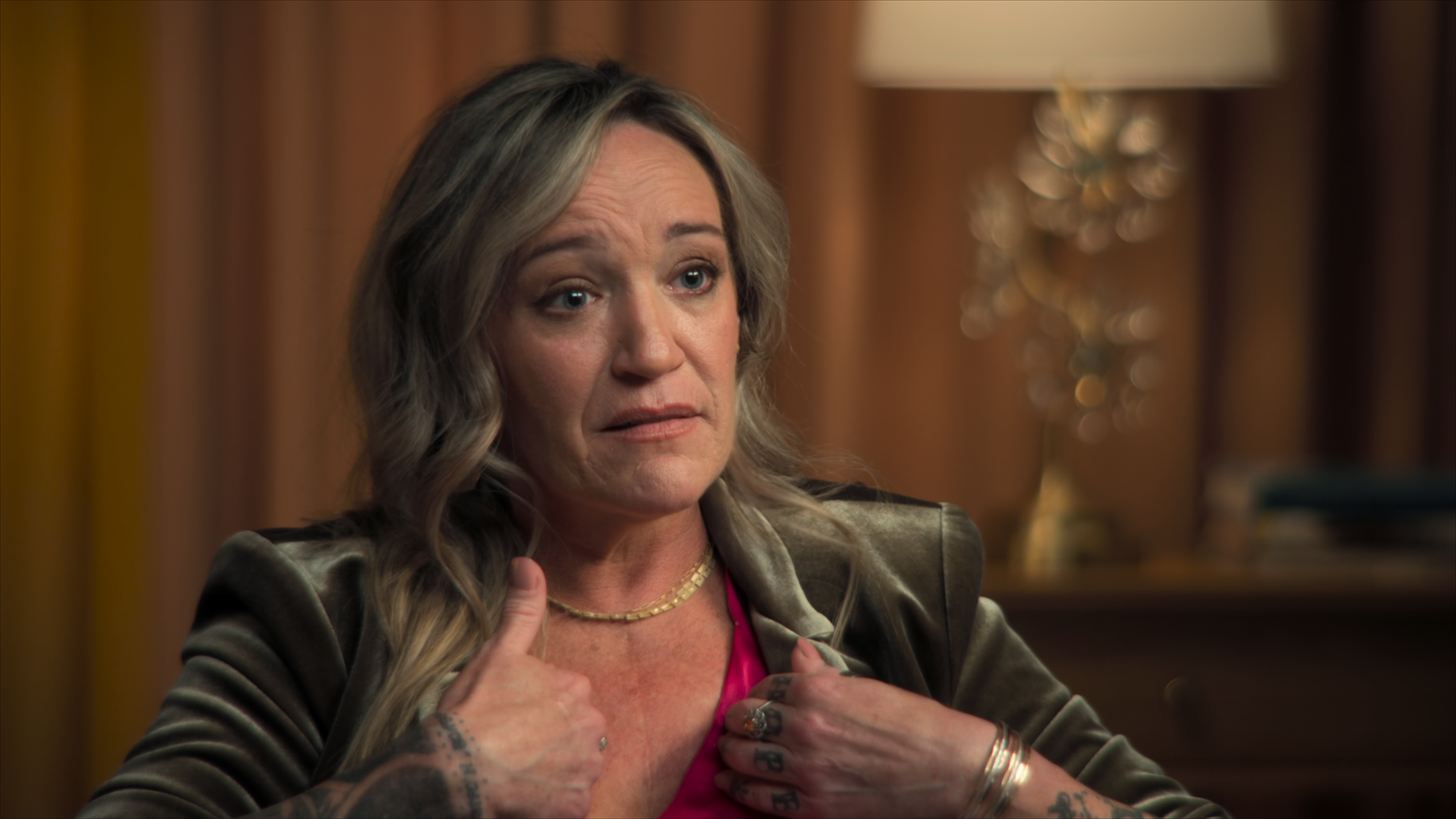
Before The Swan could take flight, it needed to cast a crew of willing participants. So the producers behind the show launched an advertising campaign that emphasized the idea of transformation. Prospective contestants would be treated to a cornucopia of all the plastic surgery they could imagine, as well as therapy, life coaching, and personal training.
‘It really seemed like a golden ticket,” Garza says of her initial reaction to a seemingly bountiful offer.
The Swan held open casting calls all over the country. The show cited figures as high as 200,000 to 250,000 applicants, though Carr says she’s never been able to verify that statistic. “That seems extremely high, given that it was an unknown show,” she says. “One of the tactics used with the swans was, ‘We picked you out of 200,000 people.’ In my opinion, that has a compliance effect. You got chosen above everybody else. You can’t say no.” Carr estimates the figure might have been closer to 75,000.
Convincing some of these women to open up, years later, for Behind the Mirror, proved more difficult. The Swan’s effects on contestants’ self-esteem still lingers, and it was frightening for both Garza and Bravata to speak about their experiences, having been manipulated for the sake of television in the past. But both credit Carr for creating a safe space.
“I knew from the very first conversation that Erin was genuine. She cares about women’s stories. She cares about empowering women,” says Garza. “The questions that she asked right off the bat, you could tell she wasn’t setting us up for something else,” Bravata adds.
“I remember sitting in the chair, and she said, ‘Kristy, take a breath. This is about you. This is for you.’ And in that moment, I felt this weight lifted, and my bleeding heart poured all over the floor,” says Garza.
That comfort was created in the details. Carr had each swan choose a song they loved to be their “walk-on” song, to lighten the mood before filming, and a “walk-off” song to celebrate the completion of their interviews.
It was equally important for Carr to highlight the experiences of the women who were on the show over everything else. “Revisiting docs are often about the producers, and not about the people that actually lived through the experience,” says Carr. “While it was instrumental to talk to the producers, these women went through an experience that somebody called the most sadistic reality show of all time. That’s what I wanted to understand.”
The dark side of The Swan
Carr recorded accounts from 12 different swans, as well as several producers and one of the show’s plastic surgeons, Dr. Randal Haworth. Carr credits one of the participating swans, Kelly Alemi, with providing essential research materials. Carr recalls that she brought with her to set the “Swan Binder,” which the contestants received at the beginning of filming and detailed what they would experience, as well as Alemi’s personal calendar from the reality show. “It was this calendar with German Shepherds on it,” recalls Carr. “And she had written ‘pain’ day after day on the calendar. I saw that and thought, ‘That really epitomizes part of this experience.’”
Garza remembers her situation before the show well: “I was getting ready to end my five-year military enlistment, and I wasn’t really sure what I wanted to do.” The ad she found promised things like a life coach, career counselling, fitness training, and a full plastic-surgery makeover. “So I went to a live audition. You go into this first little room, and there’s a panel of people sitting at a little fold-out table and they were like, ‘Tell us what you don’t like about yourself.’ I was ready, willing, and able to do what I needed to be chosen.”
The first season threw the contestants one surprise after another. The first was that when the swans arrived to stay in the apartments they’d be living in for the next three months, all the mirrors and reflective surfaces had been removed. For three months, they wouldn’t be able to look at themselves.
The show put the swans through extreme regimens over those months: head-to-toe surgeries that required long, arduous recoveries, combined with constant exercise and strict dieting (including limiting intake to 1,200 calories a day). “All of it was on a schedule and very specific,” explains Carr. “You had times where you were on and going to the doctor, and you had handlers that were going to move you from one location to another that had to be careful about you looking in any mirrors. Other times you had these huge swaths of downtime. There were no phones. They told me that they watched the Food Network all the time because they were not eating a lot of food. They really were, in a word that we understand now—quarantined from others.”
It was in that downtime when the swans really got to know each other. They became one another’s support systems and began to form a genuine sisterhood. They commiserated over promises the show made and then underdelivered on. “I only got three therapy sessions,” remembers Garza, “but all they wanted to talk about was my relationship. I was like, ‘Am I here for me, or am I here for my relationship?’” The so-called life coaching, Garza says, was little more than someone berating them and telling them how fat they still were. And as they began to lean on each other more and more, it turned out the producers had a huge twist up their sleeves: The swans weren’t just undergoing big physical changes—they were going to compete with one another in a pageant. The women learned this just before the dramatic moment on screen when they finally saw their transformed selves for the first time. “We were each other’s cheerleaders. They said we’re going to be pitted against each other, and only one of you moves on,” remembers Garza. “I was absolutely shocked. You gave me all of this to build me up, and then you immediately took it away. It was very debilitating from a mental-health standpoint.”
When Garza went head to head with another contestant, she lost. “In my mind, I’m like, I just had a $250,000 makeover, and I’m still not good enough for your fly-by-night pageant. It was drilled into us the whole time that we had to get to the pageant.” Then they brought her in for the pageant as a wild card. “They told me again that I was not chosen, and it was devastating.” Garza shares perhaps the worst indictment a contestant could offer: “I left there with less self-esteem than I went in with.”
A twist that might have broken a family

For Bravata, who participated in Season 2, the audition process was different. Casting for the second season began while the first season was airing, and it was actually her sister Gina who began the application process. Gina had seen in an ad on Craigslist that the production was looking for sisters, so she reached out. When she received an enthusiastic response, the sisters officially applied together. But only Kari would get on the show.
“When they told me I was going to be a swan, I immediately shut down. I thought, ‘Why would you tell me this if my sister’s not here?’ recalls Bravata. “That was the first time I thought, something’s not right. This isn’t what I signed up for. They don’t have good intentions.” The producers then told Bravata that she would have to tell Gina, on camera, that she hadn’t made it. “I genuinely feel like that was one of the worst days of my life. It’s a hard memory for me,” says Bravata.
But that wasn’t the end of the sisters’ story on the show. It turned out Bravata wasn’t going to be the only sister competing on The Swan. Gina was going with her. But Gina’s participation was to be kept a secret—one the entire season hinged on. “The second I drive away, they turn the camera on Gina and tell her, ‘You’re going to be there, and your sister doesn’t know.’ And then they threaten her for the next three months of the show that she’ll be liable for $5 million if she breaks the secret. She has to make sure I don’t find out,” Bravata says.
Bravata sees all this as further proof that The Swan was designed to tear women apart instead of delivering them the promised better life. “The twist was trying to break a family. They wanted competition,” Bravata says. “There is nothing in our DNA that would even allow us to compete with each other like that. I’m not sure what they thought they were doing, but what they did is they made us hate them,” she says.
An unexpected upside
The most remarkable thing about The Swan: Behind the Mirror is that this isn’t the tragic story you’d anticipate. Though the reality show was predicated on the entertainment value of tearing women apart, Behind the Mirror shows an aftermath in which the opposite outcome somehow came to fruition. Through the stories of these resilient women, Carr crafts a larger narrative of sisterhood.
“When we were in production and we were shooting it in L.A., I recognized the laughter and the sweetness from these women,” says Carr. “I thought to myself, ‘Is there a real way for this film to have a happy ending?’ She found it by way of DeLisa Stiles, the winner of Season 2, whose walk-off song was ‘F-ckin’ Perfect’ by Pink. “As soon as I heard that—and by the way, I did not have the rights to the song—it came to me: I want everybody to lip sync that song. It was literally when this woman played this song, and it crystallized in my head. It’s one of my favorite things I’ve ever done and will do.”
But before that moment comes a deeply touching reunion between the swans. Though they talk constantly through group chats and Facebook groups, they live scattered across the United States and don’t often get to see each other in person. But Carr’s film granted them the opportunity to come together and reconnect over their shared experiences. Their simple joy in being with one another is a surprising moment of warmth in the film. The ladies cheer to “tits, teeth, and trauma,” and “to being enough.” This collective scene was essential, for Carr, to show audiences how an unexpected positive came from such a harrowing experience. Pulling it off was no small feat. “Most networks will say, ‘You get three characters. We cannot follow 12 different people,’” says Carr. “So I said, ‘Hey, if we’re doing this, I need to follow everybody. We all need to be interviewed, and then I need for them to come together and do a reunion.’ That is extremely expensive. I was not sure if it was going to be a yes, but that was my dream. And when your dream is realized as a documentarian or filmmaker of any kind, you feel extremely special.”
Bravata is excited for people to see that the show’s participants are far from wounded animals. “I think it’s human nature for people to assume the worst for us now. They want to see how crazy our lives have become, and I just think they’re gonna really enjoy that we’re thriving, that we are friends, and that we’re doing great.”
There was one question I still had to ask the swans: Would Bravata and Garza, despite everything, do it all again?
“I would do it again 1,000 times,” says Bravata. “I would like to think I’d do it on my own terms. I’d do it without allowing anyone to make me feel less than what we all deserve to feel. The plastic surgery and friendships and this bond we all have—I would do it again.” Garza agrees. “For me, the good outweighs the bad. I felt shame for the past two decades. I loved the plastic surgery and the way it made me look. I feel everything happens for a reason, and sometimes the most traumatic, terrible things in your life are actually the most beautiful things. You have to decide whether you’re a victim of life circumstances, or if you’re going to use that to empower yourself. I love who I am now.”
By and large, the swans didn’t regret the plastic surgery. Many of them were happy with the results, and all of them went on the show because they wanted the operations. The documentary does detail that some of the work they had done hasn’t been as successful as it was originally envisioned to be, and the dentist who performed the dental surgeries ultimately had her license suspended. Still, the biggest problem for the swans was in how they were treated, and how they were presented on screen. “It made us look really weak, and made us look like broken women,” Garza reflects. “I used to joke that I’d rather tell people I had an STI than admit I was on The Swan because of the way it was edited.”
“We didn’t hate ourselves. We didn’t go there because we thought we were ugly,” says Bravata. “We went there and were told we were ugly. If I could share one thing, it’s that we’re amazing women. We are stronger than anyone could ever imagine because that was not for the faint of heart. We are on the other side, we survived, and that should be celebrated.”
Adds Garza: “In the original fairy tale of the Ugly Duckling, it turned out that it was a swan the whole time. It was just in the wrong nest.”
The post The True Story of the Extreme Makeover Reality Show in The Swan: Behind the Mirror appeared first on TIME.