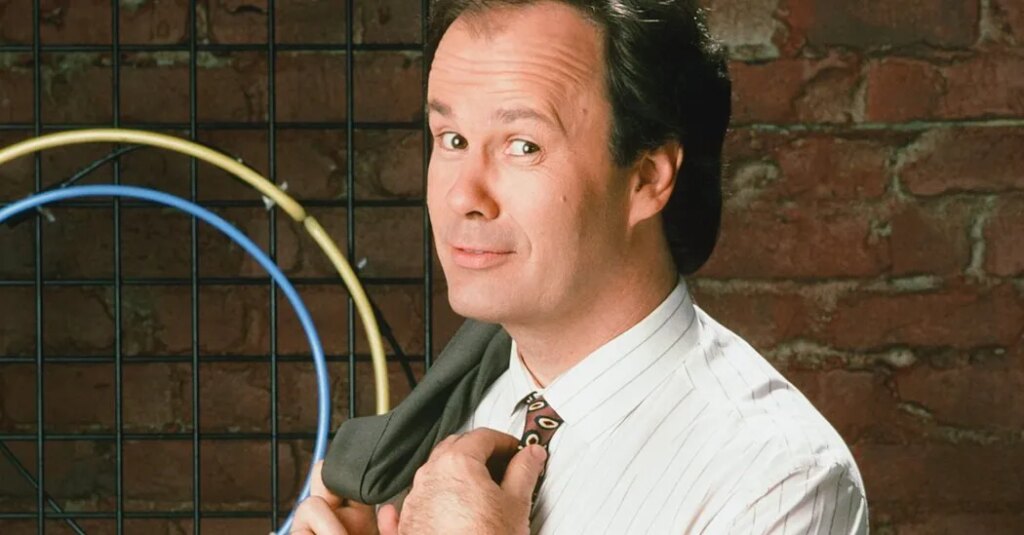
Dennis Haskins was among the first to put the pal in principal on screens.
Before him, principals onscreen were almost always easy typecasts. They were the ultimate disciplinarians pitted against an adolescent protagonist.
Think Mr. Strickland (played combatively by James Tolkan) poking Marty McFly’s chest in “Back to the Future” or Mr. Rooney (Jeffrey Jones) and his weird obsession in wanting to destroy Ferris Bueller.
Then came Haskins, who died on Sunday at the age of 75, as Richard Belding on “Saved by the Bell.” Belding was the affable presence who patrolled Bayside High School, trying — mostly unsuccessfully — to keep Zack Morris (Mark-Paul Gosselaar), Screech Powers (Dustin Diamond), Jessie Spano (Elizabeth Berkley) and the gang in line as they deployed their cockamamie 1990s-era schemes like mass producing secret spaghetti sauce and selling a calendar with photos of the Bayside girls’ swim team.
Belding provided a template for more dynamic personalities to play principals in future movies and sitcoms. In “Glee,” Principal Figgins (Iqbal Theba) was relatable in being completely overwhelmed and served as a comedic foil throughout much of the mid-2000s.
Today, Belding’s groundwork in the eager-to-be-liked principal is showcased in “Abbott Elementary’s” Ava Coleman (Janelle James) as an authority figure who is also an unapologetic opportunist with underlying humanity.
Belding’s gentle staccato of a catchphrase — “Hey, hey, hey, hey, what is going on here?” — was often laced with genuine curiosity instead of being accusatory.
Nearly every time, he fell for Zack’s initial deception (no, the failed enterprise was never an honors project or for a charity fund-raiser). He’d smile and walk away before the lie unraveled. Then, Belding issued a lenient punishment, like cleaning up the school or hall duty, with a smirk.
Lesson learned, tune in again next week for the next scheme.
In doing so, Belding showed concern for his students. He wanted them to grow, mature and ultimately succeed.
“I think the relationship between Mr. Belding and the students has held up to this day,” Haskins said in a 2014 interview. “I can’t tell you how many people have said, ‘My parents wouldn’t let me watch any show but yours.’”
Belding was the connective tissue throughout the show’s history.
Haskins had minor television roles before landing Belding. He said he auditioned seven times for the role before calling an executive producer. “Everybody else told me not to call him,” he said. “But I called him because I thought I just wanted one more shot at it. I thought I did pretty good, but I thought I could do a little better.”
Haskins played Belding from the late 1980s to 2000, the only actor to appear in every iteration of the show, from “Good Morning, Miss Bliss” to “Saved by the Bell: The New Class.”
As Haskins pointed out in interviews, the teenagers aged out of the show. He did not.
But he will be best remembered for his role in the show’s flagship series, which ran on NBC on Saturday mornings from 1989-1993.
In one episode, Belding’s cooler brother abandoned the students after promising to take them rafting. Belding, who had been cast aside by the students, quietly took the students without exposing his brother’s flakiness, prompting Zack to admit they had “the better Belding” all along.
“Mr. Belding wasn’t showing off,” Haskins once told Parade. “He just did the right thing. His brother had abandoned his kids, and even though he didn’t know how to raft, he was going to take them. That bonding is not only enjoyed by the show, but also by the audience.”
In the show, Belding often seemed desperate to hang out with the students — a careful line to walk that could have proved cringe-inducing performed by other middle-aged actors. Haskins played Belding with open arms and double takes, offering moral lessons without lectures.
And when Zack inevitably found trouble, it was Belding — not his parents or any other adult figure — who provided a soft landing spot. For a generation of children who rushed to the television first thing on a Saturday morning, he showed that an authority figure could still have a heart.
The post He Showed That Principals and Students Didn’t Have to Be Enemies appeared first on New York Times.