PLY, by Hernan Diaz
Hernan Diaz’s new novel, “Ply,” set centuries from now, depicts a dystopian future in which civilization dangles by a thread. The state has been dismantled, the Great Lakes region has seceded and the Pacific Coast has crumbled. In a bombed-out, Ballardian New York City, most of the inhabitants seem to have wandered out of an early-aughts cyberpunk novel.
An evil monopoly, Tensor, controls what’s left of the energy supply. Noble bandits known as “pinchers” siphon off the volts needed to power events like underground rock shows. Private security henchmen in (what else?) black uniforms, black masks and black goggles pluck dissidents from the street and disappear them. “What were lawyers?” one character asks.
These details are straight from an Acme kit for dystopian novels. Diaz does allude to some weirdness at the margins — there’s a place called “the island of the grunters,” for example, and a reference to “misanthropic communities of surfers” — but little more information is provided. I kept thinking about what Thomas Pynchon, or Neal Stephenson, might have done with the grunters and the surfers.
“Ply” is Diaz’s third novel, after “In the Distance” (2017) and “Trust” (2022), the latter a co-winner of the Pulitzer Prize, alongside Barbara Kingsolver’s “Demon Copperhead.” One of the best things about Diaz is his determination to experiment: He pushes in a different direction each time out.
“In the Distance,” set in the middle of the 19th century, was about Swedish brothers who intend to go to New York by ship but get separated. One boards the wrong boat and ends up penniless in San Francisco. The novel strips away the romantic veneer of the American frontier and subverts the archetypes of the western by having its lonely protagonist walk east on foot instead of west.
“Trust” was largely about financiers and old-money marriages in early-20th-century New York. The novel borrows some of the high realism of Henry James and Edith Wharton, but it includes immigrant perspectives, modernist in tone, that cut against the finery. The book fires cannonball after cannonball into the flanks of capitalism, dreary old white men and the historical erasure of women.
After those backward-facing novels, “Ply” pitches forward, into the realm of science fiction, to vastly lesser effect. This would-be bullet train barely exits the station. It gets caught between diverging tracks — potboiler and literary novel — and runs into the gravel in between. It’s polished but lifeless.
On the potboiler side, there’s little suspense — despite one female scientist’s intention to rig up a machine that will “alter the fabric of reality itself” (a lot of tin foil is involved) and possibly spawn a quantum black hole, one she argues will be “perfectly safe.” On the literary side, Diaz’s characters lack interiority. They’re action figures, posed into series of cinematic stances.
“Ply” is as humorless as a James Blunt song. Little interest is taken in the messy, earthy life that humans make do with. Diaz doesn’t do close-up work. No meals are taken, and there’s no sex, except in the briefest and most notional of ways. He has a greater predilection for the soul, and when soulfulness runs up against self-seriousness, as it does here, there is no remedy.
The dialogue tends to be flatly transactional in a B-movie kind of way (“Let’s go to the control room. No more delays”) or seemingly made to be sung to the accompaniment of woodwinds: “There’s nothing lonelier than a goodbye without an answer”; “It can be a beautiful thing to share, silence”; “We are nothing but a constant becoming.” Monologues about science and ideology extend for pages at a time.
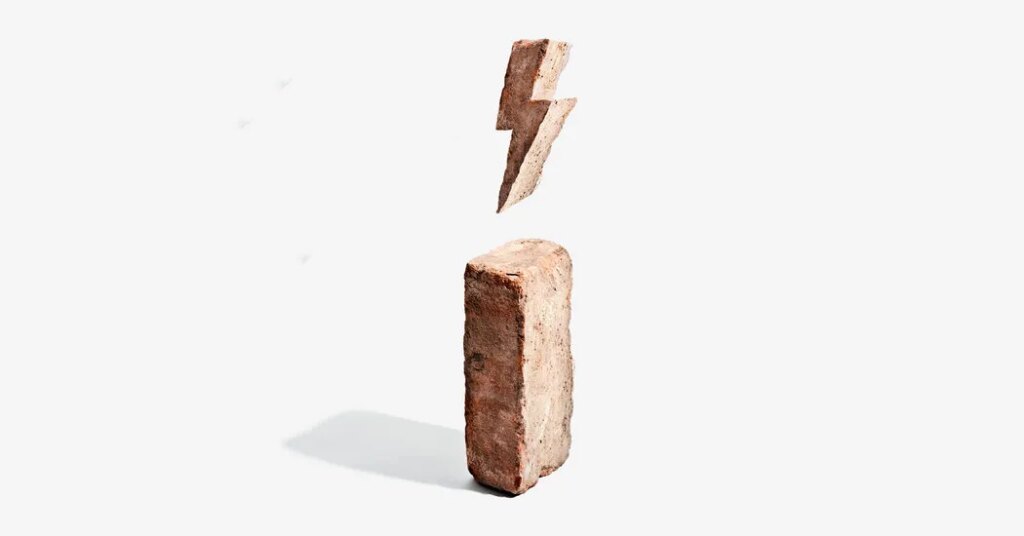
The plot, put simply, is this: A nameless young woman — she’s an orphan and a skillful pincher — develops a novel method to steal and store large amounts of power in portable “bricks.” Others covet this technology. Tensor’s goons, and other rivals, are at her heels as she bicycles through a blasted city of abandoned apartment blocks.
This orphan falls in with an older woman, who’s also been following her. This woman is a scientist, world-class tinkerer and possessor of communist-anarchist politics. She needs the bricks to power her plan to rip a revolutionary hole in the space-time continuum. She says things like, “We will work the loom of the universe.”
The two are joined by another, younger orphan. The three resemble one another in a manner that puts you in mind of Edward Albee’s play “Three Tall Women,” about the same woman at different periods of her life. Essentially, they’re gleaners who comprise a groovy, ragtag all-female commune.
“Ply” wears its politics, gender and otherwise, very heavily. As in “Trust,” nearly all the men are acquisitive creeps, or worse, and the women are idealized. Here they are bold, sensitive, plucky, attractive in a bohemian, loosely sketched manner (green eyes, prominent collarbones, gaunt frames, aristocratic postures), routinely smarter than everyone else in whatever room they are in, almost too good for this world.
This kind of enormous deference toward women characters has slowly come to seem, I think, like a form of disrespect — nearly as fraudulent as Norman Mailer’s boisterous chauvinism (and the old, winking flattery and chivalry) that it replaced. Each is a form of not paying attention. Extremes have begun to meet.
They meet, too, in this novel’s sociopolitical content. It’s as clunky and didactic, in a progressive-anarchist direction, as anything in Ayn Rand’s “The Fountainhead.” For readers of nearly any politics, it’s suffocating, as if someone has thrown a tarp over your head.
The graves of commerce, liberal democracy, “patriarchal” families and “guardians of tradition” are danced upon, repeatedly, in favor of “spontaneous forms of cooperation,” “collective closeness,” “freedom in dissolution, joy in disorder” and “wild beauty.” Board games are scorned by an influential character because “gamers love rules.”
The book’s heroes pointedly give their work away for free and the put-downs are on the dollar-book Marxist level of: You are “a friend of surplus.” The words “collective” and “we” appear as often as “love” does in a pop song, and the pronoun “I” is deeply suspect.
Extremes meet, too, in this novel’s view of knowledge and learning. When the scientist brags that she doesn’t do “normal research that necessarily expands and builds on previously acquired knowledge,” she sounds like Robert F. Kennedy Jr., scornful of painfully accumulated expertise.
When it comes to reading fiction, I find myself in sync with D.H. Lawrence, who put it bluntly: “We have to choose between the quick and the dead.” By quick novels he meant ones that, no matter what else is on their minds, are vital, surprising and zoom low over common lived experience. His off-the-top-of-his-head list of examples of such lived experience included snow, bedbugs, sunshine, trains, silk hats, sorrow, people, food, diphtheria, fuchsias, the sex organs, stars, ideas, God, toothpaste, lightning and toilet paper.
For Lawrence, “unquick” was a synonym for “dead,” and “Ply” is as unquick as they come. “The ordinary unquick novel, even if it’s a best seller,” Lawrence continued, “disappears into absolute nothingness, the dead burying their dead with surprising speed. For even the dead like to be tickled.”
PLY | By Hernan Diaz | Riverhead | 452 pp. | $32
The post His Last Novel Won the Pulitzer. This One Fails to Launch. appeared first on New York Times.