As Russia’s war on Ukraine enters its fifth winter, Kyiv’s Western backers are finding it increasingly difficult to keep the violence contained. They would be wise to remember that de-escalation with Russia can be negotiated only from a position of strength. Moscow probes for weakness. To this point, the Kremlin has sensed real hesitation in the West.
Matters will not improve until that dangerous perception is dispelled. Every Russian escalation should make Moscow’s position worse: Attacks on Ukrainian cities should bring greater pressure on Russia. Attacks on Europe should produce greater European support for Ukraine. De-escalation should remain available — but only reciprocally.
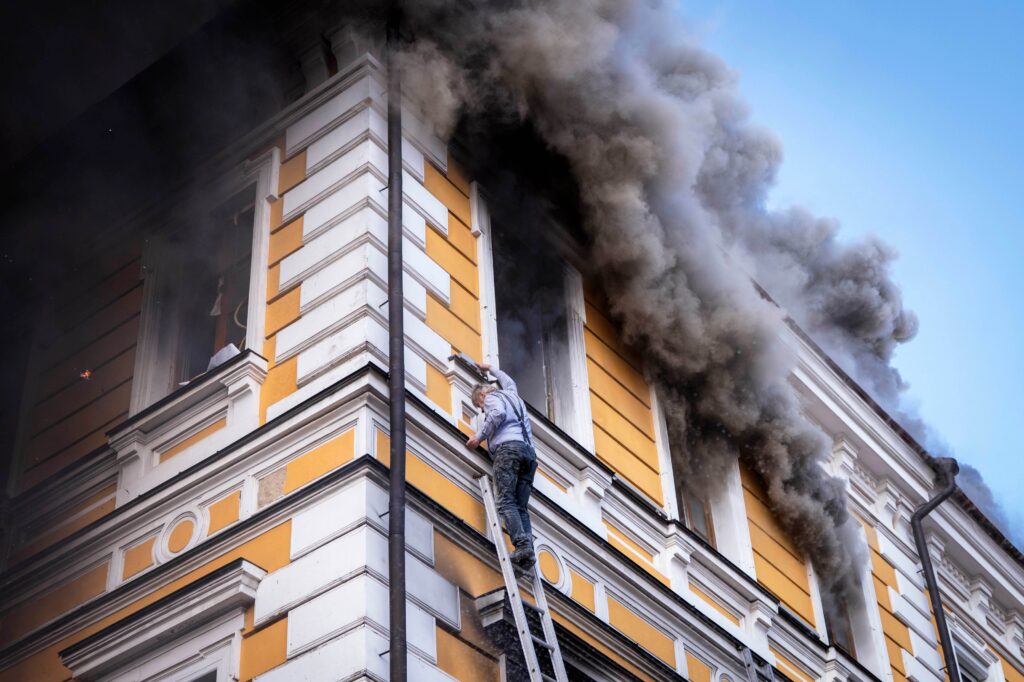
Frustrated on the battlefield, the Russians are escalating in two directions simultaneously. In Ukraine, they’re intensifying attacks on cities and infrastructure, hoping that terrorizing civilians will accomplish what Russia’s army has failed to do: break the country’s will to fight.
Ukrainian officials say that over the past week alone, Russia launched more than 2,200 attack drones, some 1,650 aerial bombs and 38 missiles. On Monday, Russia struck Ukraine’s National Academy of Sciences in downtown Kyiv in the middle of the day, killing at least two people. A medical facility was also hit. Over the weekend, Russian drones struck a food market, killing two.
Across Europe, Russian intelligence services have been linked to sabotage and other covert operations intended to convince Europeans to abandon Ukraine. Last month, German authorities say, Russia came perilously close to blowing up a Ukrainian cargo plane at an airport near Leipzig, a major hub for delivering aid to Ukraine. The attack failed but could have caused massive casualties.
At the same time, faced with increasingly indiscriminate attacks on civilian infrastructure, Ukraine is taking the war deeper into Russia. Ukrainian forces are striking oil and defense facilities hundreds of miles from the border. A Moscow refinery stopped processing crude after a Sept. 20 attack. For many Russians in major cities, the war has been a distant reality. Increasingly, it is not.
As Ukraine tries to raise the cost of attacks on its cities, Russia has doubled down. The mistake the West — and especially the Trump administration — has repeatedly made is to imagine itself outside this escalation cycle. Russian aggression has too often prompted another Western search for negotiations rather than counterpressure. Now that Moscow is testing what violence it can get away with on European soil, the United States can no longer consider itself on the outside.
Europeans are increasingly aware of this reality and are trying to adapt. Defense ministers in the European Union met on Monday to debate new collective mechanisms for responding to Russian hybrid attacks. NATO Secretary General Mark Rutte signaled last week one way the discussions might go: “If you really want to give a signal to the Russians on every hybrid incident,” he said, the answer is “more support for Ukraine.”
French President Emmanuel Macron, discussing Leipzig, echoed these sentiments. “The very nature of deterrence is not to give visibility to what we will do,” he said. But attacks, he warned, “will not remain without a response.”
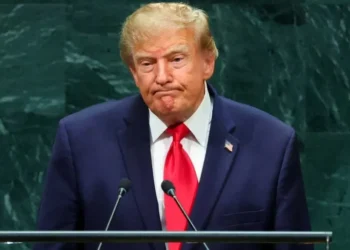
Unfortunately, President Donald Trump sent the opposite message on Sunday when he said he had told Ukrainian President Volodymyr Zelensky to “take it easy” on Russian refineries. Ukraine’s strikes are beginning to impose precisely the price that could challenge Moscow’s recklessness. A better message from Trump would be that the U.S. will allow Ukraine to do more if Russia doesn’t ease up.
Washington has other ways to increase the pressure. The administration’s campaign against Iran’s financial institutions offers a model: Target Russian banks, the foreign institutions that transact with them and the intermediaries that keep Russia’s war economy connected to the world. Pressure like this isn’t meant to get Russian President Vladimir Putin to sue for peace. The object is more modest: to teach Moscow that escalation makes its position worse, not better.
George F. Kennan understood this dynamic 80 years ago. In 1946, in what became known as the “long telegram,” he wrote that Soviet power was “highly sensitive to logic of force.” It usually withdrew, he observed, upon encountering strong resistance. Putin is probing again. The quickest route to eventual de-escalation is to convince him that he has finally found the point beyond which the West will not give way.
The post De-escalation with Russia requires a bigger show of Western strength appeared first on Washington Post.