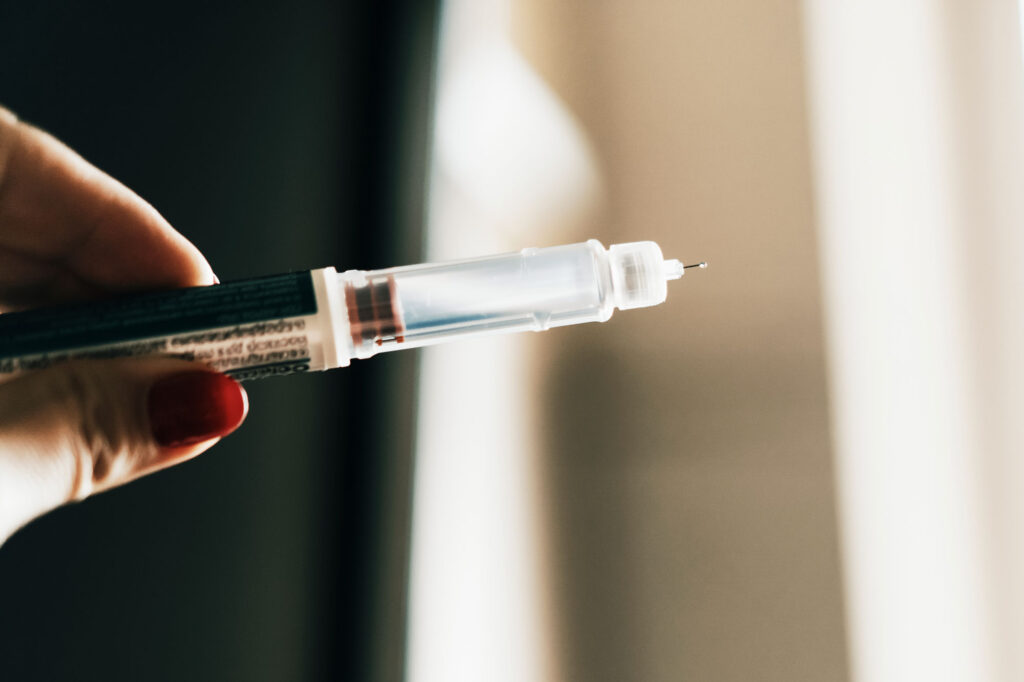
Should I be taking peptides to support my health and fitness goals?
A few weeks ago, a patient sat across from me and asked a question I am hearing more often these days: “Should I be taking peptides?”
He wasn’t asking about an injury. He wasn’t trying to qualify for the Olympics. He was simply looking for a way to feel better, recover faster and stay healthy as he got older. He had heard about peptides from friends, podcasts and social media. The promised benefits seemed almost endless. More muscle, less fat, faster recovery, better sleep, fewer aches and pains.
As a sports medicine doctor, I find myself in an increasingly uncomfortable position. For most of my career, I have told my patients that building a healthier body is remarkably unglamorous and requires consistency, with few shortcuts. Move more. Get stronger. Sleep. Eat well. Find exercise you enjoy enough to keep doing. Don’t wait until you are sick to start taking care of yourself.
But I also know that medicine has not always been very good at helping people do those things.
As a field, we’ve been very good at treating disease but less successful at preventing it. For most busy health care professionals, it is often easier to prescribe a medication to treat an existing medical problem than to coach patients on how to change the behavior that contributed to it.
The United States is investing far more than any other nation in disease treatment, to the tune of roughly $5 trillion per year, but much less in disease prevention. That mismatch has created an opening. And peptides, increasingly promoted by the modern longevity movement, have rushed through it.
Some peptides are well-studied and have proven benefits
Peptides are short chains of amino acids — the molecules that serve as the building blocks of protein — but the word now seems to carry an almost magical quality. Not all peptides, however, are created equal. Some are medications like insulin, with decades of human research behind them. Others are experimental compounds that have produced intriguing results in mice or cells in a laboratory but have barely been studied in people.
Consider semaglutide, a GLP-1 receptor agonist. It is a peptide-based medication, and unlike many compounds now circulating through wellness clinics and the internet, it has been studied in large, randomized clinical trials.
In a 2024 study published in the New England Journal of Medicine, people with obesity and painful knee osteoarthritis took semaglutide or a placebo for 68 weeks. Those taking semaglutide lost an average of 13.7 percent of their body weight, compared with 3.2 percent in the placebo group. They also had substantially greater reductions in knee pain and improvements in physical function.
The most interesting number in the study wasn’t even the number on the scale. It was what happened to people’s ability to move. Less weight meant less pain, which meant more movement.
For a sports medicine doctor, that is important. We’ve been encouraging people with knee arthritis to move more for decades, but it’s difficult to do that when your knees are sore. This GLP-1 study points to a new approach, using weight loss as part of the initial treatment, not an afterthought.
When it comes to peptides like GLP-1 — which is also found in tirzepatide, liraglutide and dulaglutide — these drugs may allow us to help patients in ways we previously could not.
But there is another side to the peptide craze.
Most peptides are understudied and unregulated, and their long-term safety is unknown
Go online and you will find peptides promoted for almost everything. BPC-157 for tendon healing. TB-500 for rapid recovery. CJC-1295 and ipamorelin for muscle and growth hormone effects. Others are marketed for inflammation, aging, fat loss and athletic performance.
The science behind these compounds is not remotely equivalent to the science behind semaglutide.
For some of the most popular recovery peptides, the excitement comes largely from animal studies, laboratory experiments or very small human studies. What we don’t have is enough high-quality human evidence to know whether these treatments work, who should take them, what dose is appropriate and most important, what happens after years of use.
The Food and Drug Administration has raised concerns about the limited safety information available for many of these compounds, driven by the lack of human exposure data. That uncertainty has previously led regulators to proceed cautiously with many peptide therapies.
However, the regulatory debate recently started moving in a different direction. The current administration has encouraged efforts to reconsider whether certain experimental peptides, including BPC-157 and TB-500, can be prepared by compounding pharmacies under applicable federal rules. Compounding pharmacies acquire the raw ingredients for a drug and prepare the final product themselves, rather than dispensing medications that have already been mass manufactured in standard, FDA-approved form. In essence, they circumvent the FDA.
Supporters argue that if people are already buying these substances through poorly regulated channels known as the “gray market,” physician-supervised access may be safer. The idea is to allow access while simultaneously studying the results in human subjects.
That is a reasonable suggestion. But allowing a pharmacy to compound a drug is not the same as the FDA approving it after years of clinical trials. Compounding does not establish that a peptide heals tendons, accelerates recovery or extends life. More important, compounds that have not undergone the FDA approval process do not have remotely the same body of rigorous safety and efficacy data as approved medications, nor are they produced under the strict manufacturing rules and inspections required for approved medications.
My bottom line
Here’s where I struggle: A peptide can work in a precise manner. It can repair tissue in a mouse. It can make a cell behave differently in a laboratory dish. It can generate hundreds of testimonials online. None of that tells us what happens after five or 10 years of taking it. We don’t want to confuse biological plausibility with medical evidence.
That doesn’t mean we should stop studying these treatments. Quite the opposite: We should study them more. But the standard for liberalizing access to treatments like these shouldn’t be excitement.
It should be evidence.
The peptide era may ultimately become one of the most important developments in preventive medicine. It may give us new ways to treat obesity, preserve muscle, reduce pain and help people stay active as they age.
We don’t know yet. And that is okay.
I tell my patients that I want to help them improve their health, mobility and fitness. I want them to move, lift weights and push themselves. But I also tell them that it’s dangerous to experiment with substances that haven’t been subjected to appropriate human trials or manufactured under strict safety guidelines.
My job isn’t to tell them that peptides are good or bad. My job is to help them make the smartest decision they can with the evidence we have today.
That is what being a sports medicine doctor means in the increasingly muddled peptide era.
Jordan D. Metzl, MD, is a sports medicine physician at the Hospital for Special Surgery in New York and the founder of the Ironstrength fitness community. His newest book, “PUSH: Unlock the Science of Fitness Motivation to Embrace Health and Longevity,” examines the science of fitness motivation and muscle maintenance for health.
The post As a sports medicine doctor, here’s what I want you to know about peptides appeared first on Washington Post.