To the Editor:
Re “Doctor A.I. Will See You, in Spite of Misgivings” (front page, Sept. 16):
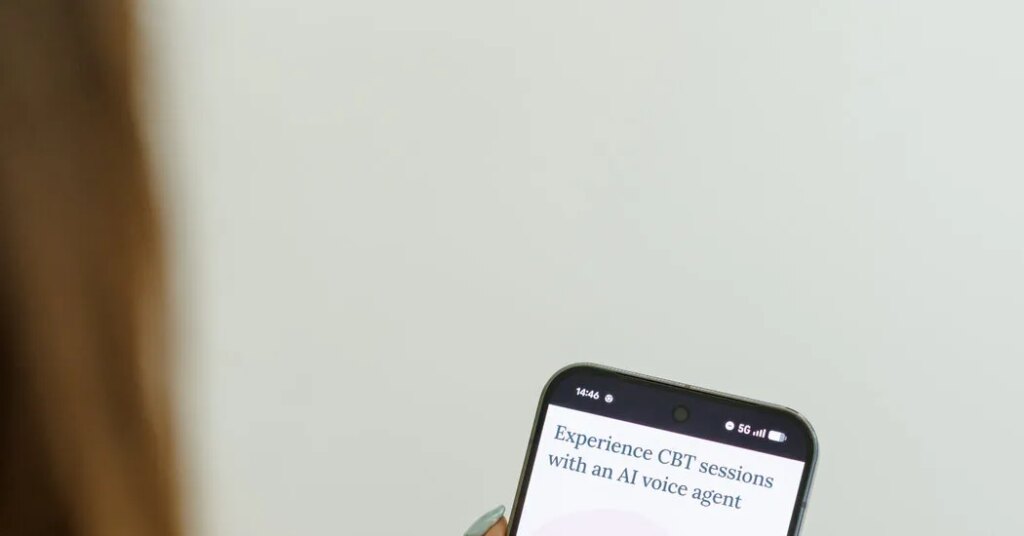
Artificial intelligence can indeed be a huge help in the public health arena. However, A.I. bots cannot replace doctors. That is typical Silicon Valley hubris. A.I. is great at searches but is weak at matching human judgment.
There is already a shortage of doctors and other medical personnel. A.I. can help increase the proficiency of medical assistants such as nurse practitioners and various technicians, which relieves the pressure on the relatively few doctors we still have. It can provide much information for decision making.
On the other hand, it can easily be fooled by baseless medical claims, poorly conducted studies and inappropriate solutions, which is why human judgment is always needed.
John Stearns Mountain View, Calif. The writer is a retired technical writer and software developer.
To the Editor:
Whoa. “It’s a moral issue to get this out into the hands of people who can’t access care,” you quote one tech executive as saying in support of the idea that A.I. doctors could replace care by human doctors for people who can’t afford the humans.
We need some proof of concept here. Do the tech entrepreneurs promoting the systems, not to mention the president and the health secretary who tout them, get their care from A.I. doctors instead of human ones?
If it’s not good enough for them, then it’s not good enough for those for whom they perceive a cost-saving opportunity or anyone else.
Susan Sugarman Princeton, N.J. The writer is a professor of psychology at Princeton University.
Canada Won’t Yield
To the Editor:
President Trump is attempting to bully Canada into making trade concessions that would seriously harm us. He is using tariffs to coerce Canada into economic submission. He is not honoring a free-trade agreement he negotiated during his first term. He has insulted Canadians by suggesting that we become the United States’ 51st state.
He is trying to destroy the good will created over the years by many valuable family, friend and business relationships. He has seriously damaged the relationship of trust between our countries. He is more friendly toward adversaries of the United States such as Russia and North Korea than he is to Canada. What have we done to deserve all this?
Canadians will not submit to such hostile treatment. We may retaliate by cutting back on travel to U.S. destinations or on the purchase of U.S. products or services. Not because we want to harm Americans, but because the American president wants to harm us.
We are not hostile toward Americans any more than Americans are hostile toward Canadians. We are defending our interests against a hostile U.S. administration.
I hope that our traditional friendly and mutually beneficial relationship can be re-established.
Tony Manera Ottawa The writer is a former president and chief executive of the Canadian Broadcasting Corporation.
The Lasting Value of Collective Joy
To the Editor:
Re “We Came. We Scream-Sang. We Felt Alive,” by Rachel Feintzeig (Sunday Opinion, Sept. 13):
Ms. Feintzeig captures something wonderful about being among thousands of people who are happy at the same time.
As a psychologist for more than 35 years, I am interested in how differently we sometimes treat people in those moments. We sing next to strangers, tolerate the person bumping into us and smile at people we ordinarily might walk right past. For a few hours, some of our usual irritations and judgments seem to matter less.
I wonder if that is part of what makes these experiences so powerful. We spend a lot of ordinary life reacting to people who frustrate us: our children, partners, co-workers and strangers. Maybe the lasting value of collective joy isn’t just that it makes us feel alive. It reminds us that we’re capable of being a little more openhearted with one another.
The hard part is bringing some of that home with us.
Jeffrey Bernstein Exton, Pa.
The post A.I. Is Not a Doctor. We Need Human Ones. appeared first on New York Times.