America’s adversaries, especially those with nuclear weapons, sometimes seem to be treated more kindly by President Donald Trump than the country’s oldest friends. Such U.S. unreliability risks encouraging nuclear proliferation by pushing countries to look out for themselves.
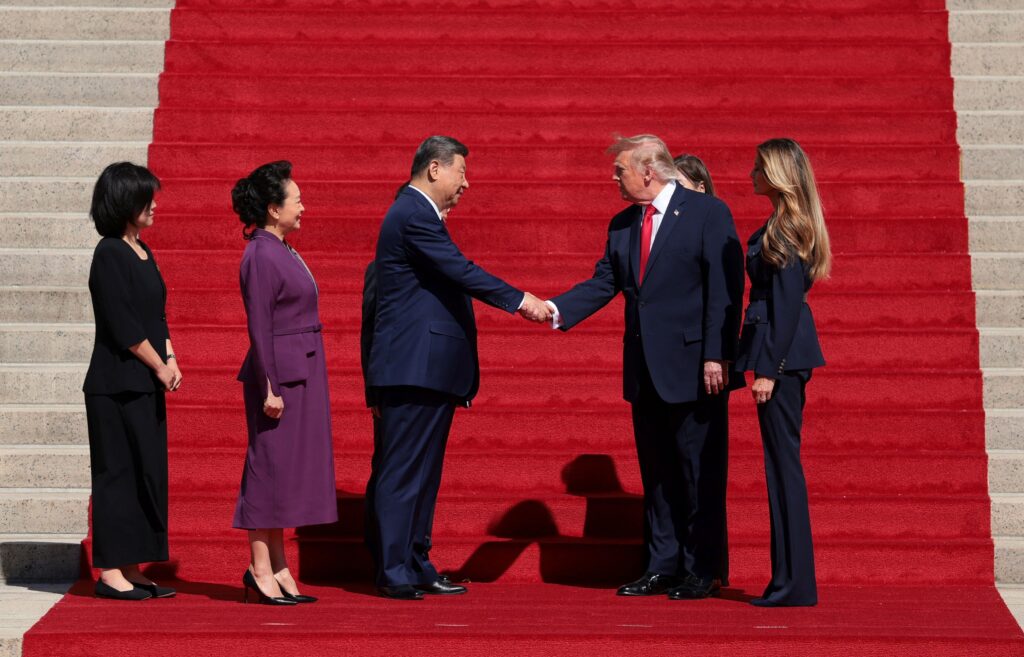
Last week underscored the dynamic: Trump rolled out the red carpet in Washington for Chinese President Xi Jinping while continuing to hold in abeyance a $14 billion arms package to Taiwan. Secretary of State Marco Rubio announced that Trump has invited Russian President Vladimir Putin to the G-20 summit in Florida in December. And Trump expressed a desire to buy potash, a critical fertilizer ingredient, from Belarus, Russia’s close ally, instead of Canada.
Trump caught European Union officials off guard last Tuesday by saying that he would support a U.S. ban on diesel exports. The irony is that Trump cajoled the officials last year to buy more and threatened tariffs if they didn’t. Now, worried about the midterms, Trump was threatening to cut off their supply as winter nears. Cabinet secretaries seemed to talk the president out of the move, but the message to Brussels was that Europe cannot count on U.S. diesel deliveries.
On the sidelines of the U.N. General Assembly, Trump signed a deal with the leaders of Denmark and Greenland to give the United States expanded security rights over the Arctic island. The agreement isn’t all that different from the status quo before Trump threatened in January to annex the NATO member’s territory. That pointless saber-rattling prompted Europe to scramble troops to defend the island in case of a U.S. invasion.
Regarding Taiwan, Trump seems to have made no concessions during Xi’s state visit, fortunately, even though the president, while visiting China in May, called the island “a very good negotiating chip.” China longs for the U.S. to drop its neutral stance regarding Taiwan and openly oppose independence for the self-governing territory. Trump hasn’t gone that far, yet the arms-shipment delay continues. Anxieties are growing in Taipei that the U.S. might not come to its defense if invaded by its larger neighbor.
Taiwan is not alone in questioning the durability of America’s commitments, especially amid the heavy burn rate of U.S. weapons stockpiles during the inconclusive Iran war. Prompting allies to become stronger and more self-reliant, as the U.S. has been urging for years, is desirable. But stirring their doubts about America’s staying power undermines U.S. credibility.
South Korea was blindsided in August when Trump abruptly ordered a substantial reduction in planned joint military exercises, saying the exercises sent a “hostile” message to the regime in Pyongyang. Trump apparently was also upset that South Korea did not offer support for the U.S. in the Iran war. The president has said he intends to meet with North Korean dictator Kim Jong Un before the end of the year.
The result of all this is growing public support in South Korea for building an independent nuclear arsenal instead of relying on the U.S. nuclear umbrella for its survival. The debate has shifted from the fringes to the mainstream. Polls this year show that nearly 70 percent of South Koreans back building a nuclear weapon.
Saudi Arabia is also considering going nuclear amid growing fears that the U.S. cannot be counted on. Crown Prince Mohammed bin Salman asked Trump to launch airstrikes against the Houthis in Yemen earlier this month after the Iranian-backed rebels bombed a critical Saudi oil pipeline. Trump refused to intervene. The Post reported on Friday that the U.S. intelligence community assesses that Saudi Arabia has not ruled out the option of developing a nuclear weapons program.
The Saudis are already hedging. Witness their mutual defense agreement with Pakistan and Turkey last month that called aggression against one of the three an aggression against all.
No U.S. allies are publicly foreswearing the partnership, instead insisting it remains strong, but some are clearly looking for backups and alternatives. Such anxiety is not helped by Trump’s chumminess with Xi.
China makes no secret of its desire to supplant the U.S. as the world’s dominant power. Beijing may have contributed to the deaths of American soldiers by sending intelligence to Iran that helped it target U.S. bases in Jordan. China continues to provide economic support that helps prop up Tehran. At home, China adds to its nuclear arsenal and the number of warheads aimed at the U.S.
The main deliverable of Xi’s visit, beyond good vibes, seems to have been the extension of a trade truce for two months, until Jan. 10.
Trump is right to advocate for more burden-sharing by U.S. allies. New global security arrangements and regional alliances can enhance America’s global reach. But networks created out of fear of a U.S. retreat risk leaving America more isolated and with fewer friends to trade with. They also reflect weakening trust in what has been one of America’s greatest strengths — its word.
The post Treating adversaries better than allies is a recipe for isolation appeared first on Washington Post.