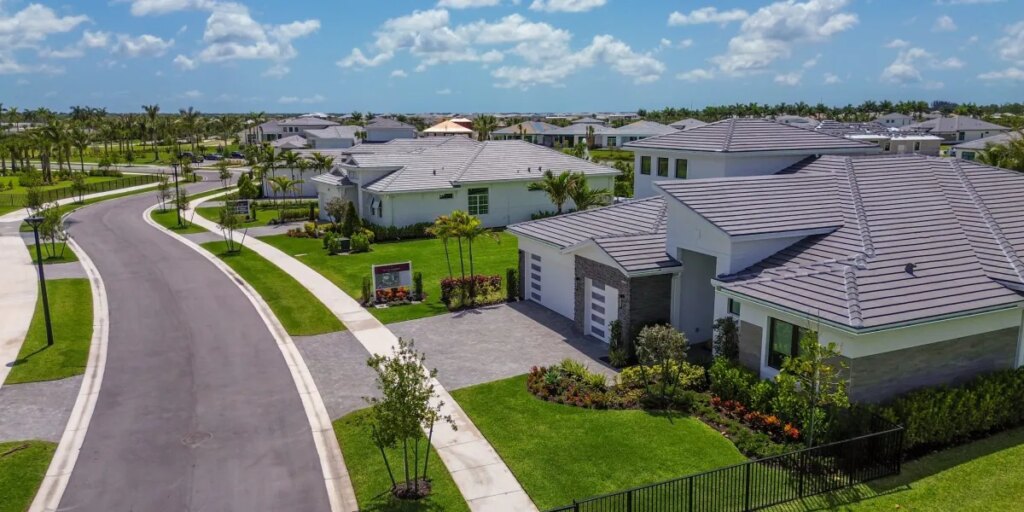
From an investing perspective, U.S. homes have paled in comparison to the stock market in recent years, and the surge in mortgage rates will likely widen that mismatch.
The housing market has been largely frozen since the COVID-era boom ended in 2022, when the Federal Reserve embarked on an aggressive rate-hiking campaign to rein in inflation. The Fed is now tightening policy again, and the average 30-year fixed mortgage rate is back above 7%.
At the same time, the AI boom has supercharged stocks, and the S&P 500 has been on a hot streak of double-digit annual gains not seen since the late 1990s.
That’s not lost on younger Americans, who have been shut out of the housing market. They are choosing to rent and investing in stocks to build wealth rather than saving up for a downpayment on a home they may never be able to afford.
Over the past decade, that has worked out well. From December 2015 through December 2025, the Case-Shiller Index of home prices has increased 87%, while the S&P 500 has soared 235%—and that doesn’t include dividends that boost returns even higher.
For Ray Fisman, an economist at Boston University, and Michael Luca, an economist at Carnegie Mellon University, the split between the housing and stock markets should challenge Americans’ long-held views of homeownership.
“The rent-versus-buy decision involves real trade-offs that too often go unrecognized, especially by those who can comfortably afford to buy,” they wrote in a Wall Street Journal op-ed this past week. “Buying a home also bundles two very important, but very different, decisions: where to live, and how to invest a large chunk of your life savings.”
To be sure, the comparison isn’t totally apples to apples, they acknowledged, pointing out that a home provides a place to live as well as an investment return. The U.S. tax code also has benefits for homeownership.
But even when home prices have seen robust gains, “the returns to buying can be, well, meh,” the economists added.
That’s the case so far in 2026 as well. The latest Case Shiller data shows home prices are up 1.5% nationwide, while the S&P 500 is up 13%, despite the Iran war and fears of an AI bust sending stocks on a wild ride this year.
The ability to borrow may be distorting how homeowners perceive their gains, according to Fisman and Luca. By financing the vast majority of the purchase price while putting only a small portion down in equity, any appreciation magnifies an investment.
For example, a 20% downpayment on a house that goes up by 10% in value translates to a 50% return on their initial equity, they noted.
But a decline in prices similarly has outsized impacts, especially given that a home is a “single, illiquid, undiversified asset.” That’s why financial advisers don’t recommend borrowing hundreds of thousands of dollars to buy a single stock, Fisman and Luca wrote.
They added that they aren’t saying no one should ever buy a home. Ownership has upside, like being able to remodel without a landlord’s permission, while renting has downside, like limited supply and the risk of being forced to move.
“The mistake we see all too often is the tendency to bundle two very different decisions,” Fisman and Luca said. “Where you want to live need not be where you want to invest.”
For those who are thinking more about where to live, however, prospective homeowners currently enjoy a buyer’s market.
Indeed, sellers gave concessions in 44.7% of home sales last month, up 2.1 percentage points from a year ago and the highest share for the month of August since at least 2020, Redfin said in a recent report.
Incentives typically include mortgage rate buy-downs, or sellers agreeing to pay for repairs. To win over increasingly selective buyers, sellers are also offering household appliances, or concessions totaling $10,000 to $20,000.
Some sellers have become so desperate they are also dropping the asking price. One real estate agent in Atlanta even offered their client a free week-long vacation in an Airbnb owned by the home’s seller. Another in Charlotte offered an all-expenses-paid cruise.
“If we were to quantify all these concessions… we would see that home prices are down, and people are getting better deals,” Redfin Chief Economist Daryl Fairweather told Fortune’s Sasha Rogelberg.
The post Thinking about buying stocks instead of a home as mortgage rates top 7%? The S&P 500 has blown away the housing market over the past decade appeared first on Fortune.