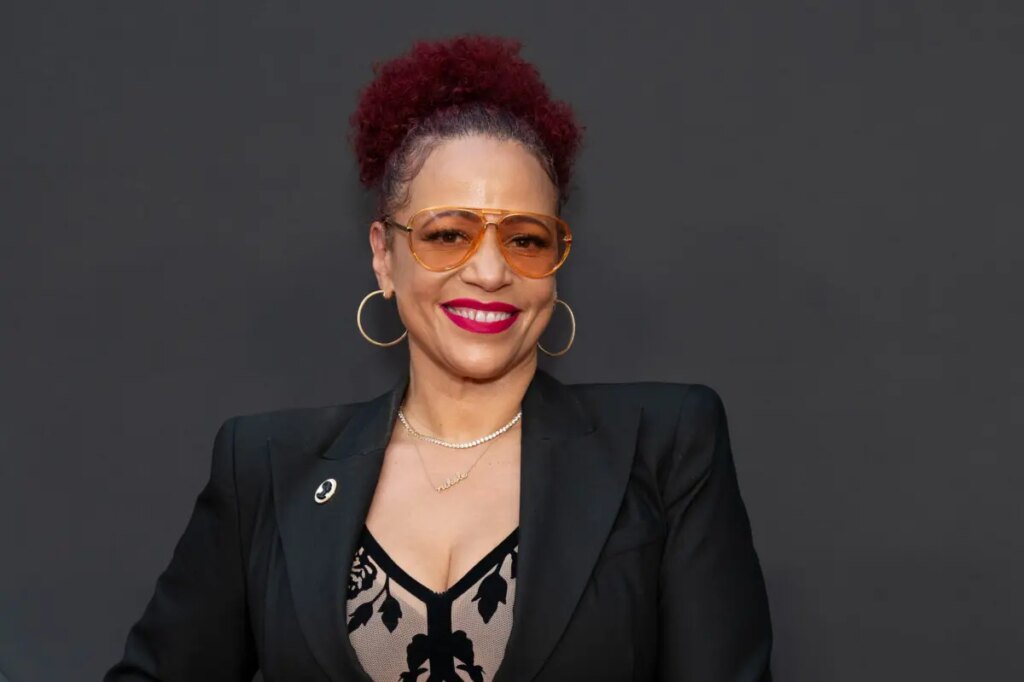

In 2016, New York Times journalist Nikole Hannah-Jones and her husband, Faraji, made a much-publicized decision: Despite having the means and connections to send their daughter, Najya, to a more selective school, they enrolled her in a “mostly low-income and black” public school in Brooklyn.
Now she’s expressing doubts about her choice, but her experience leaves a valuable lesson — about the importance of school choice.
The couple had framed their choice as solidarity: Individual educational decisions should serve the collective good, not merely a family’s private advantage.
Then came a crucial confession: “I also knew that we would be able to make up for Najya anything the school was lacking,” the journalist admitted.
That was the truth hiding in plain sight.
The most important advantage they gave their daughter was not a ZIP code or rhetoric around equity.
It was a stable, married, two-parent home with time, money, contacts and the confidence to intervene with school leadership if they were unsatisfied.
I wrote at the time that no amount of anti-black racism, poverty or school disorder could easily overcome the advantage of a supportive household helmed by married parents.
Ten years later, the record has not contradicted that observation.
Najya is now a 16-year-old high-school sophomore who was admitted to “her first choice, one of the city’s hardest public high schools to get into.”
Hannah-Jones describes years of intense parental advocacy to improve their daughter’s elementary and middle schools: observing a chaotic cafeteria in which children chased, hit and pushed one another while aides looked bored; physically separating two boys; pressing the principal to remedy unsafe conditions; hiring private tutors; going to the superintendent when homework was not assigned and classrooms were unmanaged.
In other words, she and her husband did exactly what she predicted they would do: They made up for what the school lacked.
That is why it is so striking that in Hannah-Jones’ latest essay, “In Fighting for Every Black Child, Did I Betray My Own?,” she makes a curious statement of guilt.
She writes that she feels she “failed both my values and my child,” that she is “overcome with regret,” that “Najya deserved better.”
Her daughter, by Hannah-Jones’ own account, asked whether her parents had sacrificed her education because other children were disadvantaged.
Those are painful questions Hannah-Jones must confront. But they are also evidence of the power of parental school choice.
Hannah-Jones now treats the decision to let Najya pursue a screened high school as an abandonment of principle. It was not. It was parents using the autonomy they had always possessed.
When their daughter wanted a more rigorous high school, they gave her complete autonomy over that decision, so long as it was a public school.
The confidence they finally placed in their own child is the same confidence they should want for parents who lack their platform, income and access.
Here is what Hannah-Jones gets wrong. The lesson of her experiment is not that privileged families must keep their children in disorderly schools as an act of moral witness.
The lesson is that family structure and parental agency can buffer a child from a weak school — and that hundreds of thousands of low-income parents are denied the power to make the same calculation.
They cannot hire tutors on demand, reach a superintendent or wait a decade to course-correct.
They need high-quality options for their children now.
Rather than treat her daughter’s choice to pursue a selective high school as a fall from grace, Hannah-Jones should argue for the policies that would give far less resourced families comparable room to maneuver,
Lift New York City’s cap on public charter schools, which still leaves tens of thousands of students on waitlists.
Treat Gov. Kathy Hochul’s decision to opt New York into the federal Education Freedom scholarship program as a gain for students, not a betrayal of public education, even if teachers’ unions oppose it.
Advocate for schools to teach the Success Sequence — graduate, work full time, marry before having children — in middle and high school, so the next generation is not left to discover, too late, that the household that buffered Najya is not an accident of privilege but a path that can be chosen.
Hannah-Jones ends her essay with a familiar indictment: So long as privileged parents must “rescue” their own children from schools where other children “languish” because they were “born Black and poor in a nation of racism and riches,” there is “no absolution.”
Perhaps the parents of those “languishing” children do not want absolution from Nikole Hannah-Jones.
They simply want the same privilege she and her husband ultimately exercised: the right to choose a better school for their own child.
Ian Rowe is a senior fellow at the American Enterprise Institute and co-founder of Vertex Partnership Academies, a network of virtues-based International Baccalaureate high schools inaugurated in The Bronx in 2022.
The post Nikole Hannah-Jones accidentally gave us a vital lesson on school choice appeared first on New York Post.