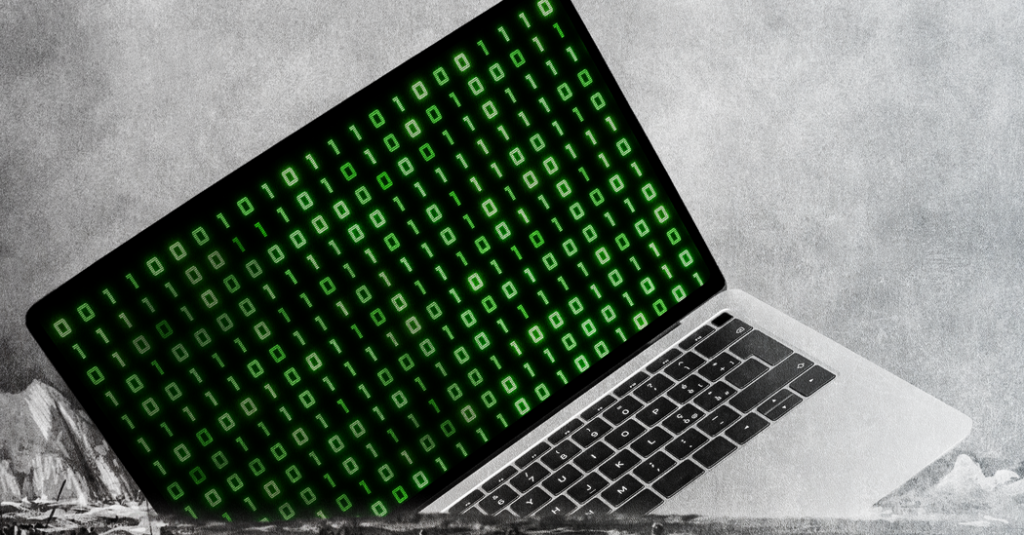
It was about a year ago that Sarah Friar, the chief financial officer of OpenAI, said one way the company might sustain its current financial high-wire act was with a “backstop” or “guarantee” — as in, a government guarantee — “that allows the financing to happen.” Almost at the same time, Sam Altman, the company’s chief executive, said, “Given the magnitude of what I expect A.I.’s economic impact to look like,” the government should serve the role of “insurer of last resort.” They qualified those comments, but still, the gist seemed to be that the industry The Wall Street Journal calls “the biggest economic bet in U.S. history” is so important to the nation that if it needs more funding, taxpayers should be on the hook.
Another way to put it is that the government should regard artificial intelligence the same way it regarded the banks in the 2008 financial crisis: too big to fail.
It’s hard to reconcile that suggestion with the other message blaring out of leading A.I. companies these days: that the technology “could kill us all by the end of the decade,” as the former Anthropic researcher Jacob Coxon recently warned, and must therefore be restrained. A.I. is so important that we can’t let it fail, but so risky that we shouldn’t let it go forward?
Now add the conventional wisdom that the United States has to beat China at all costs (or as President Trump put it, “Whoever wins A.I. wins!”), and the arguments can start to reinforce one another. The more the race to dominate becomes existential, the more we have to spend on it; the more we spend on the industry, the more economically and geopolitically consequential it becomes; the more consequential it becomes, the greater the need to speed ahead, safety concerns be damned; the more we race ahead heedless, the more risk there is. All in all, it raises an even scarier possibility: What if rather than being too big to fail, A.I. is too big to stop?
The idea that a business could be so important that the government is obligated to keep it afloat dates at least from 1797, when an English financier said the Bank of England should shore up ailing companies when private sources had been exhausted. The phrase crystallized in 1984, after Continental Illinois bank almost sank because it had taken on too many bad energy loans. “We have a new kind of bank,” Representative Stewart McKinney said at the time. “It is called too big to fail.” Then came the 2008 crisis, in which the big banks were bailed out using taxpayers’ money, on the theory that without it they would take down the whole economy.
Those too-big-to-fail banks were the legacy of Reagan-era concerns that if U.S. banks didn’t bulk up, and fast, they’d be unable to compete with financial institutions in Europe and Asia. You can hear something similar today in President Trump’s assertion that fear about A.I. is a “hoax” that endangers America’s lead over China. Another similarity: In the buildup to the 2008 financial crisis, even as it was becoming clear that customers couldn’t pay back all the subprime mortgages the banks had been giving out like candy, the leaders of those banks refused to change course. Call it rational recklessness: “As long as the music is playing,” said Chuck Prince, then the chief executive of Citibank, “you’ve got to get up and dance.” Today, the companies behind the data centers, such as Amazon and Alphabet and Oracle, and the companies behind the A.I. models, such as OpenAI and Anthropic, are dancing too, and they can’t stop, lest they lose the hundreds of billions they’ve invested in beating the competition.
The A.I. boom is far larger than the boom in subprime mortgages that set off the 2008 crisis. A.I.-related spending accounts for about half the growth in the U.S. gross domestic product, by some estimates. The vast majority of the $33 trillion in market value the S&P 500 has gained since late 2022 has come from spending linked to A.I. companies.
There are reasons to hope that economic history won’t repeat itself. The collapse of the subprime mortgage market was so dangerous not because of its size but because of the extent to which subprime debt had become integrated, in ways that were not readily visible, into the mechanisms through which banks finance themselves. A.I. investment, though bigger, hasn’t infiltrated the banking system in the same way. “The related debt levels are not systemic — yet,” says Jim Chanos, an investment manager and a perpetual skeptic.
For now, the louder the industry proclaims its hazards, the faster it grows. Dario Amodei, the chief executive of Anthropic, has warned repeatedly about A.I.’s risks to humanity, while reportedly accelerating the company’s expansion plans ahead of its initial public offering. (As the economist Owen Lamont joked, it’s “like Robert Oppenheimer doing an I.P.O. for the Manhattan Project in 1945.”) “Perverse financial incentives are making it difficult to protect humanity from the dangers of A.I.,” the former Treasury secretaries Robert Rubin and Hank Paulson wrote in a recent opinion essay. “The economic incentives for A.I. developers, capital market participants and the general economy are so great that the risks are at best inadequately addressed and at worst ignored. The world has never seen so much capital chasing one opportunity.”
It can all start to seem inevitable, except for one thing: Americans really do not like A.I. companies. It’s not beyond imagining that concerns about safety, a sufficiently shocking disaster or a regulatory crackdown could at some point bring a sudden end to their currently lavish funding, in that way threatening their existence and the greater economy beyond.
In the 2008 crisis, policymakers had a saying: Plan beats no plan. And a plan made before a crisis is almost certainly better than one improvised during it. We need to be ready.
There are plenty of proposals for how to address the safety concerns posed by A.I., although the trick would be doing so in a way that doesn’t further enshrine the dominance of the industry’s biggest companies. When it comes to economic concerns, plans for what to do if the A.I. bubble bursts should start with the question of what it is we’d hope to save. It’s hard to imagine the nation would accept a deal like the one that emerged in 2008, which prioritized the balance sheets of the investor class at the expense of everyone else — especially given the sums that would be required and the scale of our national debt.
This technology may be critical to the future of the United States, but preserving it doesn’t mean we have to bail out the private entities that are leading the field at this particular moment, nor does it mean we have to protect the fortunes of their investors and executives. The solution to the whole ever-expanding A.I. terror starts with remembering the lessons of the 2008 crisis: No company should be too big to fail.
Bethany McLean is a financial journalist and an author of “The Smartest Guys in the Room.”
Source photographs by Bettmann, Flavio Coelho, and fotograzia via Getty Images.
The Times is committed to publishing a diversity of letters to the editor. We’d like to hear what you think about this or any of our articles. Here are some tips. And here’s our email: [email protected].
Follow the New York Times Opinion section on Facebook, Instagram, TikTok, Bluesky, WhatsApp and Threads.
The post Has A.I. Become Too Big to Fail? Or Is It Something Worse? appeared first on New York Times.