Part of what makes Beyond Fest such an exciting event is the elastic unpredictability of what fits within the festival’s purview. The recent meta-slasher “Teenage Sex and Death at Camp Miasma” shown at the resolution of an old VHS tape? Obviously. A new 4K restoration of Ken Russell’s notorious 1971 religious shocker “The Devils”? Of course.
But how about the West Coast premieres of Alex Gibney’s new Elon Musk doc “Musk” or James Gray’s upcoming crime drama “Paper Tiger”? It may take a moment but they both make sense too.
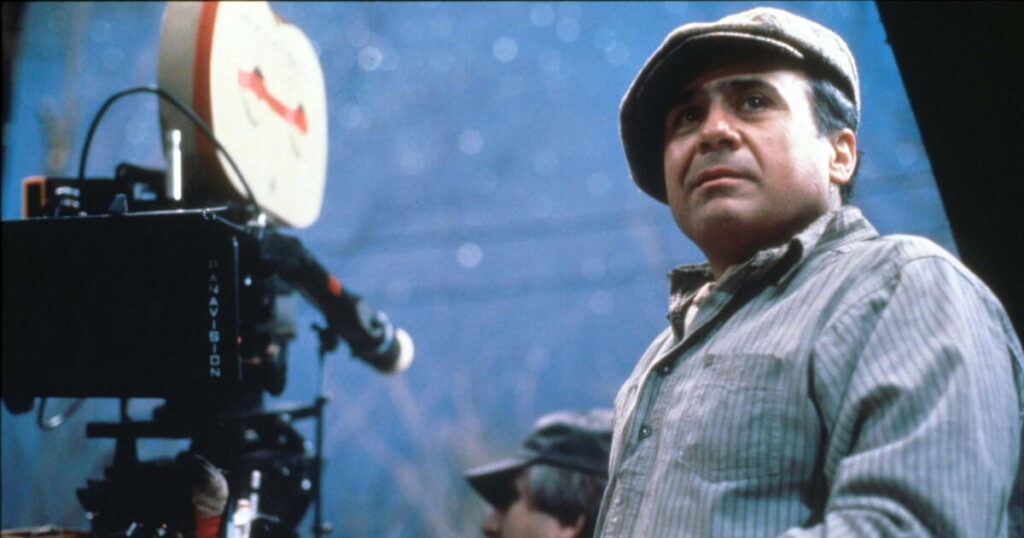
As does “Hoffa,” the 1992 drama, both gritty and glamorous, about the life of labor organizer Jimmy Hoffa, who is now largely known for the mysterious and still unexplained circumstances of his disappearance in 1975. Directed by Danny DeVito from a screenplay by David Mamet, “Hoffa” stars a bracing, bruising Jack Nicholson in the title role, exploring the tender ideals beneath his tough-guy exterior in a story told with epic sweep.
The film will be shown on Saturday at the Egyptian Theatre from one of the very small number of 70mm prints made at the time, screening in the format for the first time in more than 30 years. DeVito himself has never seen the film in 70mm, so he will be there watching with the audience before appearing for a Q&A along with the film’s cinematographer Stephen Burum, composer David Newman, prop master Emily Ferry and costume designer Deborah Lynn Scott.
Beyond Fest will also be screening “Drag,” the new comedic thriller produced by DeVito and his children Jake and Lucy DeVito (Lucy also co-stars). Danny DeVito will also be present for a rare theatrical screening of “Hot Dogs for Gauguin,” filmmaker Martin Brest’s 1972 student short starring the then-unknown actor.
During a recent Zoom interview, DeVito said, “It’s a big weekend for ol’ Danny D.”
“Hoffa” is very different from the other films that you directed both before and after, which are mostly comedies touched by dark cynicism. This film is dramatic and idealistic.
It’s a lot different than “Matilda,” yeah.
It’s so beautifully crafted, with huge crowd scenes, evocative locations and a real sense of time and place. They genuinely don’t make movies like this anymore.
Well, Stephen Burum was my DP. We did “War of the Roses” together and we worked together meticulously on all the shots. And I had a good friend, Harold Michelson, who was a storyboard artist — he actually worked on “The Birds” and old Hitchcock stuff in the early days. And we did a lot of drawings. I’m into transitions and things like that and he called them “Gozintas.” This goes into that, that goes into that. And so coupled with this really powerful script, great actors and with all the people that were eager to be part of it, I was like a kid in a candy store and we just had a ball making the movie.
You worked really hard to get the job to direct “Hoffa,” even though that’s not what we would initially think for a DeVito project. Why was it worth the effort?
I was in the spot where the studio was asking me: What do I want to do next? And they had a list of things. And they went down this list of movies that they were developing or owned or whatever and when they got to David Mamet writing “Hoffa,” that just blew me away.
First of all, I love the labor movement. I think it’s the greatest thing in the world. I know how it was crushed. And I had some real strong feelings about Hoffa, about what he did, what he tried to do, even though he got dragged right through the mud and whatever they did.
I was excited by, first of all, the fact that I have this good friend, Jack Nicholson, who could play the hell out of this part. And I read this script — it was just amazing. David’s words, his rhythms and the way he writes is a really cool thing. As an artistic endeavor, it was a little bit of a challenge. To get to try to be part of that, I jumped on that right away.
Did you always know that you also wanted to be in it? Did you ever consider casting anybody else in that role as Bobby Ciaro, Hoffa’s friend and confidant?
I didn’t. It’s like Rhea [Perlman] and I were reading “Matilda” and we went, “Oh, wait. It’s a really good story but there are two great parts in it.” Actors, you gotta cut ‘em some slack. Maybe I would’ve chosen somebody else to play Bobby Ciaro, but I really dug the loyalty aspect of it and how much he cared for Jimmy. He’s not based on a real character, he’s kind of an amalgamation. There are a couple people who were really close and would lay down their lives for Jimmy and vice versa. But I never considered casting anybody else.
It’s a very different performance from you, much quieter and more tamped down than you usually are.
I had to sit on myself. As a director, you’ve got to go, “Dan, what are you doing? Making a joke? Come on, that’s serious business.” I respected the work, David’s words and what we were doing and although we had a superior blast making the movie, there were some serious things in it that you had to pay attention to and have reverence for.
What was it like directing Jack Nicholson? The conventional wisdom is that after “Batman” he was usually just playing Jack. And here there are moments where you just don’t see Jack Nicholson at all.
He immersed himself. I remember I sent him the script and he called me immediately. He said, “We’ve got to do this.” I said, “Yes, we have to.” We did lots of getting together, we watched tons and tons of footage that we could get of Hoffa and everything that was around. He just really sunk himself into the part. We had some fun in the makeup trailer and on the set and everything like that. But every time you shoot, he’s in and he’s going to give you a performance no matter what. We met on “Cuckoo’s Nest” and we’ve been dear, dear buddies. And he took care of me in a big way. He was the big gun in the room but he’s a generous guy.
And what about the prosthetic nose he wears? When I picture this movie, I think of Jack and that nose right away.
Ve Neill was our makeup designer. And Jack was very conscious that he wanted to get closer to Jimmy physically. And if you look at Hoffa and you look at Jack, I’m not sure exactly what they did up top because it accentuated — Jimmy, his eyes were a little recessed. And he was a man who came up in a time when caution was big. You had to be cautious of everybody. Everybody was looking to take you down. And especially being the head of the Teamsters, a great organization which brought so many people into the middle class. He fought for the working men and women of the country tooth and nail.
But the movie does not make him out to be a saint. He beats people up. He gets involved with mobsters in a shady loan scheme that lands him in prison. As much as it feels like the movie is on his side, you don’t shy away from showing something more sinister.
Well, if you look at the beatings and stuff, he had to be in there. He had to be in there with a club, with a fight, with a punch. In those days, they were tough guys. I’d never be able to. They grew up fighting for every inch they could make.
He never really made any money. He lived in a modest house. I visited his house. They never went on big vacations. His whole life, his dedication was true. I respected that, big time, and we tried to make an exciting movie and stick to the truth. At the end, you don’t know how it ends, that was a fielder’s choice. David came up with the ending and I executed it as best we could.
Since people don’t know what happened to Jimmy Hoffa, did you have any concerns that depicting his murder might upset people?
I felt satisfied. But he died in the end [of the movie] and was taken away and never seen again, and nobody’s ever known anything about it. It’s a mystery still to this day, actually, even though there are people who claim they know what happened.
What do you think happened to Jimmy Hoffa?
I don’t have any thoughts on it. I think he died the way he did in the movie.
What do you think the movie has to say to people today?
It’s a though-provoking experience — the concept of taking the final blow for the working man and woman in the country, which we are not doing now. We are not taking care of the truckers in our country. We have so many forces that are against us. And then with the crazy, senseless things that are going on in the world and the fuel prices going up. It’s like in the very beginning of the movie when he helps the guy change the tire and he’s recruiting him for the Teamsters, and he says, “What do they do for you? Nobody’s looking out for you.” And he was looking out for people. I think you’re going to come away from seeing the movie and relating it to what is going on in the world at the moment.
The post Danny DeVito on directing ‘Hoffa’ and ‘taking the final blow’ for working people appeared first on Los Angeles Times.