California’s oldest family-run winery has filed for bankruptcy protection, another sign of the struggles in the wine industry.
The family behind Gundlach Bundschu, founded in Sonoma County in 1858, said it couldn’t reach an agreement with lenders to restructure its debt, so it filed for Chapter 11 bankruptcy protection to buy breathing room as it tries to rebuild.
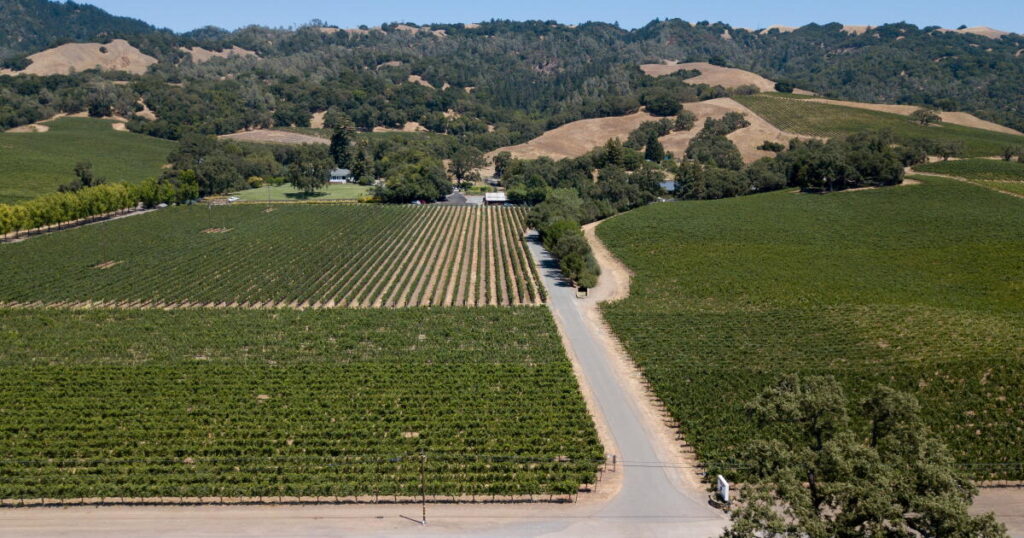
The winery’s debt hangover followed its purchase of another estate during better times. In February 2020, it acquired a 60-acre estate as its business grew rapidly and it needed more space.
A month later, the COVID-19 pandemic hit. The wine industry in California hasn’t recovered since.
The winery will change ownership for the first time after six generations.
Jeff Bundschu, a member of the founding family and president of the winery, told The Times that the family is looking for a new owner but plans to remain part of the business. He said the people behind the winery will continue to build the brand.
“When you become the kind of institution that Gundlach Bundschu has become in our community, it’s as much about all the people that are involved, and everybody who works there sort of has a spirit of caretaking,” Bundschu said. “It’s almost more important than who owns it.”
Gundlach Bundschu’s announcement follows several other California wineries that have cited difficulties as the industry struggles with dwindling demand, the trade war and natural disasters.
Wine behemoth Gallo earlier this year shared plans to lay off more than 90 employees by the end of January 2027 and close a major Napa Valley wine-making facility.
In February, Constellation Brands announced plans to lay off 212 workers at its Mission Bell Winery in Madera. The publicly traded company, which owns Robert Mondavi wines and Modelo and Corona beers, has set a goal of $200 million in cost savings by 2028 and is shifting away from wine to focus more on its growing beer business.
That month, Santa Rosa-based Foley Family Wines & Spirits wound down operations at its Chalone Vineyard in Monterey and laid off the facility’s entire wine-making staff.
Some wineries were hurt by ongoing Canadian boycotts on American alcohol in retaliation for the United States’ new tariffs on Canadian goods.
McManis Family Vineyards, founded in 1990, is selling 3,500 acres of property across Sacramento and San Joaquin counties for $22.5 million, including a winery facility in Ripon and 10 vineyards ranging from Clarksburg to outside Modesto.
Canadian exports used to make up 40% of the company’s export sales, but have fallen to 5%. The vineyard has also seen a drop in its bulk sales to larger U.S. wine brands, which usually make up about 90% of its business.
Wildfires have also hurt business.
Signorello Estate — a Napa Valley winery that rebuilt after becoming the poster child of the Atlas fire when its tasting room burned to the ground — filed for Chapter 11 bankruptcy protection last month.
A 40-year-old winery, Rosenthal – The Malibu Estate, announced it will begin closing down this week after its tasting room was destroyed in the 2025 Palisades fire, according to The Hollywood Reporter.
“This is a challenging time for California wine, and some wineries are having to make incredibly difficult decisions,” said Steve Gross, president of the Wine Institute, an industry group. “What makes those decisions especially hard is that for so many, this isn’t just a business. These are family legacies built over generations.”
Gundlach Bundschu plans to remain open while it resolves its debt and ownership issues.
“I need to reiterate 1,000 times, we’re wide open,” Bundschu said. “Any visitors to the place won’t know a difference.”
In the coming years, Bundschu said the winery will focus on its central Rhinefarm estate. He said the new operations may expand beyond wine and integrate music as part of its central offering.
The post California’s oldest family-owned winery declares bankruptcy as wine industry struggles appeared first on Los Angeles Times.