One of the Republican Party’s biggest donors has sharply reduced his giving ahead of the midterm elections, especially to Senate Republicans, a decision driven largely by the party’s failure to pass a far-reaching bill of voting restrictions.
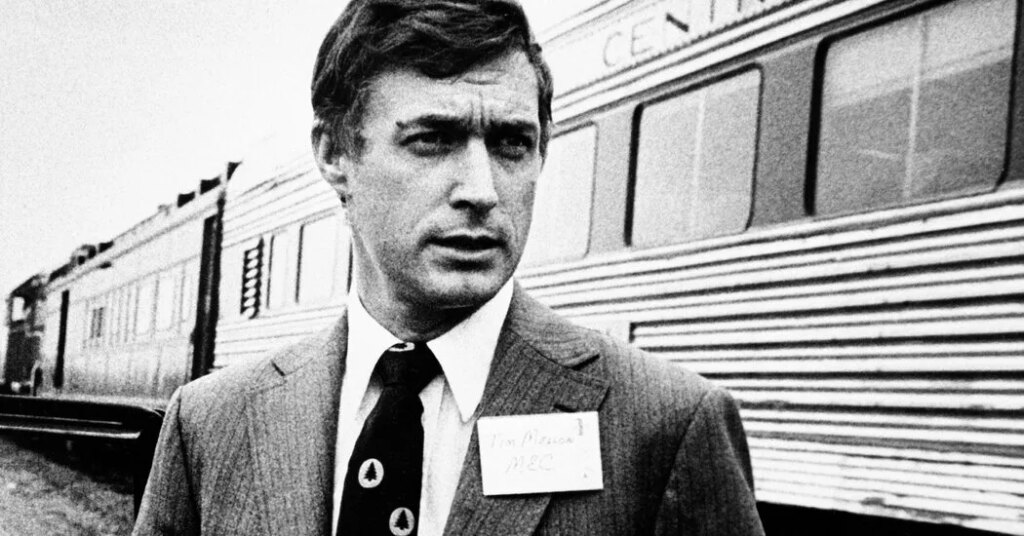
The donor, Timothy Mellon, a reclusive Wyoming billionaire who is a grandson of the Gilded Age industrialist Andrew Mellon, gave nearly $200 million to support President Trump and other Republicans in the 2024 election. Only Elon Musk donated more.
Two years later, Mr. Mellon has given just $3 million or so in publicly disclosed donations to Republican candidates or groups. He also made a $20 million donation last month to help House Republicans, according to two people briefed on the contribution, which will not be disclosed until the next financial reports.
But Mr. Mellon has given nothing publicly so far to support Senate Republicans this fall — a move that has been conspicuous in the party’s financial circles, and shows how some influential Republicans remain angry about the party’s inability this summer to pass the voting legislation, called the SAVE America Act.
The electoral significance of Mr. Mellon’s sudden drop-off in giving is uncertain. Republicans have a broad financial advantage in the midterms, with Mr. Trump’s super PAC and other megadonors shoveling tens of millions of dollars into key races.
Still, Mr. Mellon’s tightfistedness illustrates the unexpected and acrimonious fallout inside the Republican Party after its failed push to pass the voting bill.
The legislation, pushed hard by Mr. Trump, would severely limit voting by mail, impose a nationwide voter identification requirement nationwide and require proof of citizenship to register to vote. Senator John Thune of South Dakota, the majority leader, supported the measure but said the “math” was not there to overcome a Democratic filibuster. Ultimately, the effort sputtered out.
Mr. Mellon’s team has told fellow Republicans that he is not backing Senate Republicans because of their inability to pass the voting legislation, according to two people briefed on the conversations, who spoke on the condition of anonymity to disclose the private discussions.
Mr. Mellon actually received a recent solicitation letter in the mail seeking to raise money for Senate Republicans, according to one of the people. That’s not typically how megadonors like Mr. Mellon are courted. An angry Mr. Mellon personally wrote back that he would not be donating because of Senate Republicans’ inability to pass the bill, the person said.
A representative for Mr. Mellon declined to comment.
Mr. Mellon, 84, is seen in Republican financial circles as a mysterious, eccentric figure. Fund-raisers describe him as almost comically inaccessible, even compared with others in his stratosphere of wealth. He is close to Representative Steve Scalise of Louisiana, the majority leader, and Robert F. Kennedy Jr., the health secretary, but few other Republicans know him well.
Mr. Mellon burst onto the scene in 2018, when he donated $10 million to the Congressional Leadership Fund, the main super PAC for House Republicans. Two years later, he gave over $70 million to back Republicans, including $20 million to support Mr. Trump.
During the last midterms, in 2022, Mr. Mellon donated about $42 million. He truly made his mark in 2024, when he gave about $197 million to Republicans overall and became the single largest disclosed donor to Mr. Trump’s super PAC, MAGA Inc. Mr. Mellon cut two $50 million checks to the group.
It’s a very different story in 2026.
After making an average of 28 donations in each of the last four election cycles, Mr. Mellon has made only five publicly disclosed contributions in the 2026 cycle so far. He donated nearly $2 million in private stock to MAGA Inc.; $1 million to the Congressional Leadership Fund; and smaller five-figure checks to three other conservative-aligned super PACs. Two of those groups backed candidates for the Senate who criticized Mr. Thune and lost their Republican nominating fights.
Campaign finance reports show only public donations through June 30 for some federal committees, and through Aug. 30 for other committees. More donations from Mr. Mellon to Republicans could be revealed in the coming weeks. His $20 million donation in August to the Congressional Leadership Fund, the group backing House Republicans, is set to be disclosed in an F.E.C. report by Oct. 15. The super PAC declined to comment.
Notably absent so far: any donations to help elect Senate Republican nominees this fall. In 2020, Mr. Mellon gave $30 million to the Senate Leadership Fund, the party’s main super PAC for Senate candidates.
In 2022 and 2024, he donated about $30 million combined to other super PACs that focused largely or exclusively on the Senate.
Fund-raisers for Republican Senate candidates have noticed Mr. Mellon’s disappearing act this cycle. Beginning last year, aides allied with Mr. Thune sought to arrange a sit-down between the majority leader and Mr. Mellon, to no avail, according to two of the people briefed on the relationship. A spokesman for Mr. Thune did not respond to a request for comment.
A person close to the Senate Leadership Fund said that even before the SAVE America Act failed, the group had never expected a check from him this cycle.
And it is not as if the Senate Leadership Fund in desperate need of money: As of the last financial reports, it had raised nearly $80 million more than its Democratic counterpart. Other billionaires have filled the void, including Miriam Adelson, who has donated $30 million to the Senate Leadership Fund, and Stephen Schwarzman, who gave $17 million to the group.
Mr. Mellon has found other things to spend his money on. The billionaire, who reportedly appeared this spring at a White House event and toasted Mr. Trump, donated $130 million to the U.S. government to help pay troops during the federal shutdown last year. And he has also transferred a $5.5 million estate to an anti-vaccine group founded by Mr. Kennedy.
The post A Reclusive G.O.P. Billionaire Pulls Back His Money From Senate Republicans appeared first on New York Times.