There may be no more nail-biting diplomatic moment for a world leader in recent years than the first face-to-face meeting with the always unpredictable President Trump.
But Prime Minister Andy Burnham of Britain drew praise on Tuesday from Mr. Trump, who called Mr. Burnham a “natural business person” and said he expects to be able to work with the prime minister because “he gets it.”
The president’s generally positive comments about his fellow leader came after a brief meeting between the two men on the sidelines of the United Nations General Assembly in New York City. Their appearance in front of news cameras following their meeting was the kind of venue that Mr. Trump sometimes uses to skewer his political opponents.
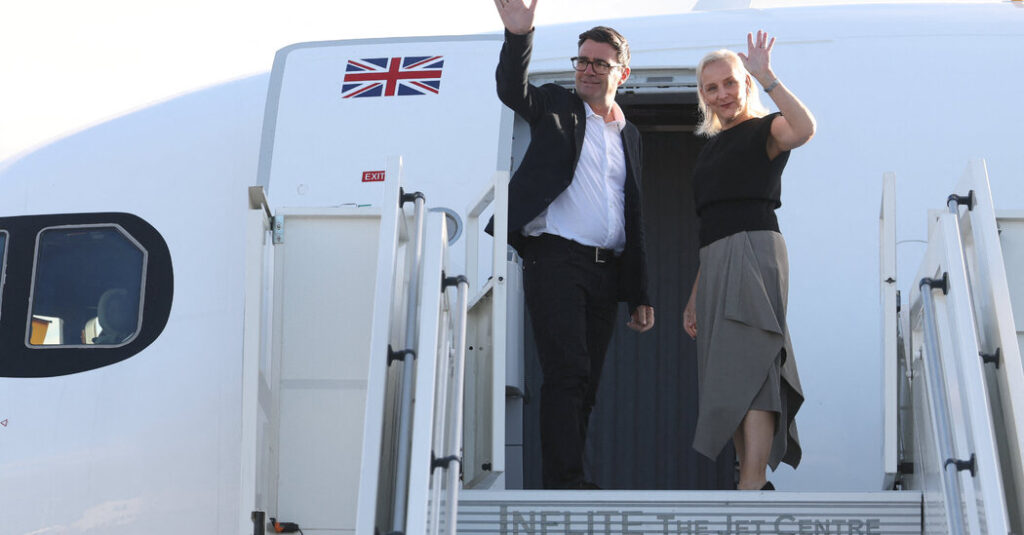
Instead, Mr. Burnham, who took office just 64 days ago, emerged from the engagement largely unscathed. He was set to deliver a short speech later in the evening at the U.N. and planned to be back in London by Wednesday.
“It’s been great to be with you and the team today we really, really appreciate it,” Mr. Burnham told Mr. Trump, at times appearing slightly nervous. “Thank you very much.”
The era of good feelings between Mr. Burnham and Mr. Trump may yet end up being short-lived, much as it was between the president and Keir Starmer, the prime minister’s immediate predecessor.
In their first meeting last year, Mr. Starmer presented the president with a state visit invitation from King Charles III and left with kudos from Mr. Trump. But by this spring, the president was angrily accusing Mr. Starmer of being a coward for his refusal to participate in the U.S. attacks on Iran.
Mr. Burnham and his top advisers are keenly aware of that history.
They say he will not shrink from making announcements that Mr. Trump may dislike. Mr. Burnham is expected to announce in the coming weeks whether he will approve two oil and gas projects in the North Sea. While he has signaled that he will take a more “pragmatic” approach to drilling, possibly by approving one or both fields, Mr. Burnham has also pledged to stick to Labour’s election promise not to issue new drilling licenses.
That could lead the prime minister to a decision that is not as expansive as Mr. Trump might hope. Shortly after Mr. Burnham was chosen to lead the Labour Party and become prime minister, Mr. Trump said, “I hear he’s extremely liberal, extremely. So that means he probably won’t open up the North Sea.” But following a telephone conversation several weeks later, Mr. Trump said: “He said he’s going to open up North Sea oil. If he does that, you’re going to be a wealthy country.”
Aides say they expect the British prime minister to take a more cautious approach with Mr. Trump than Prime Minister Mark Carney of Canada or Prime Minister Pedro Sanchez of Spain have done in recent months. After trade talks with the United States collapsed this month, Mr. Carney declared that Canada was “at war” with America, adding, “You’re at war when you’re attacked, and we got attacked.”
On Tuesday, there was little of that heated rhetoric from Mr. Burnham, who went out of his way to note that when it comes to Iran and the Strait of Hormuz, Britain is “ready to play our part in the Middle East in terms of helping you stop the conflict, open the Strait. Obviously, we’re with you.”
The prime minister largely skipped over issues that could be contentious, like trade and the ownership of the Chagos Islands, a disputed archipelago in the Indian Ocean where the U.S. and the U.K. have a joint military base. In 2024, Britain agreed a deal under which Mauritius would gain sovereignty over the chain of islands, while the United States and Britain would continue to use the military base on Diego Garcia, the largest island, with Britain leasing the base for an initial period of 99 years. That deal was put on hold in April following criticism from President Trump, which he reiterated on Tuesday.
“It was a terrible deal. Somebody has ownership that never showed up before after decades and centuries. I think it’s ridiculous,” he said. Mr. Burnham, eager not to engage the president on the issue, did not respond.
On immigration, Mr. Burnham said he agreed with the president that “our commitment is to get to a controlled approach. That’s what people want to see.”
Earlier this summer, when Mr. Burnham was asked about how he would deal with Mr. Trump, he said, “I sense it’ll be a bit of a challenge.”
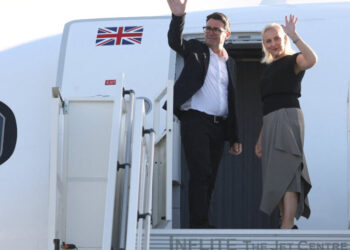
On the plane to New York on Monday night, Mr. Burnham had told reporters he wanted to focus the conversation with Mr. Trump on three things: closer cooperation on AI; efforts to bring about a peaceful and just resolution in Ukraine; and a discussion about how to end the conflict in the Middle East, which has had deep impacts on the price of energy, food and other goods in Britain.
Over the long run, Mr. Burnham will be looking to navigate a rapidly changing relationship with Washington in which Britain aims to become less reliant on the United States for trade and security. Mr. Trump has made it clear that he no longer believes in the “special relationship” that has served as a bond between the two countries since World War II.
Last year, the president referred to Britain as “our once Great Ally” in a social media post, saying he was angry with Keir Starmer, then the prime minister, for refusing to help attack Iran. “We don’t need people that join Wars after we’ve already won!” the president wrote.
During his time in office, Mr. Starmer expended a lot of effort trying to placate Mr. Trump. The mayor of London, Sadiq Khan, said in an interview with The New York Times this summer that Mr. Burnham should not follow his predecessor’s approach.
“The thing about a special relationship is that it’s akin to having a best friend,” Mr. Khan said. “When you’ve got a best friend you expect more from them to a casual acquaintance or a work colleague and that means saying boo to a goose, calling them out when they’re wrong.”
“I think we know there are some people who have been sycophantic to President Trump — it’s not worked out too well for them,” Mr. Khan added. “So Andy should be true to himself.”
Mr. Burnham said on Tuesday that he had told the president about his plan to “turn the story about Britain to a positive story; get some hopefulness going around the country.”
Mr. Trump, who has repeatedly said that Britain and other countries in Europe are in a civilizational decline, decided to be more positive himself.
“There’s great patriotism in the country. They want to see great things happen, and there’s tremendous potential,” Mr. Trump said. “I think it’s just waiting for success, waiting for good leadership, waiting for success.
And when he was asked by a British reporter about the up-and-down nature of the U.K.-U.S. relationship over the past year, Mr. Trump said: “I think you’re up. Well, they’re more now than they were with your last prime minister, let me put it that way.”
He added: “I think right now, based on my relationship with your prime minister, Andy, I think we’re doing very well.”
Stephen Castle contributed reporting from London, and Zolan Kanno-Youngs from New York.
The post Trump Praises Burnham as ‘Natural Business Person’ After First Meeting appeared first on New York Times.