Barely a week passes without fresh evidence that artificial intelligence systems might spin out of control. Public fears are rising. Even the bosses of most big AI firms are calling for regulation and a slowdown.
There’s little doubt that smart controls make sense, but the real question is how to design and implement them. For answers, AI might turn to another industry that faced similar challenges: nuclear power.
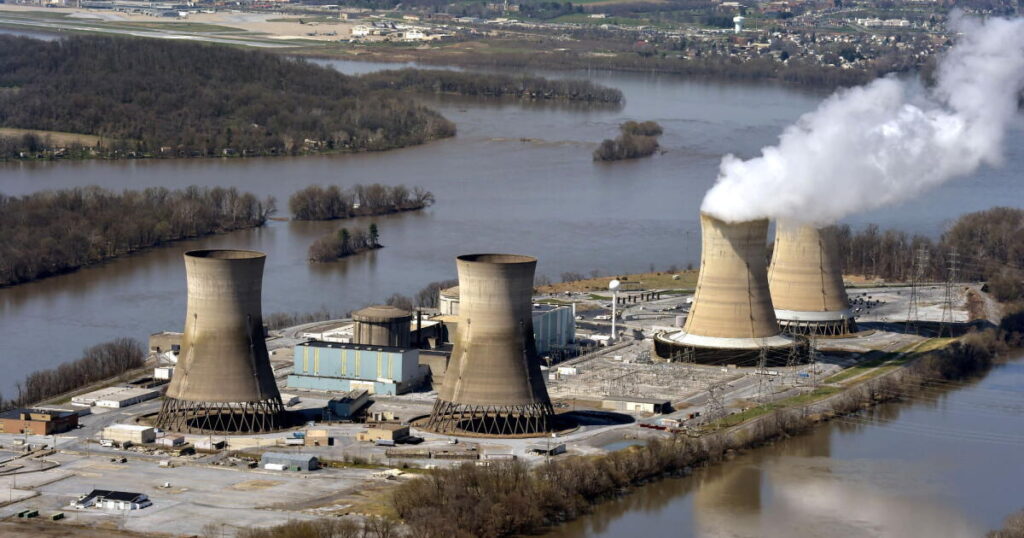
The accident at Three Mile Island nuclear power station near Harrisburg, Pa., in 1979 was a wake-up call for the industry: Bad performance by any firm would destroy public confidence for all. Many in the public were gripped by fear — made more palpable by the fact that Hollywood’s own tale of nuclear meltdown, “The China Syndrome,” opened in theaters just 12 days before the accident.
Just as some AI firms are urging be done today, leading nuclear firms quickly swung into action and started regulating themselves — to make sure everyone in the industry avoided reckless behavior. They did this through extensive peer review. Experts from each firm inspected each other, not just themselves. To make the system work independently, they created a new organization, the Institute of Nuclear Power Operations.
The genius of the institute was that it didn’t confuse the two main roles for regulation. One is learning about novel risks and helping firms, policymakers and the public learn how to avoid the worst ones. That’s what the institute does. Over nearly five decades it has not only made the industry safer — and provided the model for a global version that helps review nearly every nuclear reactor on the planet — but also boosted economic performance. (I am on its independent advisory board but not an employee.)
The other function of regulation is more punitive and restricting: the imposition of binding rules that constrain behavior and penalties on firms that stray. When today’s AI bosses make reasoned calls for “regulation” or “slowdown,” they envision a system for learning and pace — their version of the Institute of Nuclear Power Operations. But the big risk is that some firms — and, apparently, the Trump administration — so fear thickets of regulations and nonsensical constraints that they abhor any intervention. Without all the big players on board, today’s calls for regulation will fail.
Self-regulation in the nuclear industry worked because the industry itself supplied the best experts. Review by people who don’t know what they are looking for can be worse than nothing. For AI, these functions will need to be tailored to the risks and the ability to understand them. Open-source models might be different from closed ones, for example, and the risk analysis will need to be fluid as the technology changes. It won’t be easy to rely on seconded employees because few firms will want to part with their key employees or let intellectual property slip away. Luckily there are enough top engineers who are concerned about keeping AI aligned that they can staff a well-designed system for peer review — earning salaries good enough to stay engaged.
In other industries that self-regulate — such as finance, biotechnology and aviation — firms are motivated less by altruism than by the fear of disaster and the knowledge that government might step in with more onerous regulation if private firms don’t step up. AI’s biggest problem today might be that government seems to have lost that ability to intervene credibly, no matter who occupies the White House.
The big AI firms will need to build an oversight consortium themselves. The good news is that in recent months the wisest calls for self-regulation are pointed in a similar direction. Last week Anthropic’s Dario Amodei called for “embedded evaluators” inside companies who make sure that risks are understood — a function similar to the nuclear power institute, but lacking needed independence. In July, Demis Hassabis, Google’s AI czar, sketched a self-regulation system based on what is done in parts of the financial industry.
There’s a world of difference between saying AI needs regulation and designing a system that works. The concentration of the industry will help. Just a few firms that join a self-regulating consortium can control most of the frontier market. Just two countries, the United States and China, also dominate. Success probably requires starting with as small and focused a group as possible — big firms working inside the U.S. — and then expanding out.
A clock is ticking for the AI industry. None of the AI bots slipping their chains, to date, is probably enough to inspire a serious self-regulatory system. Fierce competition — evident in the huge capital expenditures of the industry — makes any regulation of the whole industry vulnerable to firms that drag their feet or refuse. Waiting longer, however, risks making regulation harder because there could be more new firms with new ideas and risks, not just here but also in China and other countries that learn how to operate at the AI frontier.
David G. Victor is a professor of innovation and public policy at UC San Diego and a nonresident senior fellow at the Brookings Institution.
The post There’s precedent for regulating AI. Look to nuclear power appeared first on Los Angeles Times.