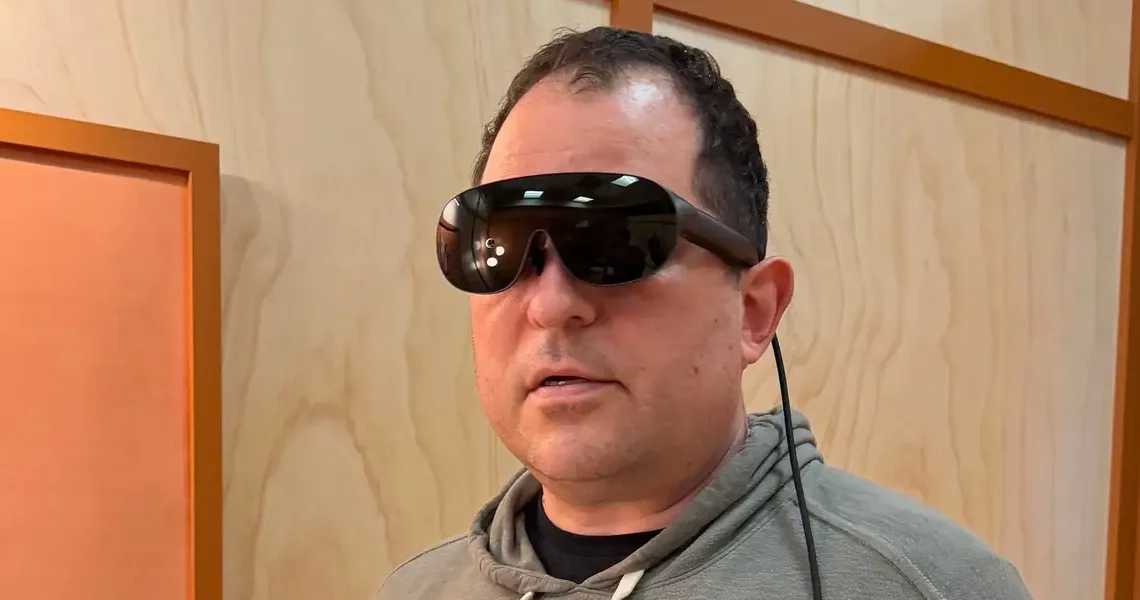

Two years ago, Apple introduced its Vision Pro virtual reality goggles.
They failed: They were too expensive, too heavy, and — crucially — no one could figure out what to do with them.
Now Mark Zuckerberg is taking a swing at the same idea. The new Meta VR Glasses, which he debuted at his annual developers’ conference Wednesday, are way cheaper and way lighter than Apple’s, and they have at least one cool new feature.
But I’m still not sure what to do with them.
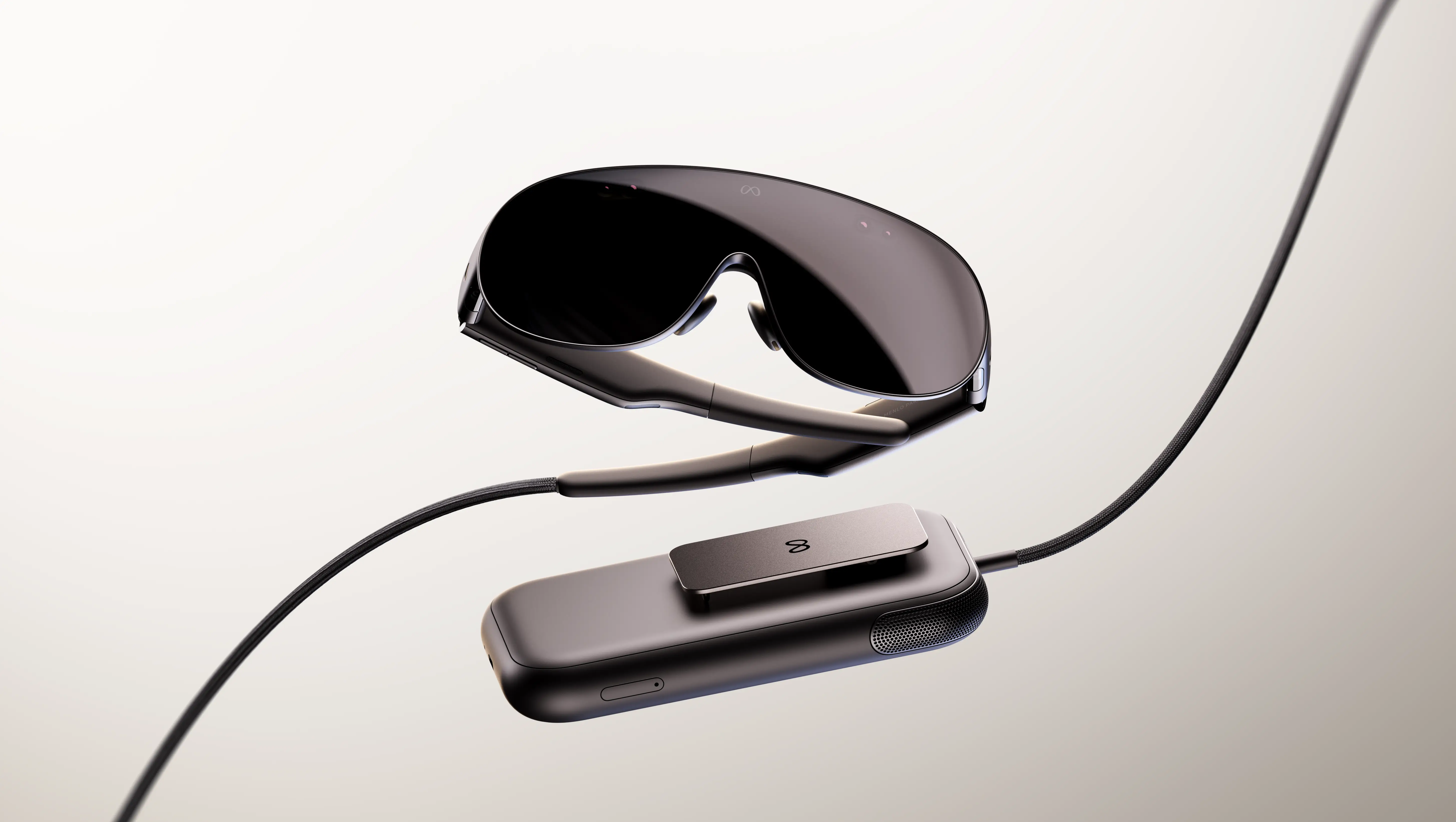
The basics: The Meta VR goggles — which they’ve been working on for years — will go on sale in spring 2027 for $1,300 — a third of the Apple Vision Pro’s starting price. The headset weighs about 100 grams — much, much less than the 600 grams the AVP weighs. (The Meta glasses also require a not-too-bulky “puck,” which provides battery and computing power for the device. Meta expects the puck will sit next to you when you use the goggles, but you could also conceivably wear this thing on your belt if you wanted to stand up or (don’t do this) walk around with the goggles on.)
And at their core, Meta’s goggles do the same thing as Apple’s: Put them on and you can see a completely encompassing view of a virtual world. You can also toggle them so you can look outside into the real world, sort of*.
Just like the Apple Vision Pro, it’s quite an amazing experience, at least from a technical standpoint.
The Meta goggles also improve on the “Minority Report” hand-wavy interface that both Apple and Meta have used before. Instead of having to hold your hands up in front of you to manipulate virtual stuff, like AVP requires, or use a wristband that reads the electrical impulses your hands make, like Meta’s souped-up Ray Ban line, these goggles allow you to manipulate your surroundings with your hands when they are at your desk, or at your side, or in your lap. Super cool.
But what would you actually do with these things if you owned them?
The most obvious answer is “watch a movie.” Which helps explain why “Avatar” director James Cameron has been working with Meta on these (and talking about them) for some time.
This is also the answer that Meta employees who are demoing the product give you. And I can definitely see why this might be more fun on a plane than watching a movie on my iPhone. On the other hand, I have to take my iPhone with me when I fly. Do I also want to bring a $1,300 pair of goggles with me?
And if I’m not on a plane, then … this is where I get stumped.
You don’t want to wear these around anyone you actually want to talk to or interact with, for pretty obvious reasons. (This is also a privacy upside: You don’t need to worry about people secretly recording you with these things, because anyone with eyes can see you’re wearing a big piece of tech on your face. Zero chance you’re sneaking up on anyone.)
And if you’re by yourself, at home, wouldn’t you just watch a movie on a TV?
Meta has other suggestions as well: You can play relatively crude games with these, similar to what Meta’s existing Quest goggles let you do. You could also use it as a work device and pull up multiple screens to work on. And I do think there are a number of antisocial coders who might like this.
And beyond that? You got me.
I do understand why Meta, which has spent tens of billions of dollars working on consumer hardware, keeps plugging away at it, even though it has yet to create a truly mass-market success: Zuckerberg hopes that one of these devices will become the next version of the iPhone — a device lots of people use to access the internet, but one that he controls, instead of Apple or Google.
This kind of tech also syncs nicely with the entire tech industry’s AI push: Once you’re wearing a face computer, it makes plenty of sense to bark commands at an attached AI, which is most definitely what Meta wants you to do with its goggles, too.
But that AI push also means we could be looking at a future where the device you use matters a lot less than the AI you use.
Meta’s Muse agent app, for instance, appears to be a hit out of the gate, and I’ve been using it extensively on my iPhone. I’m sure Zuckerberg would prefer if I use Muse on his own hardware. But I’m also sure what’s most important is that people use Muse.
That doesn’t mean that Meta is going to abandon hardware — they are pushing very hard with their line of souped-up Ray-Bans, which aren’t nearly as robust, but double as actual glasses you might wear. But I do wonder if this is their last attempt to put a face computer on your head — at least until they can explain what you’d do with it .
*Both Apple and Meta’s goggles feature “pass through” tech, which means they are actually filming the world outside your goggles and giving you an ever-so-slightly pixelated view of that inside your goggles.
Read the original article on Business Insider
The post I tried Meta’s new $1,300 VR Glasses. They might be good for watching a movie — but I’m not sure what else. appeared first on Business Insider.