Kenya Glasgow and her family were arriving at an aunt’s home in Margate, Florida, for dinner when the rain started coming down hard.
The 31-year-old and her husband, Kameron Glasgow, hurried to get their toddlers indoors, he recalls. But as they were walking on the sidewalk, lightning struck Kenya and her 2-year-old daughter, Kennedi, according to police.
Both were taken to a hospital, where they were pronounced dead.
“I’m still trying to wrap my mind around it,” Kameron Glasgow told CBS News.
Sixteen people have died from lightning strikes in the United States so far this year, six of them in Florida. Four of the deaths in that state have occurred since late August, including Kenya and Kennedi Glasgow on Aug. 23; a 41-year-old man who was struck and killed while using a personal watercraft near Fort De Soto Park days later; and a 20-year-old man who was struck in early September while out walking in a suburb of Orlando.
Florida typically sees between four and six lightning deaths each year, according to data from the National Lightning Safety Council. While this year’s deaths are within the typical range, experts at the council say lightning activity across the state this summer has been abnormally intense.
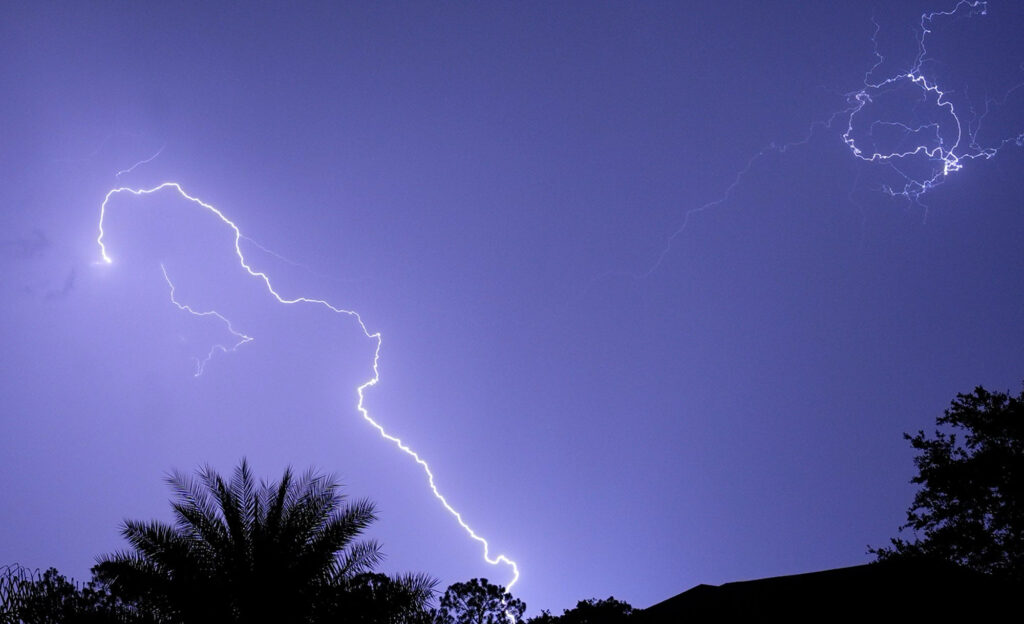
So far this year, lightning activity across Florida has been 28 percent above the 10-year average, said Chris Vagasky, a lightning data and safety specialist with the National Lightning Safety Council. Florida averages more than 3,200 cloud-to-ground lightning strikes each day, according to Vaisala data from 2009 to 2018.
While May and June were below average, lightning activity jumped to 12 percent above average in July, 58 percent above average in August, and 212 percent above average in the first half of September.
“Somewhere in July, a switch was flipped,” Vagasky said, describing this year as “supercharged” in Florida.
Vagasky could not say yet why lightning activity has been worse this year.
Pinning down the reasons will require analyzing storm patterns and weather data, Vagasky said. A good starting point is always moisture, he said, because more humidity means more moisture available to fuel thunderstorms.
Some studies have suggested climate warming will boost lightning activity. A 2014 University of California at Berkeley study predicted that lightning strikes in the U.S. could increase by roughly 50 percent by the year 2100.
Still, Vagasky said it’s difficult to tie what he describes as such a small-scale phenomenon as lightning to “climate change overall.”
“How much additional lightning we’ve seen, especially in the last couple of months, is something that we’ll have to dig into,” he said.
July and August are the peak months for lightning-strike casualties, in part because more people are outdoors and lightning activity is higher. But people can be struck at any time of the year.
Experts stress that no place outside is safe during a thunderstorm. If you can hear thunder, you are close enough to be struck by lightning, which may strike as far as 10 miles from rainfall.
John Jensenius, a safety expert at the National Lightning Safety Council, said people should plan outdoor activities around forecasts, monitor changing weather and avoid situations where reaching shelter would take significant time. He said it’s important to seek shelter immediately when you hear thunder and stay inside for 30 minutes after the last clap.
“We have a very simple saying: ‘When thunder roars, go indoors,’” Jensenius said.
The post As lightning claims lives in Florida, experts warn of ‘supercharged’ activity appeared first on Washington Post.