A group of civil-rights and free-speech lawyers said Tuesday that they had identified “staggering” missteps in a multimillion-dollar verdict against Greenpeace last year and argued that the judgment should be overturned.
Greenpeace, the environmental organization, last year lost a lawsuit brought by the pipeline giant Energy Transfer over protests against the Dakota Access Pipeline in North Dakota. The company accused three Greenpeace entities of property destruction, defamation and interfering with its business operations, among other claims.
The jury trial in North Dakota state court resulted in a verdict of more than $660 million, which was later reduced by the judge to $345 million. Greenpeace has said the verdict threatens its United States operations with bankruptcy.
Greenpeace’s main U.S. arm was found liable for most of the damages. Another American branch, Greenpeace Fund, and Greenpeace International, based in Amsterdam, were also found liable for some claims.
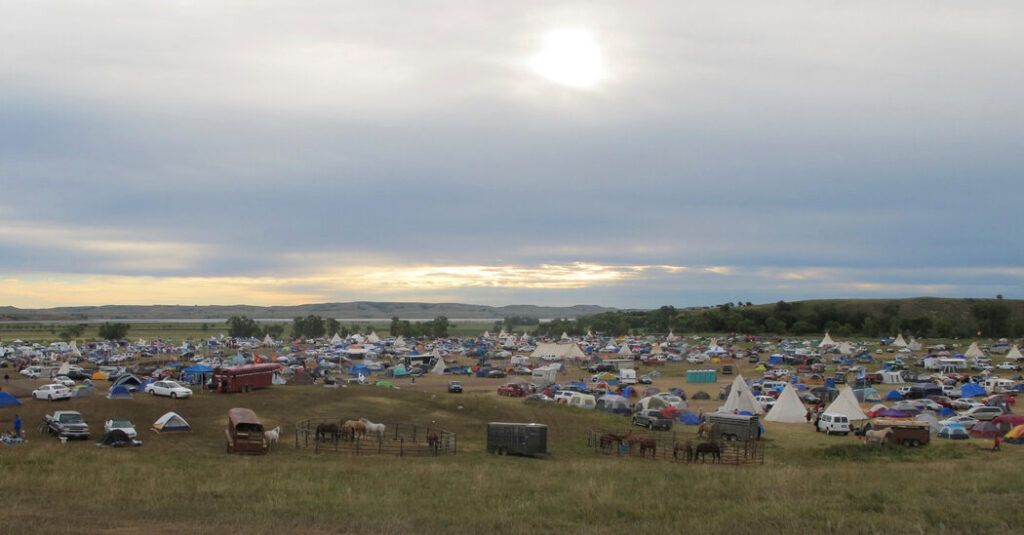
The demonstrations against the Dakota Access Pipeline were led by the Standing Rock Sioux Tribe starting in 2016 and attracted support from around the world. The tribe said the planned pipeline encroached on its ancestral lands and threatened the local water supply.
Energy Transfer is a major player in the American energy industry and says it maintains about 140,000 miles of pipeline and associated infrastructure across 44 states. Its founder and board of directors executive chairman, Kelcy Warren, is a donor to and ally of President Trump and has been outspoken about his desire to confront protesters.
The lawyers’ group, which had observed the trial, described on Tuesday what it said were examples of due-process violations, judicial bias and jury manipulation. The group included Martin Garbus, a veteran free-speech advocate, and Steven Donziger, who fought a long legal battle against Chevron, among others.
In a statement, Mr. Garbus called the verdict “probably the most unfair one I’ve ever witnessed in the United States.” If allowed to stand, he said, it could “impair the advocacy of activists, religious groups, political organizations, churches, charities, and anyone exercising a constitutional right to speak on an issue of public importance, regardless of where they fall on the political spectrum.”
The lawyers said they observed bias in the jury pool that prevented Greenpeace from getting a fair trial. Many jurors had ties to the oil and gas industry, an important business in the state, the lawyers said, and they noted that the jury did not include Native Americans or people of color.
The Dakota Access Pipeline has been operating since 2017. In a statement, Vicki Granado, a spokeswoman for Energy Transfer, dismissed Tuesday’s report.
“This is a tired story line that Greenpeace continues to resurrect as a way to raise money,” she said. “Greenpeace was held responsible by a court of law for its actions related to their conduct during the construction of the Dakota Access Pipeline. They have posted a $25 million bond which is the first step in the payment process of more than $345 million awarded to us as part of the established legal process. We look forward to bringing this to an eventual close that will result in Greenpeace paying the full amount of what they owe.”
Greenpeace has requested that the judge in the case, James Gion, grant a new trial. If he rejects the request, the group said it would file an appeal.
The group had sought to have the trial moved from state court in Mandan, N.D., about 200 miles away to Fargo, arguing that local residents harbored bitter memories of the disruption from thousands of out-of-town protesters descending on the area. Greenpeace also cited pro-industry mailers that had been sent to local residents ahead of the trial. The request was denied.
The lawyers criticized some of the decisions of Judge Gion. The lawyers said he had unfairly blocked Greenpeace from presenting its full defense through various decisions and that he had given the jury confusing instructions. They accused him of “general incompetence” coupled with “a troubling degree of bias.”
A representative for Judge Gion said that it was “an extremely important case to all involved, and Judge Gion took immense care to preserve the record and the parties’ legal rights.”
Greenpeace had argued the trial was a SLAPP case, or Strategic Litigation Against Public Participation. That’s a term for cases in which powerful organizations try to use the threat of costly litigation to silence critics. Many states have laws limiting SLAPP cases, but not North Dakota.
Greenpeace International is also pursuing a countersuit in the Netherlands against Energy Transfer, citing local anti-SLAPP laws.
The post $345 Million Verdict Against Greenpeace Should Be Overturned, Lawyers Say appeared first on New York Times.