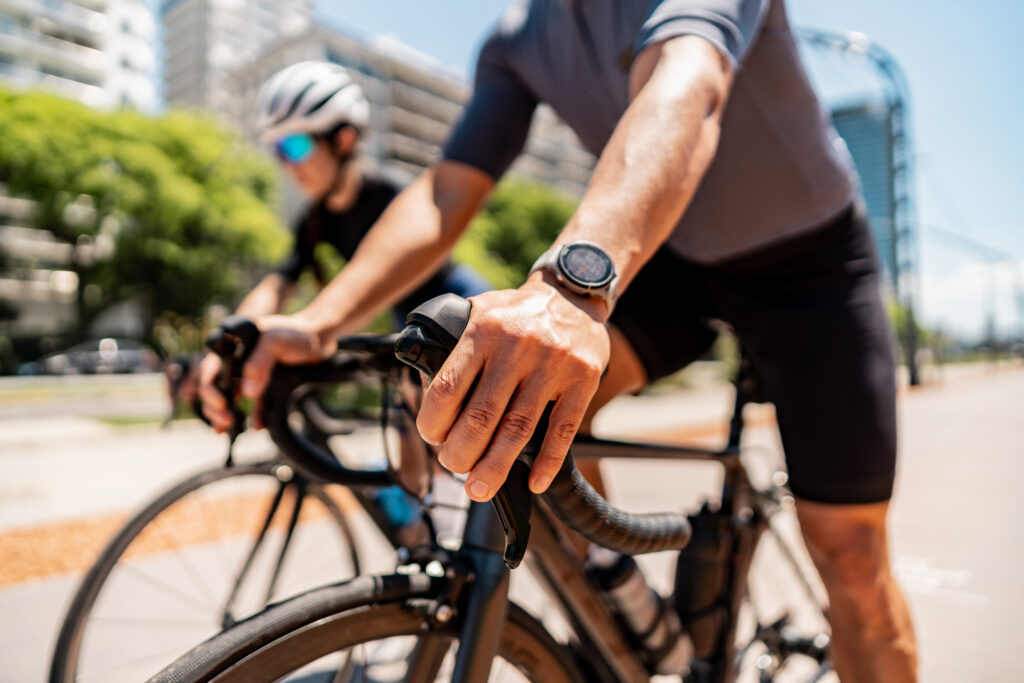
Your smartwatch may not be lying to you about how many calories you burn when exercising. But it’s almost certainly exaggerating, according to an eye-opening new study.
Scientists asked 58 men and women of varying ages and body weights to wear different smartwatches for the study, which was funded by the National Science Foundation. (The devices were made by Apple, Garmin, Samsung and Fitbit.) The volunteers also strapped on high-tech face masks and other scientific paraphernalia to precisely measure metabolic changes.
Then they rode stationary bicycles, alternating two minutes of fast pedaling with five minutes of rest, until they’d completed 10 minutes of strenuous pedaling, plus the rest periods. The various devices tracked everyone’s energy expenditure throughout.
But the final measurements differed widely. Almost across the board, the smartwatches had overestimated people’s caloric burns by about 15 to 25 percent, compared to the rigorous, scientific readings.
The overestimations were greatest among people with higher body weights, perhaps, in part, because the watch’s caloric algorithms had been developed with data from leaner people, said Ekaterina Oparina, an exercise scientist at Barry University in Miami and study co-author.
But for anyone using a smartwatch to track calories, the takeaway is the same. Check the number after a workout, Oparina said, and “round down.”
Catch up quickly every weekday morning with a rundown of the 7 most important and interesting stories. Sign up for The 7 newsletter.
The post Why your smartwatch is so bad at telling you how many calories you burned appeared first on Washington Post.