A six-figure annual salary used to be a milestone for career success and financial security, but it isn’t what it used to be.
The era of elevated inflation that began during the COVID pandemic has eroded the value of $100,000 to the point that Americans earning that much are hunting for bargains like everyone else.
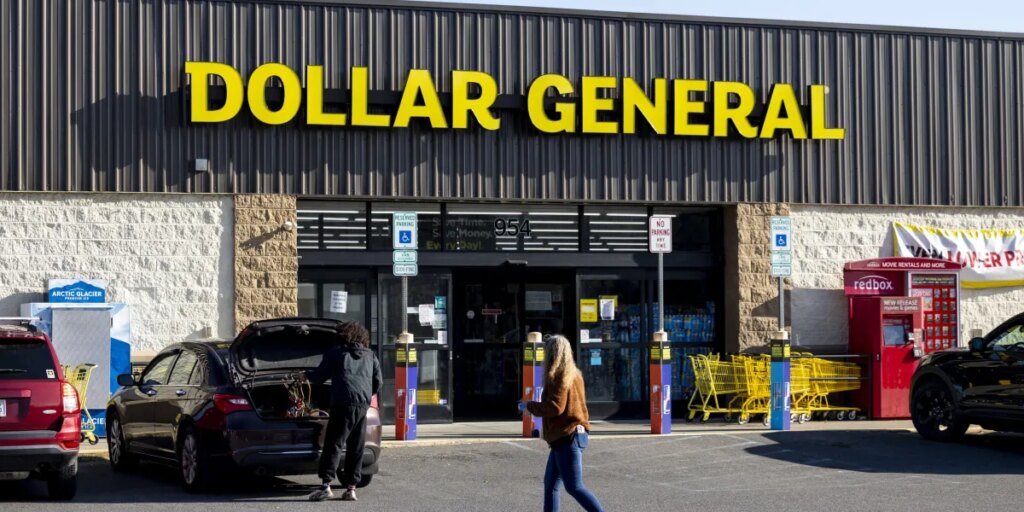
Walmart has previously noted that more affluent customers are shopping at the discount chain. And now they are patronizing deep discounters like dollar stores.
At the Goldman Sachs Global Consumer and Retail Conference on Tuesday, Dollar General CEO Todd Vasos said core customers, whom he defined as those making less than $45,000 a year, change their shopping behavior when gas prices hit $4 a gallon.
For example, they tend to buy closer to home, shop more often, and buy less on each trip. The frequency of shopping goes up because customers don’t know what the next week will hold and will buy what they can, when they can.
“But the interesting thing with this economy, because of the other sustained headwinds of inflation over the years that have passed, even that middle to upper middle is acting more like a lower-income shopper these days,” he said, according to a Seeking Alpha transcript.
The national average for a price of gasoline is now $4.476 a gallon, up from $3.189 a year ago, according to AAA, as President Donald Trump’s war on Iran disrupts global oil markets. The price of diesel has soared to $6.50, making items shipped by trucks more expensive.
But it’s not just energy costs. Utility bills, new and used cars, insurance, food, and caregiving costs have all jumped. Vasos said even those making $100,000 a year or more are feeling the squeeze.
“I would tell you, what we’re hearing more and more from them is ‘I don’t feel like I’m higher income at $100,000 any longer,’ because of all of the headwinds that I just mentioned,” he added. “So we believe at Dollar General, we’re in a really good position to service all of the different demographics of what we have.”
Still, consumers remain very resilient, and the biggest reason is that they have stayed employed, Vasos explained.
Indeed, the ability of consumers to adapt to higher prices has been a hallmark of the U.S. economy lately. The latest retail sales report showed a better-than-expected 1.2% increase in August and a 1.1% gain after excluding gasoline.
As long employment holds, Dollar General’s costumers will find a way to navigate the inflation landscape, he predicted.
“Having 2,000 items at or below $1 is very meaningful for the consumer, always has, but especially in this environment,” Vasos added.
Other signs have emerged that making $100,000 isn’t enough to avoid economic anxiety. A survey from the Harris Poll last year found that 64% of six-figure earners said their income isn’t a milestone for success but merely the bare minimum for staying afloat.
In fact, even those making $200,000 or more have resorted to financial tactics that are often associated with less wealthy consumers. For example, 64% said they’ve used rewards points to pay for essentials, 50% have used “buy now, pay later” plans for purchases under $100, and 46% rely on credit cards to make ends meet.
And Michael Green, chief strategist and portfolio manager for Simplify Asset Management, wrote a viral Substack post last year arguing the real poverty line should be $140,000.
Conventional gauges don’t capture how much Americans are struggling with the cost of living, even households earning six figures, he said.
“If the crisis threshold—the floor below which families cannot function—is honestly updated to current spending patterns, it lands at $140,000,” Green added.
The post Dollar General CEO says consumers making $100,000 a year don’t feel like high-income shoppers anymore as high gas prices and inflation reshape habits appeared first on Fortune.