Regarding the Sept. 15 5-Minute Fix, “Trump has failed to restrict voting by mail”:
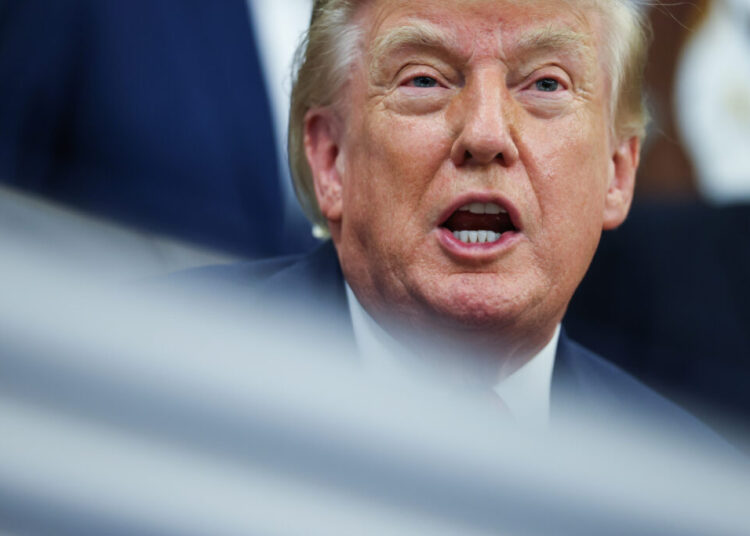
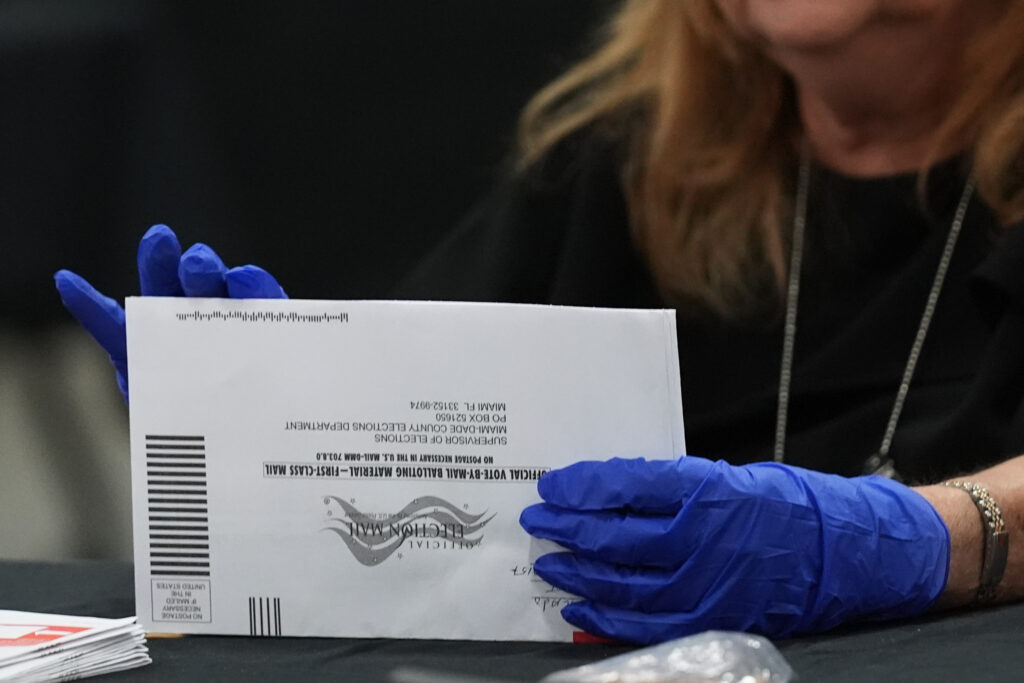
The 7-2 Supreme Court decision blocking President Donald Trump’s contemptible ploy to use the U.S. Postal Service to restrict mail-in voting is an enormous victory for common sense and a relief for the nearly one-third of American voters who send their ballots by mail.
The Post reports that election experts say voting by mail is safe and secure. The court has acted decisively to forestall the likely disenfranchisement of voters. Its ruling will help dispel concerns about widespread fraud and thwart Trump’s efforts to sow confusion and chaos in the absentee voting process.
John R. Leopold, Stoney Beach
The writer, a Republican, represented Maryland’s 31st District in the House of Delegates between 1983 and 1991 and between 1995 and 2006.
Across the country, mail-in voting continues to draw skepticism, yet the evidence tells a consistent story: Mail-in voting works because it’s built on verification. Every ballot mailed to a voter is traceable, auditable and protected by law. States verify registration databases, match signatures and track ballots through unique barcodes. Bipartisan counting boards and postelection audits confirm accuracy. These procedures are the product of refinements made by election officials from both parties. The Constitution gives states the authority to manage elections, and state attorneys general defend those systems in court.
Mail-in voting is a tested, transparent process that expands participation while preserving integrity. The real danger lies not in the ballots, but in the erosion of public trust. Democracy depends on confidence in the count — and mail-in voting earns that confidence every election.
Linda Lindquist, North Fort Myers, Florida
American Catholics should find unity
Regarding Nathan Pinkoski’s Sept. 13 op-ed, “Immigration is splitting the Catholic Church,” and the Sept. 14 Metro article “DHS hire defended Trump on citizenship”:
I am dismayed that the Trump administration appears to be deliberately elevating Catholic voices that challenge Pope Leo XIV and the American bishops on important moral issues. I also worry that highlighting divisions among Catholics may contribute to that growing divide.
The political polarization in America is clearly finding its way into the Catholic Church. Some Catholics are identifying more closely with President Donald Trump’s agenda, and in some cases with Christian nationalism, while Pope Leo and much of the hierarchy continue to emphasize the Gospel’s call to welcome immigrants, protect human dignity and care for the vulnerable.
I worry that too many Catholics are beginning to see their faith through a political lens rather than allowing the Gospel and Catholic social teaching to shape their politics.
At a time when America is already deeply divided, I wish we could find ways to bring Catholics together rather than deepen the schism among us.
John Mudd, Washington
The writer is a retired Catholic priest of the Archdiocese of Washington.
Everyone counts in the census
Regarding the Sept. 10 front-page article “Sweeping census proposal could exclude millions”:
The Trump administration’s proposal to add a citizenship question to the census and exclude undocumented immigrants and noncitizens without permanent residency is cruel and arguably unconstitutional. The 14th Amendment explicitly states that representatives are to be apportioned by “counting the whole number of persons in each state,” which has been historically understood to include all inhabitants of the United States, not just those with legal status.
Refusing to count the millions of immigrants who are undocumented, or those who do have status but have not yet become a legal permanent resident, would deprive states of representation in Congress.
While this attempt to deny states and their residents federal funding or seats in Congress will likely be challenged in court, the next administration should reject the proposal if it survives in any form following the 2028 election.
Anthony Arnaud, Laguna Niguel, California
A defense strategy grounded in reality
The Sept. 13 editorial “The U.S. cannot afford a major war. What if one comes anyway?” argued that the federal budget is not prepared for the United States to fight a major war. And it made the wrong assumption that “defending the country is Washington’s most fundamental responsibility.”
The challenge is resolving the strategy and budget imbalances. Too often, American strategies have been aspirational and, in most cases, unrealistic. The current obsession with China and a direct defense of Taiwan is a case in point.
Shame on us if we cannot construct a strategy that is realistic, achievable and affordable, meaning hundreds of billions of dollars less than this year’s proposed $1.5 trillion defense budget. Regarding lack of preparation, as former defense secretary Donald Rumsfeld mused, “You go to war with the army you have, not the army you might want or wish to have at a later time.”
The first aim of government is to provide good governance as specified in the Constitution’s preamble: “We the People of the United States, in Order to form a more perfect Union, establish Justice, insure domestic Tranquility, provide for the common defence, promote the general Welfare, and secure the Blessings of Liberty to ourselves and our Posterity, do ordain and establish this Constitution for the United States of America.” But can we, or will we, follow that guidance?
Harlan Ullman, Washington
The writer is Chairman of the Killowen Group.
Letter submissions
Send letters to [email protected].
Submissions must be exclusive to The Post and should include the writer’s address and day and evening telephone numbers. Letters are subject to editing and abridgment. Please do not send letters as attachments. Because of the volume of material we receive, we are unable to acknowledge submissions; writers whose letters are under consideration for publication will be contacted.
The post Why voters can trust mail-in ballots appeared first on Washington Post.