The Trump administration’s confidential deals with pharmaceutical companies to lower U.S. drug prices include inducements to raise drug prices overseas and promise protection from President Donald Trump’s tariffs, according to documents shared with The Washington Post.
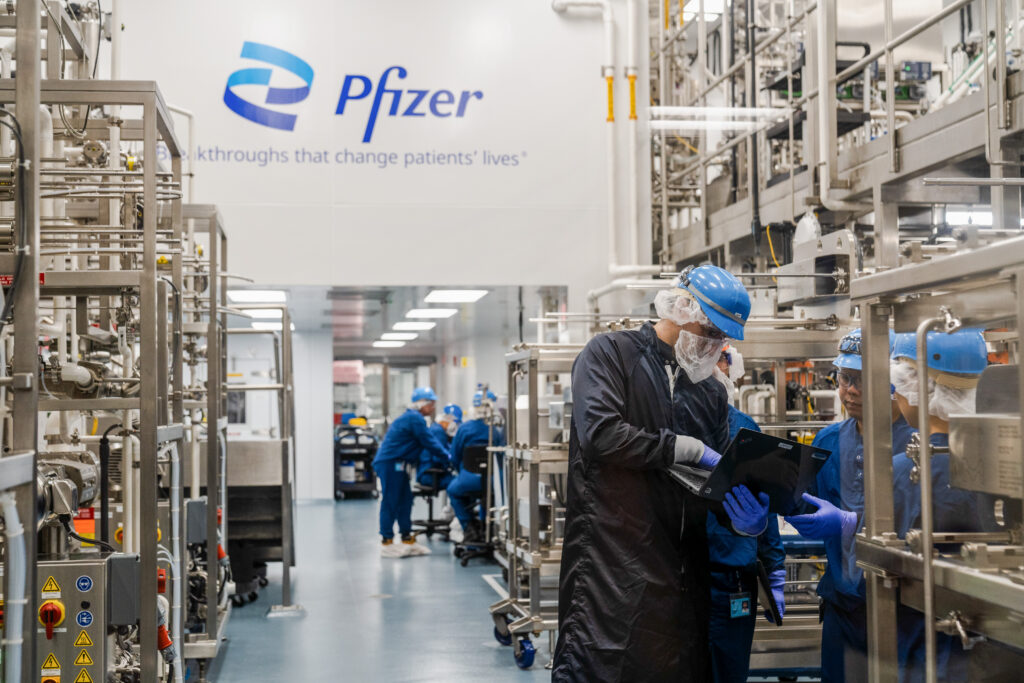
The documents, obtained through Freedom of Information Act lawsuits, detail negotiations between the administration and the pharmaceutical giants Pfizer and Eli Lilly. Both companies agreed to voluntarily cut some U.S. prices last year after negotiating with Department of Health and Human Services officials, and Trump celebrated the deals at the White House.
The text of the agreements show that key terms remained unresolved when company executives promoted them with Trump. They also detail administration commitments that were not publicly disclosed, such as how it will resolve disputes with Pfizer.
The documents contain broad confidentiality provisions. In its agreement with Pfizer, HHS pledged to “treat all Confidential Information as exempt from release under FOIA” and to limit access to government personnel needed to carry out the agreement.
The agreement also “includes an unmistakable promise that HHS will take all regulatory, administrative, and other actions necessary” to carry out its terms, according to a document dated Sept. 30, 2025, and signed by Pfizer CEO Albert Bourla and Health Secretary Robert F. Kennedy Jr.
A private agreement generally cannot, by itself, exempt government records from federal disclosure law, although a federal promise of confidentiality can be relevant when determining whether commercial information qualifies for an exemption. Trump administration officials have said that the Biden administration similarly withheld sensitive data related to its negotiations with pharmaceutical companies.
Public Citizen, a consumer watchdog, sued to obtain the documents through FOIA. The Trump administration has closely guarded the contracts, despite pledges by Kennedy earlier this year to release them. The negotiations with Pfizer and Lilly are part of Trump’s broader campaign — dubbed the “Most Favored Nation” initiative — to cut U.S. drug spending by pressuring pharmaceutical companies to discount their prices, pushing foreign governments to assume more of the cost of subsidizing pharmaceutical research and development, and linking the price of drugs in America to lower-priced drugs abroad.
Both deals are scheduled to run through Jan. 20, 2029 — Trump’s last day in office — meaning the companies’ pricing concessions could expire after this administration ends.
The records released to Public Citizen are heavily redacted. They omit key financial terms, the negotiated prices for drugs and other provisions, making it difficult to independently assess the agreements’ value to taxpayers or the companies.
Drug-pricing experts at Public Citizen, which posted an analysis of the documents Saturday, said the administration’s disclosures were insufficient and raised significant questions about the scope of the deals.
“There’s a lot missing where we can’t get a great sense of how good these deals might be for the American people,” said Sarah Karlin-Smith, research director for Public Citizen’s Access to Medicines Program. “But the more that is revealed, the more it becomes clear that they are designed to protect pharma’s pocketbooks, not patients.”
Public Citizen lawyers are litigating to challenge the administration’s redactions.
Spokespeople for the Trump administration, Pfizer and Lilly said their deals lowered drug prices and that much of the agreements should remain confidential.
“The Administration cannot release contracts with drugmakers that contain commercially sensitive information and would undermine ongoing negotiations with other companies,” said White House spokesman Kush Desai.
Desai added that the administration had released details about the deals that Pfizer, Eli Lilly and two dozen other pharmaceutical manufacturers have struck with the administration.
“We stand by our belief that the agreement Pfizer voluntarily reached with the Administration last September is a win for American patients,” said Amy Rose, a Pfizer spokeswoman. “It delivers on three priorities: helping patients access medicines at lower prices without a middleman; ensuring U.S. patients no longer shoulder a disproportionate share of global R&D costs; and providing a stable and predictable environment to support long-term investments in biopharma R&D and manufacturing here at home.”
A Lilly spokesperson touted how the company’s agreement with the government had expanded access to several of its GLP-1 drugs, Zepbound and Foundayo, which are used to treat obesity.
Trump has characterized his drug-pricing deals as a signature accomplishment of his second term, insisting that Americans are seeing real savings. The president and his deputies have also touted related efforts such as TrumpRx.gov, a government website that helps Americans purchase medicines at discounted prices, and payment pilots launched by Medicare and Medicaid’s innovation center to lower government drug spending.
“We’re delivering the largest prescription drug price cuts in recorded history with discounts of 70 percent, 80 percent, and even 90 percent,” Trump said at a rally in North Carolina on Wednesday. “And by the way, that alone should win us the midterms.”
Trump has celebrated a recent decline in prescription drug prices as evidence that his approach is working. Administration officials have also said that TrumpRx has generated hundreds of millions of dollars in savings for Americans and released projections that their deals could save hundreds of billions of dollars across the next decade — assessments that outside experts say have not been independently confirmed and may be diminished if Trump’s deals lapse after his term.
Wall Street analysts and investors have taken a relatively dim view of Trump’s drug-pricing deals, saying pharmaceutical companies have limited their concessions to relatively small portions of their portfolios. S&P Global concluded in April that Lilly’s deal with the Trump administration would have a “relatively immaterial” impact on the company’s financial forecast. Many of the pharmaceutical companies that have struck deals with Trump to discount their drugs had already offered similar discounts, including for insured Americans.
Democrats have also questioned whether the deals have produced significant savings and why the administration has not released more details, particularly after Kennedy testified that he would do so.
“I‘m happy to make the deals available except for proprietary information and trade secrets,” Kennedy told Sen. Elizabeth Warren (D-Massachusetts) at a hearing in April.
Chris Klomp, a senior HHS official who served as a key negotiator on the drug-pricing deals, was pressed by Warren and other Democrats in two Senate hearings this week on why the contracts had not been released.
“You still want the American people to believe that they are somehow a really great deal for our country? That we’re getting great prices here?” Warren said to Klomp on Tuesday.
“Billions of dollars have already been saved in out-of-pocket transactions,” Klomp replied, as Warren interrupted him and demanded to see “the receipts.”
“We are not hiding anything,” Klomp said.
Trump has made drug pricing central to Republicans’ midterm pitch, repeatedly mentioning his deals and scheduling frequent White House announcements with pharmaceutical companies and other officials. The president on Friday unveiled an effort to extend low prices negotiated through his Most Favored Nation initiative to Medicaid programs around the country.
Voters in both major parties frequently identify lowering drug costs as a top priority. But recent surveys have found that Democrats retain a substantial advantage on health care ahead of November’s elections.
“Health care costs, including the price of prescription drugs, are top of mind for voters ahead of the 2026 election with Democrats currently being seen more trustworthy on these issues,” said Mollyann Brodie, an executive director at KFF, a nonpartisan health care research and polling organization. “These latest actions by the Trump administration may in part be an effort to convince voters that they are the best party to rein in prescription drug costs.”
Trump’s drug-price strategy has also sparked some international tensions, with leaders of other countries warning that higher prices could strain public health budgets. British lawmakers this week called for an investigation into the potential cost to the National Health Service of an agreement negotiated with the Trump administration under which the United Kingdom would significantly raise its spending on pharmaceuticals. In exchange, the United States agreed to exempt British pharmaceuticals from certain tariffs.
The Pfizer and Lilly documents show how the administration offered the companies tariff protections and other benefits while encouraging them to raise prices abroad.
“The concept is they’ll go up somewhat and we’ll come way down because the world is bigger than us, so it’s disproportionate,” Trump said in remarks at the Republican midterm convention in Dallas earlier this month. He described his efforts to threaten French President Emmanuel Macron and other countries with tariffs until they agreed to make drug-pricing deals.
Thomas Hwang, a Harvard University physician and researcher who has studied Trump’s drug-pricing push, met with health officials from several European countries in Copenhagen this week. In an interview from Copenhagen, Hwang said that there was considerable “discussion and tension” about how Trump’s drug-pricing approach would affect access to medicines and costs in European countries.
“This intersection between trade, and pharma, and access to medicines — it’s entirely new and unprecedented,” Hwang said.
Hwang and colleagues wrote in the Lancet this week that the potential savings from Medicare’s new drug-pricing payment pilots could be undercut by billions of dollars based on whether pharmaceutical companies had received exemptions from the Trump administration — information that is still not public.
Public Citizen’s experts said that Hwang and his colleagues’ analysis illustrated the need for more disclosure.
“We think it’s pretty ugly that a topic that typically would be worked out through Congress, with many opportunities for public comment, is still being withheld from the public many months after the White House took a victory lap for these deals,” Peter Maybarduk, who directs Public Citizen’s access to medicines group. “There’s no reason the public shouldn’t know what terms are being negotiated on drug pricing.”
The post Secret contracts reveal undisclosed terms in Trump’s drug-pricing deals appeared first on Washington Post.