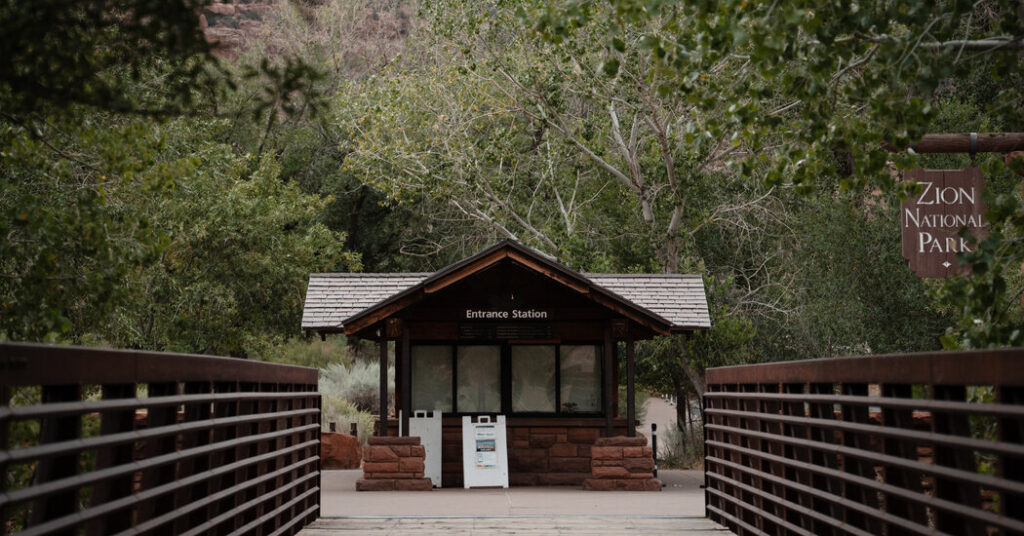
Ever since Theodore Roosevelt ventured into the wilderness of California’s Yosemite Valley in 1903 and emerged with a sweeping conservation policy, presidents in both parties have valued the country’s national parks.
The public has, too. Polling shows that Americans of all stripes and political persuasions overwhelmingly love their parks.
But President Trump’s administration has thrown the 433 sites managed by the National Park Service into turmoil, shifting funding and workers to pet projects in Washington, slashing staff across the country and scrubbing exhibits that it says “inappropriately disparage Americans.”
Moves like putting Mr. Trump’s face on some park passes have been largely symbolic. Others have upended the lives of Park Service workers and marred the experiences of some of the hundreds of millions of people who visit national parks each year.
The changes have come one after the other, affecting everything from the rugged shorelines of Acadia National Park in Maine to the high desert of Joshua Tree National Park in California.
Early last year, the Trump administration began making steep cuts to the Park Service work force, leaving at least 20 percent of parks significantly understaffed. This spring, the administration used at least $67 million generated by entrance fees from parks to help fund projects in Washington favored by Mr. Trump, like the botched Reflecting Pool repairs. As a result, hundreds of repairs and upgrades around the country may go unfunded this year, according to government documents reviewed by The New York Times.
Then there is the contentious proposal to trade away a small parcel of land in Yosemite National Park, a crown jewel of the park system, to a private developer. A bipartisan group of 153 lawmakers pledged this week to block the land exchange, declaring that “public lands belong in public hands.”
“Any one of these changes could be catastrophic in its own right, especially as it relates to staffing and funding,” said Dan Wenk, who retired as superintendent of Yellowstone National Park after nearly 43 years with the Park Service. “When the next administration comes, Republican or Democrat, funding may be restored, but it’s going to be incredibly difficult to rebuild.”
Fran P. Mainella, who led the Park Service under President George W. Bush, said that Mr. Trump may not realize the value of parks to the public and the economy.
“We have to find a better way to tell that story to him, so he understands that these parks are here for current and future generations, and part of his responsibility is to make sure they stay that way,” said Ms. Mainella, a Republican.
It is unclear if Mr. Trump has ever visited a national park, either while in office or as a private citizen; his forays outdoors typically involve a golf course. Taylor Rogers, a spokeswoman for the White House, would not say if Mr. Trump had been to a park but said he “loves our national parks and is personally invested in making them great.”
Charlotte Taylor, a spokeswoman for the Interior Department, which oversees the Park Service, said in an email that the agency “remains focused on its longstanding mission: protecting America’s natural and cultural resources, telling the nation’s history accurately and welcoming visitors to these extraordinary places.”
Senator Steve Daines, a Montana Republican who leads a subcommittee on national parks, said in an interview that Mr. Trump “has been an incredible supporter of the parks.” He dismissed reports of funding and staffing issues at parks as “fear-mongering” by the president’s critics before the midterm elections.
“You know, there’s always room for improvement, but I think some of this is just, it’s the political season,” Mr. Daines said.
Shifting Funding
As he tried to do on the facade of the Kennedy Center, Mr. Trump has left his stamp on the parks and monuments in the capital.
In one flashy example, the administration awarded a no-bid contract to cover four statues near the National Mall in 23.75-karat gold leaf before the country’s 250th birthday. It also repaired nine ornamental fountains in Washington that had been dry for years.
These cosmetic fixes siphoned money from urgent upgrades elsewhere.
While the administration added Washington sites to a list of White House priorities, it relegated about 1,500 other projects at more than 200 sites nationwide to a separate list labeled “low priority,” according to government documents reviewed by The Times.
Work was approved for many of those projects this year. But now most may not be funded before the end of the fiscal year on Sept. 30, according to two former Park Service employees, who spoke on the condition of anonymity because they feared retaliation.
At Big Bend National Park in Texas, where the administration wants to build a border wall over the objections of local leaders, a project to pay “water haulers” to provide drinking water for visitors has been shelved, the documents show.
Another stalled project would replace enormous batteries that store power from solar panels that help supply electricity for visitors and staff members at Natural Bridges National Monument in Utah.
“These batteries serve as critical park utility infrastructure and failure to complete would impact health and life-safety as well as the ability to keep the park open and operational for visitors,” the documents say.
Emily Thompson, the executive director of the Coalition to Protect America’s National Parks, an advocacy group of current and former park employees, said the administration should be tackling the $24 billion backlog of deferred maintenance projects across the country.
“While the fountains look lovely and regilding statues has value, is that really more important than some of these other very strong needs at parks throughout the system?” Ms. Thompson said.
But Steve Coleman, the executive director of Washington Parks & People, a nonprofit group focused on urban parks, welcomed the influx of federal funding in the capital. He said the District’s many federally owned sites often get short shrift because the city lacks voting representation in Congress.
“It’s funny, because we have a lot to criticize about the ways that this Trump regime is attacking our parks, but even a broken clock is right twice a day,” Mr. Coleman said. “And it’s a long-overdue thing to have the country supporting the capital. If you look at other countries, they really invest in their capitals.”
In addition to funding, the Park Service deployed more than 1,000 employees from sites nationwide to Washington this year, according to government documents reviewed by The Times. The employees typically stayed for two to three weeks to assist with events related to the 250th anniversary, and about 40 remain this month, the documents show.
Politics in the Parks
Controversy is not entirely new for the Park Service. During the George W. Bush administration, the agency was accused of promoting religious or conservative content at parks, including on plaques bearing biblical verses at the Grand Canyon.
But Ms. Mainella, the Park Service director at the time, said the Trump administration had gone much further, pointing to Mr. Trump’s directive to remove or revise exhibits that “inappropriately disparage Americans.” To comply, Park Service workers dismantled an exhibit on slavery at Independence National Historical Park in Philadelphia, a sign about climate change at Fort Sumter in South Carolina and a sign about Indigenous people at Acadia National Park in Maine.
“Our parks tell the history of this country,” Ms. Mainella said. “You may not like the history, but it is the history, and so you should tell the story that did take place, not come in and edit.”
Ms. Rogers, the White House spokeswoman, said that Mr. Trump “has put an end to the radical left and the media’s divisive and inaccurate characterization of our nation’s history, which infiltrated our national parks and museums.”
In another contentious move, the Park Service canceled at least $25 million worth of proposed agreements with outside organizations, including nearly $13 million with the Great Basin Institute, a nonprofit conservation group, according to documents reviewed by The Times and first reported by The Washington Post.
Some of the scuttled agreements would have supported efforts to reduce wildfire risk and remove hantavirus-carrying rodents in Joshua Tree National Park in California. Others would have helped the Park Service research and address record-low water levels at Lake Powell, one of the nation’s largest reservoirs, within Glen Canyon National Recreation Area along the Utah-Arizona border.
Peter Woodruff, the chief executive of the Great Basin Institute, said he only learned of the cancellations through a two-sentence message relayed by staff members at partnering parks.
The funding requests were denied, the message said, because of a change in administration priorities.
The post Gold Statues and Staff Cuts: How Trump Has Disrupted America’s Parks appeared first on New York Times.