In today’s edition … It’s gas prices, stupid … We ask you about the House leaving D.C. … but first …
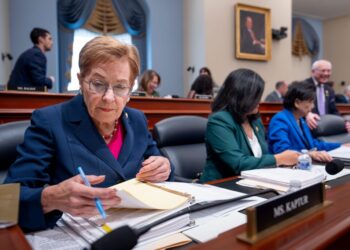
Congress is getting older. Most Americans aren’t happy about it.
This was a significant week in the debate about aging politicians.
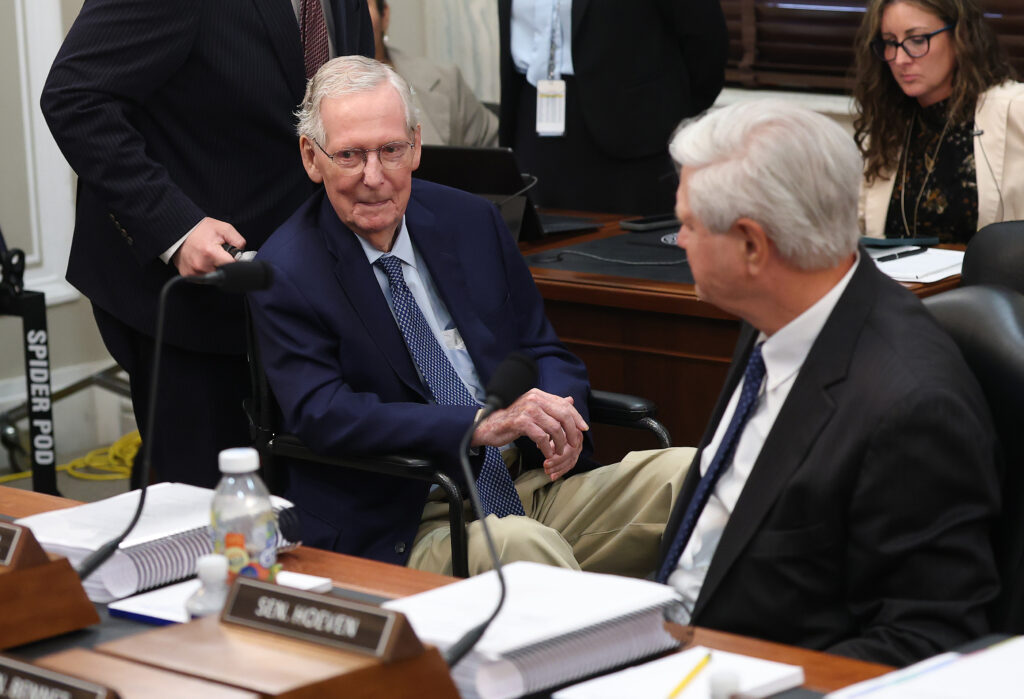
The 84-year-old Sen. Mitch McConnell (R-Kentucky) returned to the Senate on Monday for the first time since he was hospitalized for a fall on June 14, and Sen. Chuck Grassley (R-Iowa), the oldest member of Congress, turned 93 yesterday. Both are powerful figures in the Senate. McConnell once led the chamber until he stepped down from Republican leadership in 2024. And Grassley wields a great deal of influence as chair of the Senate Judiciary Committee.
McConnell is retiring at the end of this Congress, but both men have made it clear they believe they are fit to serve.
Not everyone agrees. Polls in recent years have consistently found Americans are concerned about the average age of their politicians, and voters increasingly support some sort of check on elderly leaders — be it term limits, age limits or mental competency tests.
In 2022, for instance, 58 percent of Americans told YouGov they supported a maximum age for elected officials. Just one year later, 81 percent of respondents told YouGov they support age limits for Congress, a figure that has held steady, with an NPR/PBS News/Marist poll from May finding 8 in 10 Americans support age caps for Congress. Similar percentages of Americans have expressed support for age limits for the presidency, as well.
These results appear to be driven in part by health and acuity concerns about former president Joe Biden — the oldest president at 82 when he left office — and scrutiny about President Donald Trump, 80, who is on his way to narrowly taking the title of oldest president. And by Congress, where there are more age 70-plus lawmakers than ever before.
“I think a lot of people have members of their family in their life that are that age and love them dearly, but don’t necessarily believe that that elderly person in their family should be president of the United States,” said elections analyst Nathan L. Gonzales, who has written in favor of age maximums for Congress. “People have seen a handful of politicians in their elderly years and I think believe that there’s got to be a better way.”
Gonzalez suggests that introducing a maximum age for Congress is a good way to introduce “fresh voices in the system,” in addition to ensuring “we have members who are operating in the prime of their life.”
Though lawmakers are generally cool on the idea of age maximums, many do back the idea of term limits.
In a statement to the Early Brief, Sen. Ted Cruz (R-Texas) decried “permanently entrenched politicians,” who he said are not in line with the “government of citizen legislators” the Founding Fathers envisioned.
Cruz and Rep. Ralph Norman (R-South Carolina) partnered to introduce a constitutional amendment establishing term limits for members of Congress last year, and have introduced similar amendments in the 115th, 116th, 117th and 118th Congresses as well.
“Term limits would bring accountability to Washington, and I remain committed to enacting them,” Cruz said.
In its most recent incarnation, the amendment had 115 co-sponsors in the House and 19 in the Senate, but appears likely to die on the vine, as past versions have, after being referred to the chambers’ respective judiciary committees. Bills must be passed before the end of each Congress or else they expire. While some politicians argue age is just a number, bills aren’t extended the same courtesy.
Grassley and McConnell’s offices did not comment when asked about calls for limiting service, but McConnell’s public statements give us a sense of how he likely thinks about the issue.
“We have term limits now,” McConnell told reporters last year. “They’re called elections.”
Want this in your inbox?
Start your day with The Washington Post’s flagship political newsletter. Sign up here.
Our picks
- Most Michigan voters disapprove of President Donald Trump’s tariffs on Canada, polls show, from Riley Beggin.
- Fight intensifies over the fate of homes falling into the sea, from Hannah Knowles.
- Judge says Trump’s board may not demolish Kennedy Center without warning, from Jonathan Edwards.
- Why Karl Rove, a father of the modern Texas GOP, is voting for a Democrat, from Karen Tumulty.
- RFK Jr. says Americans worried about vaccines have a ‘friend at the White House,’ from Rachel Roubein, Daniel Wu and Caitlin Gilbert.
- White House withdraws nominee for ICE director allied with DHS chief Mullin, from Maria Sacchetti and Ted Hesson.
What we’re watching
If you look at only one data point in these midterms, I would argue that gas prices would be the most illustrative.
The numbers are going one direction right now: up.
Our colleagues Evan Halper, Rachel Chason and Joyce Sohyun Lee reported yesterday that analysts believe gas prices are about to take a big jump and the worst price shocks for gas could be coming soon.
The trio report that the average price for gas was $4.44 on Thursday, near the record of $5.02 hit back in 2022. And diesel is at a record. The average price per gallon on Thursday? $6.40.
We have written in this newsletter about why gas prices feel so impactful: No other prices are advertised on so many American street corners, and the nation’s ever-present car culture make gas prices feel personal. Politically, the reason for the price hikes — namely, the conflict with Iran — points directly back to Trump.
The president’s messaging on gas prices has not been stellar. Speaking at a campaign rally in North Carolina on Wednesday — a state the president has won for three straight presidential elections — Trump said high gas prices were “a very inexpensive price to pay for what we have done” in Iran.
That scream you may have heard Wednesday night came from Republican operatives working in battleground states nationwide, frustrated that Trump would say that.
This jump in prices — coupled with Trump’s low approval rating and a political environment that appears to be shifting away from Republicans — has Democrats feeling more confident than ever that November’s midterms could be a wave election that allows them to take back control of the House and, possibly, the Senate.
“If the election were held today, we would win the majority,” Senate Minority Leader Chuck Schumer (D-New York) said in an interview with The Washington Post this week.
(You can read more about Democrats’ growing confidence here.)
In your local paper
Kansas City Star: Travis Kelce was the target of a Ponzi scheme that took in a reported $35 million.
Kansas Reflector: Kansas Attorney General Kris Kobach doesn’t “think it’s necessary” to seek Trump’s endorsement in his reelection campaign, a compelling comment from someone seen as a longtime Trump ally.
Maine Morning Star: Won’t you be my neighbor? Maine officials are working overtime to keep cordial ties with their neighbor to the north, Canada, as the federal government ratchets up its pressure on the nation.
From you
We asked you about Ed Sheeran’s decision to boot Macklemore from his tour for the rapper’s pro-Palestine comments, and your views were varied.
Sheeran said Tuesday that he didn’t want to use his “professional platform for politics.”
“Ed Sheeran’s position on politics and the stage is spot on,” wrote George Weissman. “We pay to hear music and spent some quality time away from the every minute drumbeat of politics in this country. Who pays for the stage to be used as a political bully pulpit?”
“He did absolutely the correct thing,” added Linda Clarke. “What musicians say at their own personal concert is their business but as an invited artist at someone else’s concert is unacceptable!”
Not all agreed.
“When you boot an entertainer off your tour for reasons of his politics, you are making a political decision,” Robert Jacobs Meadway wrote.
“Note to Ed Sheeran: Even when a performer doesn’t make a statement, they’re still making a statement. What we don’t say is just as telling as what we do say,” said Mary Ciriello.
And Mary A. Wilkowski added, “Anything that Americans can do to shine Klieg lights on Israel’s genocide against Palestinians is a step in the right direction.”
Send a reply
The Republican-led House has no more workdays scheduled in Washington before the November midterms. Democrats are using it as a cudgel in their quest to win back the legislative chamber this year. Do you care? Does it matter to you whether the House is in session in Washington, D.C., or back home? Does it influence who you vote for in November? Let me and your fellow Early Brief readers know at [email protected].
Thanks for reading. You can follow me on X at @merica.
The post Congress is getting older, and Americans aren’t happy appeared first on Washington Post.