New York City has always been a city in motion — forever reinventing itself, tearing down the old to make room for whatever comes next.
Over time, the once-ubiquitous elevated trains disappeared underground. Horses gave way to automobiles. Factories and warehouses became coveted lofts. Neighborhoods changed names, faces and fortunes.
But the city that never sleeps, as historians would agree, is terrible at letting go completely.
Look closely and you’ll find the ghosts of its former selves still woven into the cityscape: tiny signs cemented into buildings that once told elevated-train passengers where they were, metal stars quietly holding brick buildings together and a park wall that owes part of its existence to a neighborhood goat.
From horse poop-scraping fixtures to a fence that once protected a king, The Post rounded up some of NYC’s strangest, hidden antiques, hiding in plain sight. As the weather changes and the leaves soon start falling, finding these hidden relics across NYC makes for a perfect fall outing.
The little metal ghosts of horse-powered New York
The metal fixtures tucked beside stoops may look like decorative leftovers from a more ornate New York, but they once had a decidedly less glamorous purpose: scraping horse manure off kicks before entering the brownstone.
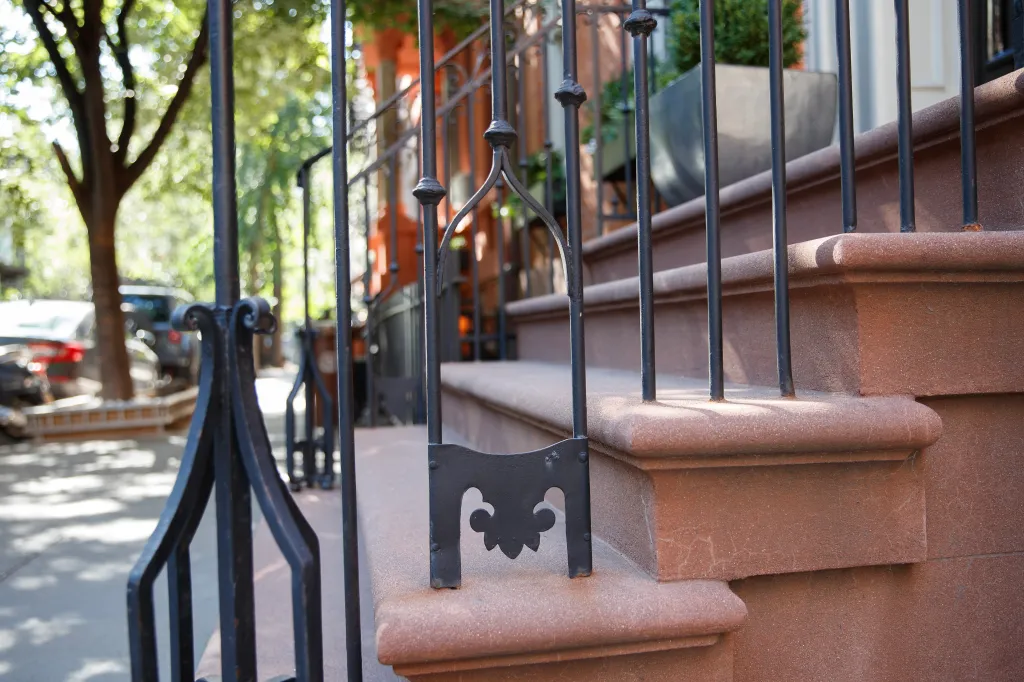
Bootscrapers are a great example of something New Yorkers still walk past without knowing what it is, according to NYC tour guide, writer and historian Nicky Shapiro, 28, who runs his own company, Nicky Tours.
Shapiro, who regularly posts on social media about the city’s forgotten architectural oddities for his multigenerational audience, said modern Big Apple residents may think the city is dirty now, but 19th-century Manhattan had a particularly messy transportation problem: horses.
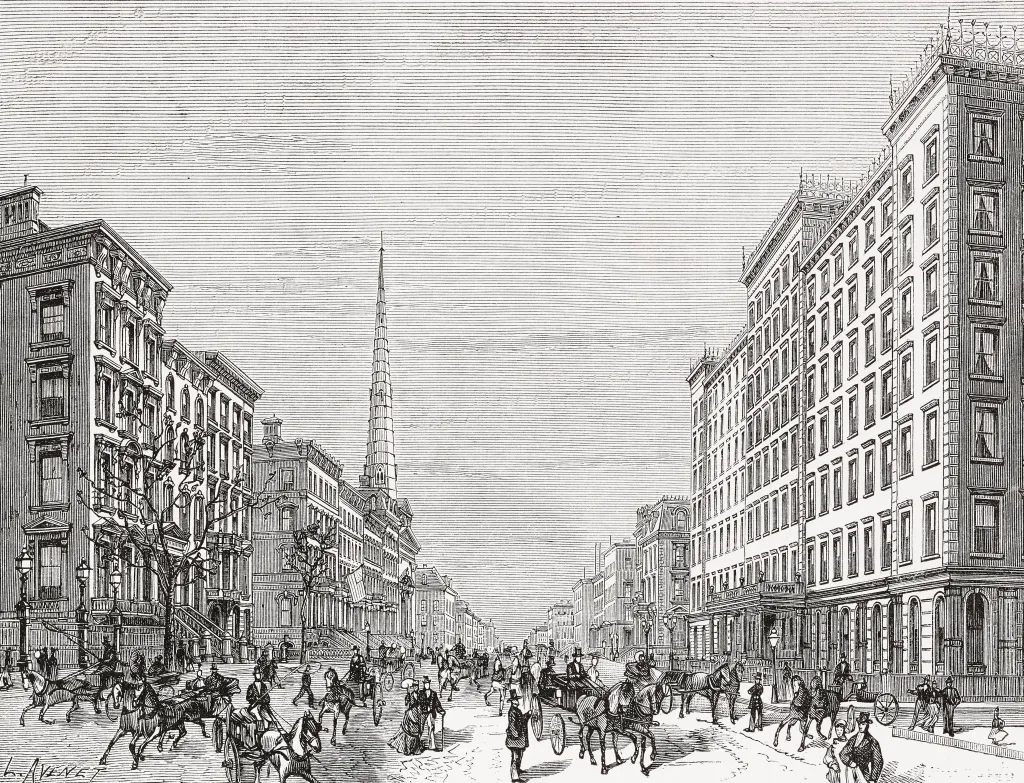
“As gross and smelly as we think the city gets today, things were even worse in the nineteenth century, when locals were dependent on horses to get around,” Shapiro told The Post.
And while today’s traffic leaves behind overwhelming exhaust, its four-legged predecessors had their own far less glamorous emissions. “The equivalent ‘emission’ of a horse, of course, is horse poop,” he said.
By the 1890s, more than 60,000 horses were depositing some 500 tons of manure onto New York City streets every single day.
The stoops that were built to beat the poop
Your favorite grand Greenwich Village steps weren’t built just for sitting, posing or pretending you’re in a Nora Ephron movie — they were a way for wealthy Gilded Age Gothamites to avoid stepping through horse manure.
Today, an NYC stoop is prime real estate for coffee sipping, cigarette smoking, flirting, people-watching and the occasional “Sex and the City” pilgrimage.
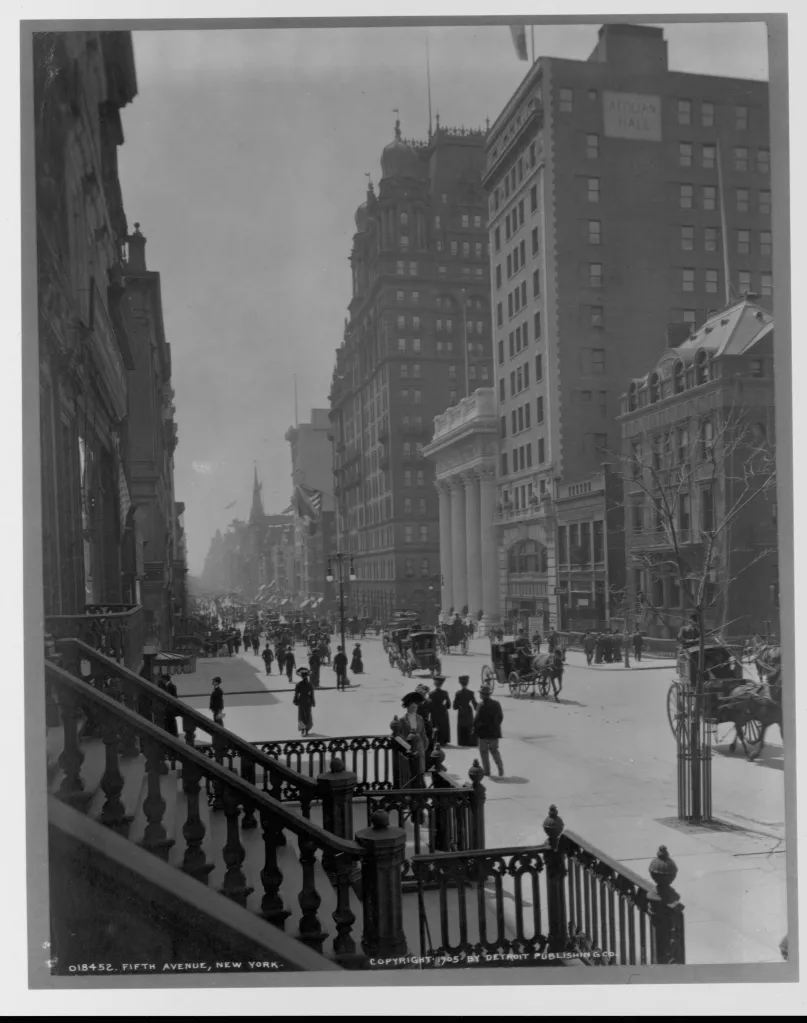
Stoops, Shapiro noted, were deliberately built high off the ground, allowing residents to step straight from their carriages onto an elevated entrance instead of trekking through the muck below.
Meanwhile, servants living in the subterranean quarters — what we might now call “garden apartments” — didn’t get the same luxury.
“The modern streetscape is totally shaped by the ghosts of the past, whether you know the history or not,” Shapiro said.
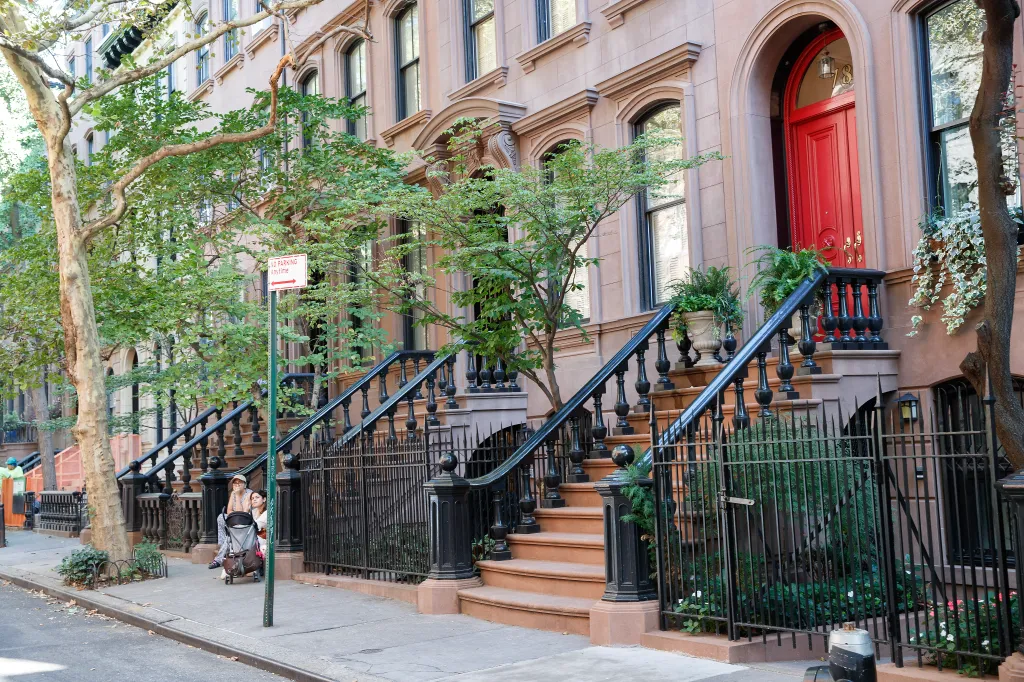
The stoops eventually grew taller as the city’s population — and its horse population — exploded.
“Of course, the stoops are more or less redundant today from a practical standpoint — no more horses — but so many iconic NYC neighborhoods would be unrecognizable without them — the Village, Harlem, the Upper West Side, Carroll Gardens, just to name a few,” Shapiro said.
These neirghborhoods Also where some of the highest historic stoops are.
The subway signs that are stuck in 1873
Look up on Greenwich Street in the West Village and you’ll find a tiny piece of a New York that disappeared more than a century ago.
Manhattan was once crisscrossed by lumbering elevated railways, their iron tracks stretching above the avenues as trains thundered past buildings and rattled the streets below.
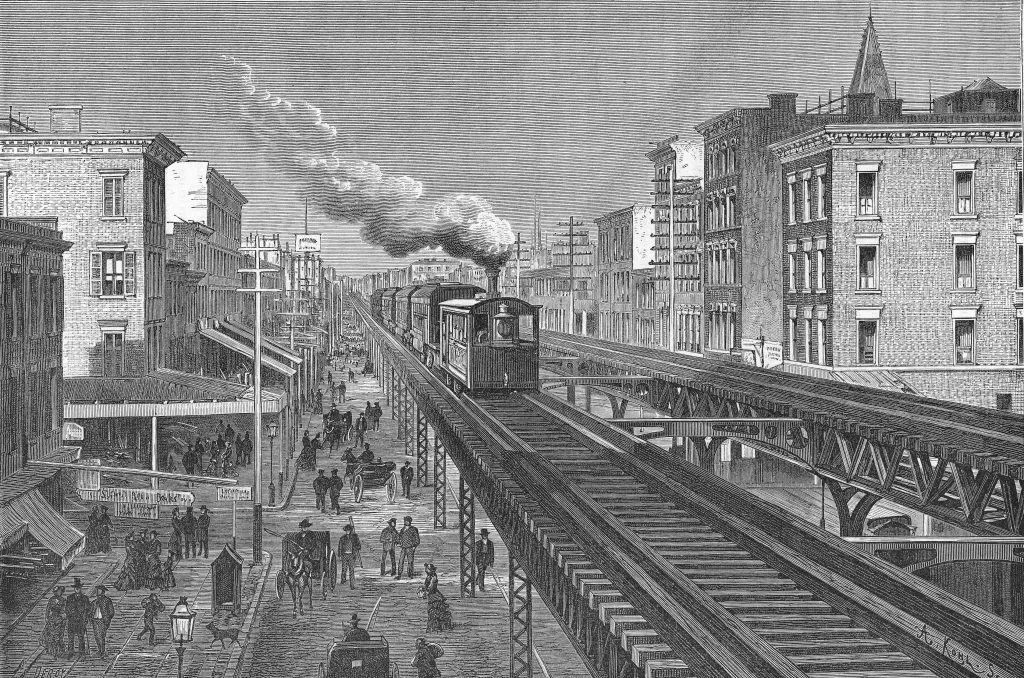
But as the modern subway system took shape, those elevated lines gradually vanished underground — leaving behind remarkably few traces of the city they once dominated.
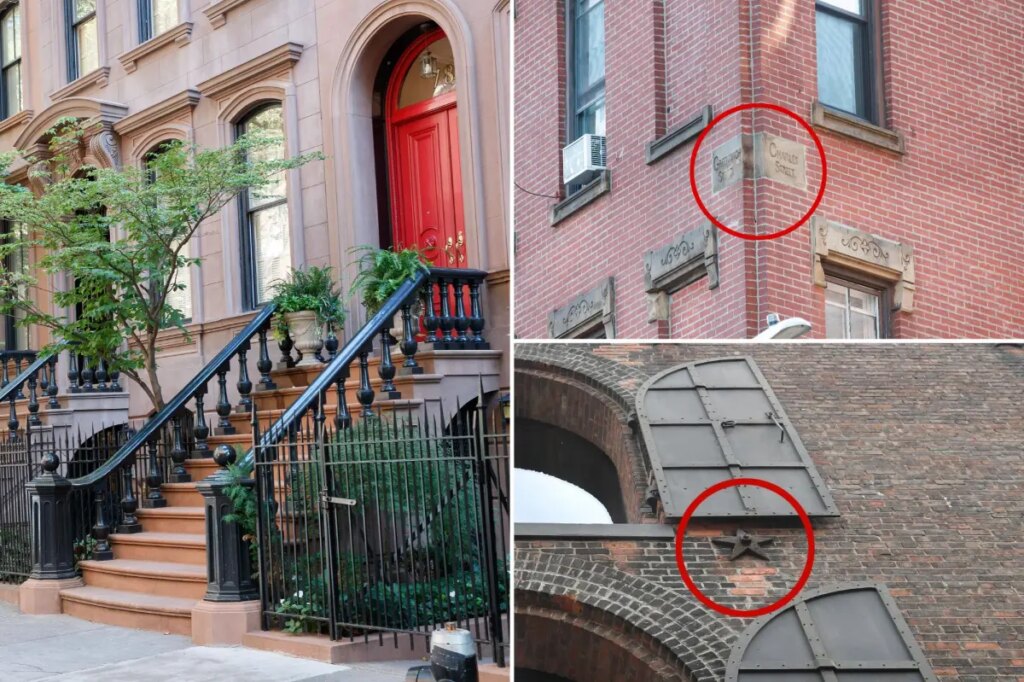
One of them is hiding in plain sight at the southwest corner of Charles and Greenwich streets.
“When the elevated line came down, the sign stayed up,” Shapiro said, adding that this “Parisian-style sign” is one of his favorite pieces of NYC’s past.
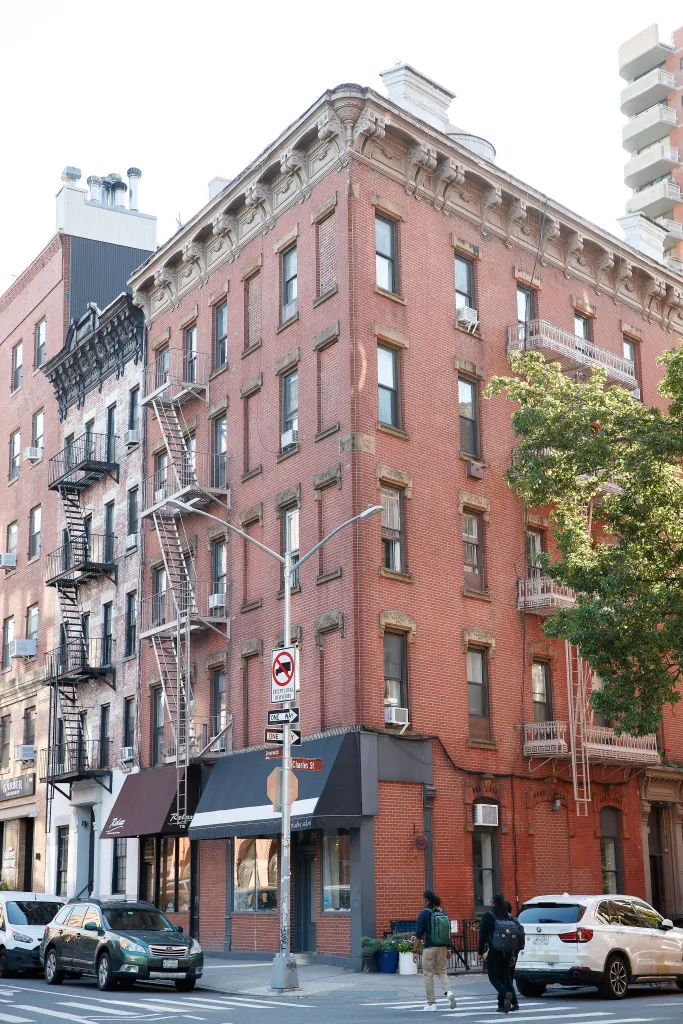
“Around the level of the third story on the building at the southwest corner of that intersection, you’ll find these tiny, gray street signs embedded with cement into the corner of the building.”
They date to the Ninth Avenue Elevated line, which had a station at the corner beginning in 1873. Set roughly 30 feet above the street, they were positioned at eye level for passengers rumbling past.
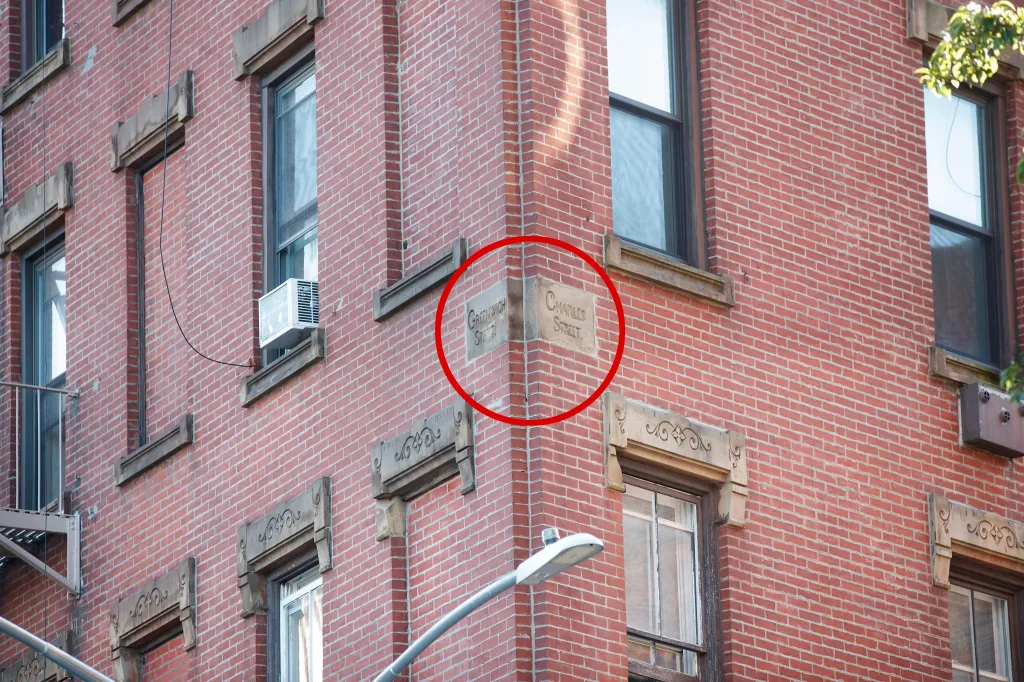
The trains are gone and the streets have changed, but the little signs are still there, quietly pointing back to a New York that once existed above our heads.
The fence that once protected a king
If you want to travel even further back in time, head downtown to FiDi’s Bowling Green, where an unassuming iron fence has been standing since 1771.
According to Ted Knudsen, co-founder of Echoes of Revolution: NYC and a visiting assistant professor of history at Queens College, CUNY, the fence was built in 1771 to protect a gilded lead statue of King George III, “which had been unveiled the year before.”
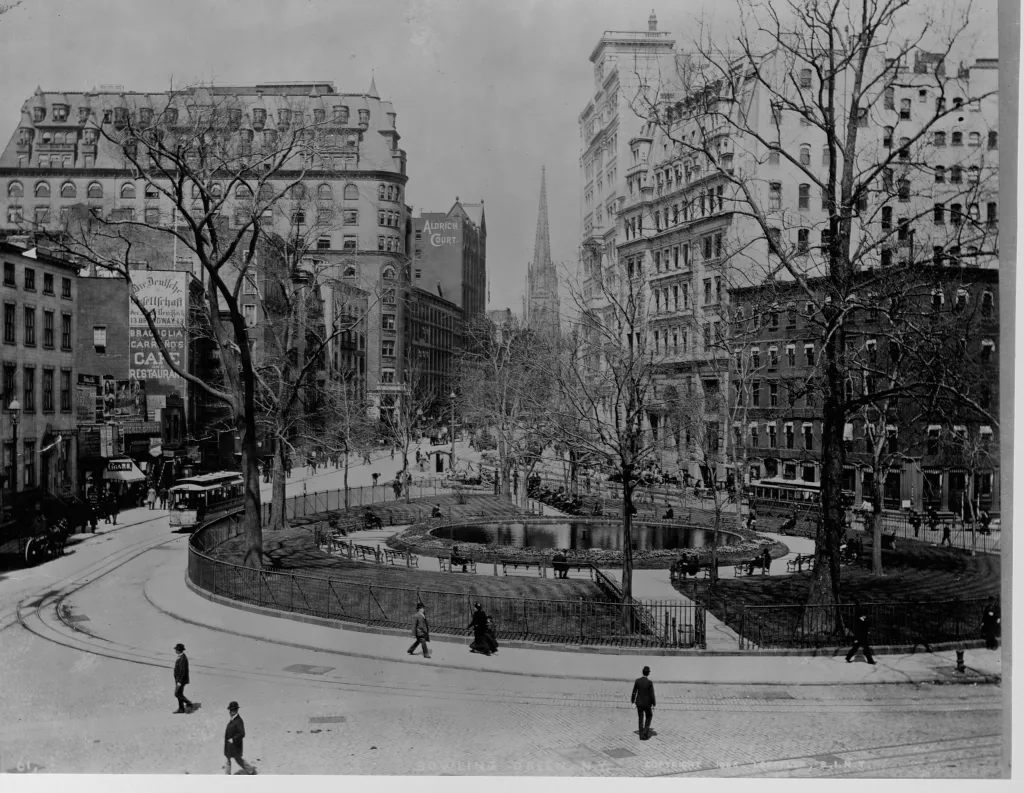
The irony didn’t last long. The statue was commissioned by New Yorkers to thank the king for repealing the Stamp Act. But just six years later, with the colonies in open rebellion, Patriots toppled the monarch from his horse.
“Within a few years, the fence was protecting the monument from the same people who had paid for it,” Knudsen explained to The Post.
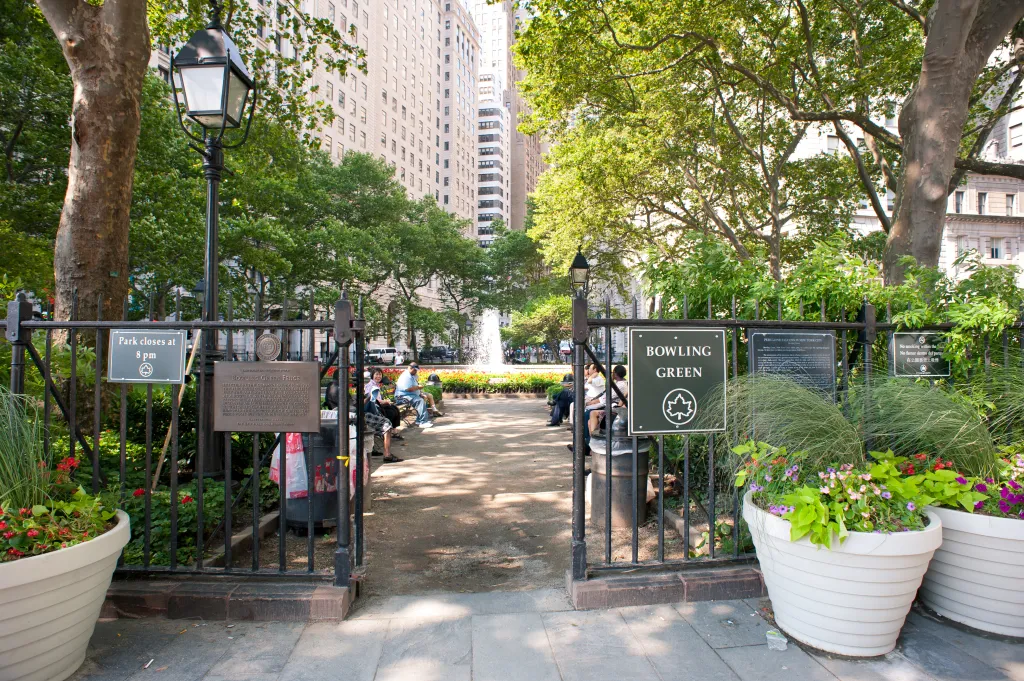
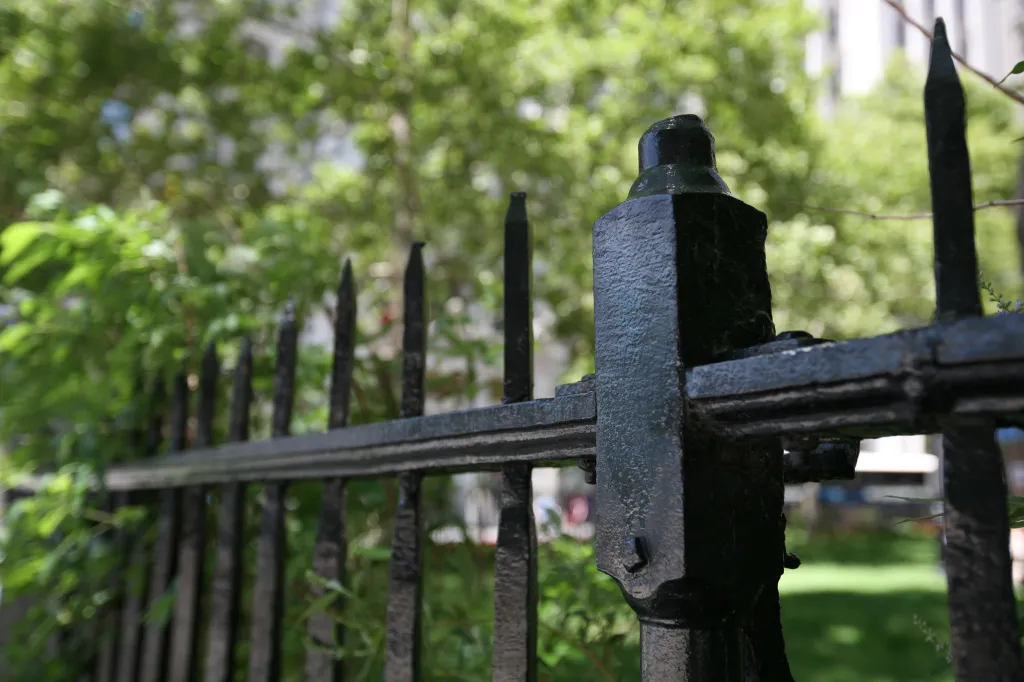
Today, the statue is long gone, but the fence remains — and if you run your fingers along the tops of its iron posts, you can still feel the rough, uneven stubs where small royal crowns were once attached.
According to Knudsen, it was believed that the crowns were sawed off by Patriots in 1776. While the king lost his head, the fence kept its place.
Years before independence, the Sons of Liberty repeatedly raised the poles in what amounted to a very public middle finger to British rule.
Soldiers kept cutting them down; the colonists kept putting them back up. The escalating tug-of-war eventually turned violent at the Battle of Golden Hill in 1770, five years before Lexington and Concord.
George Washington’s old pew
And then there’s George Washington’s pew at St. Paul’s Chapel, where he worshipped after his 1789 inauguration, when New York was still the nation’s capital.
After the government moved to Philadelphia in 1790, the pew was preserved as a memorial — and it remains today, a quiet relic of the brief moment when Lower Manhattan was the center of the young American government.
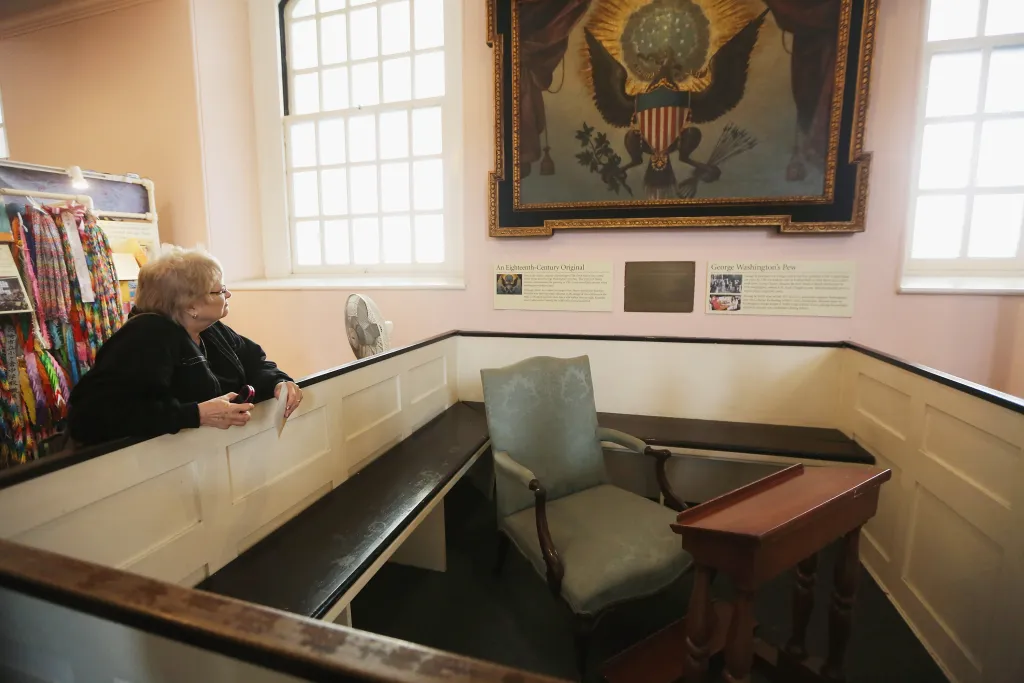
“Washington worshipped at St. Paul’s after his inauguration in 1789, while New York was the nation’s first capital,” Knudsen said. “His pew is still inside, a few blocks from where he took the oath.”
“St. Paul’s keeps surviving disasters,” Knudsen added, noting that the chapel survived both the Great Fire of 1776 and the Sept. 11 attacks and later served as a relief center for recovery workers.
Those metal stars aren’t just for show
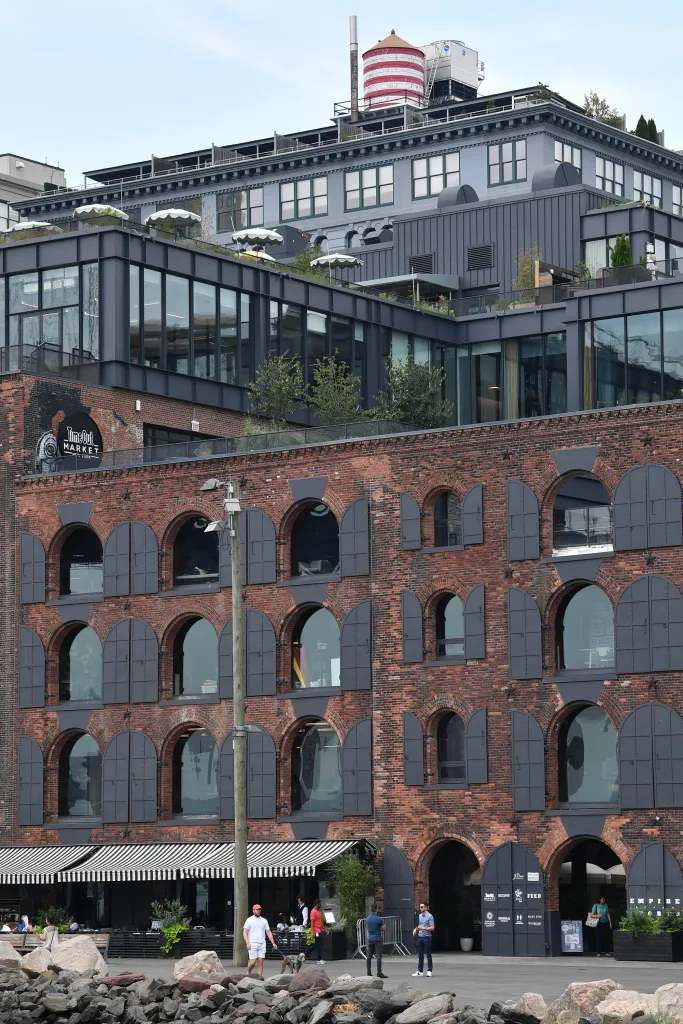
The next time you see a star bolted to a brick building, in former industrial neighborhoods, don’t assume it’s a quirky bit of old-school NYC decoration — it’s helping explain why the building is still standing.
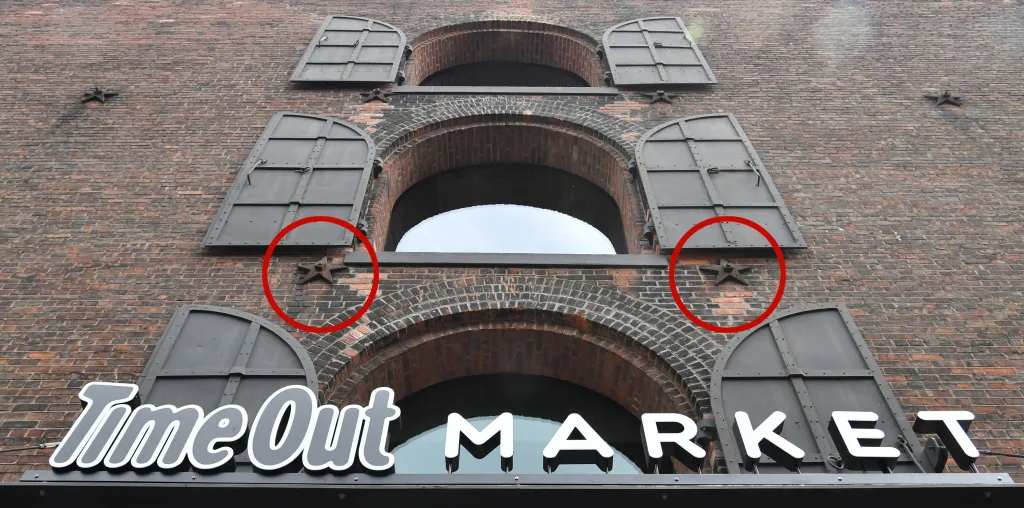
“They’re actually the ends of supportive bars which run across the brick buildings and hold them up,” Shapiro said. “If you see stars on the side of a brick building, it almost certainly dates to the 1800s.”
The technique was common on 19th-century buildings, meaning those little stars can serve as architectural clues about a building’s age.
The Central Park fountain that has nothing to do with ‘Friends’
For generations of “Friends” devotees, it has been associated with the show’s iconic opening credits. Shapiro regularly encounters visitors who mistakenly identify it as the “Friends’ fountain.”
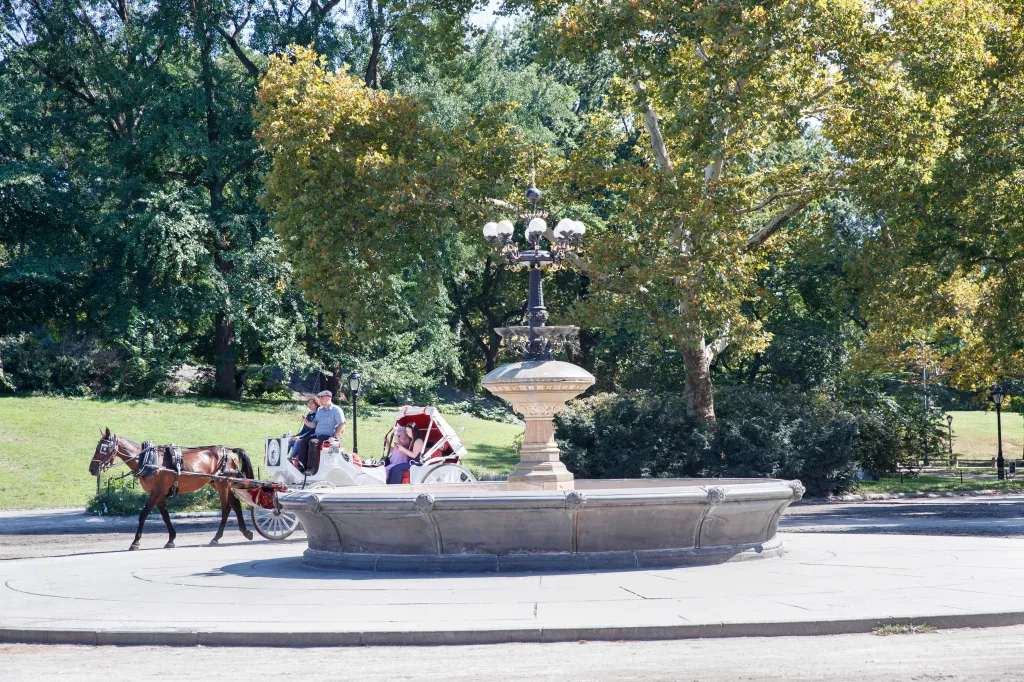
In fact, the Cherry Hill fountain is a Victorian-era horse trough, designed for the city’s four-legged commuters to get a drink.
Which makes perfect sense when you remember that horses once ruled the streets — all 60,000-plus of them.
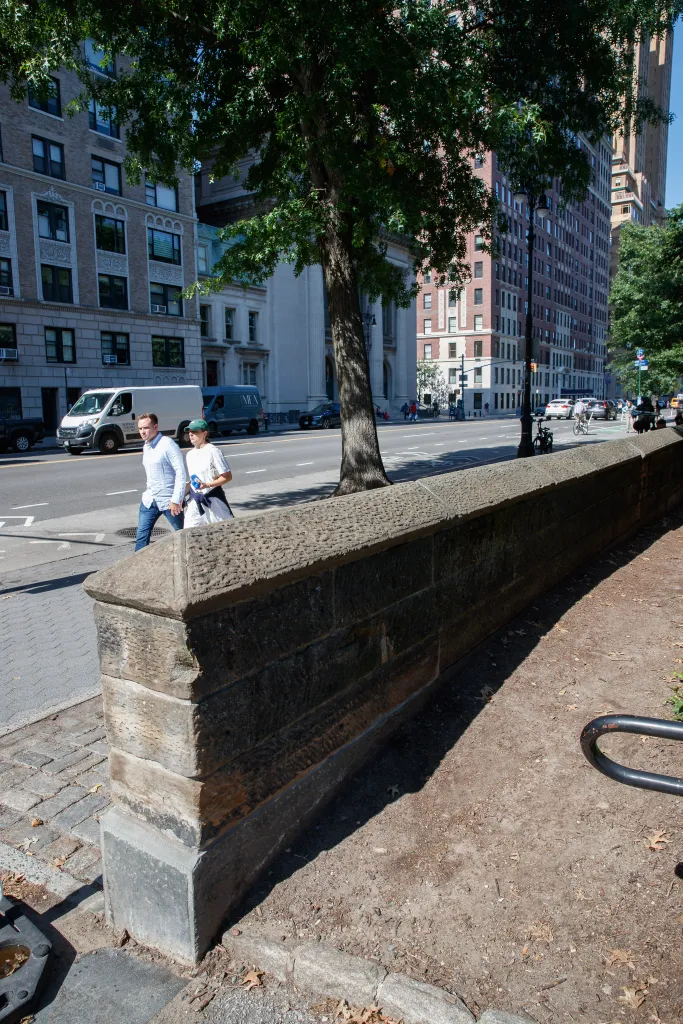
Central Park’s wall was built to keep out… goats
Today, the park’s exterior wall might look like a simple boundary meant to keep people out after hours. But Shapiro said that wasn’t the original plan.
In the 1850s, uptown Manhattan had a surprisingly large goat population. They were considered enough of a nuisance that the wall was built to keep them out of the park.
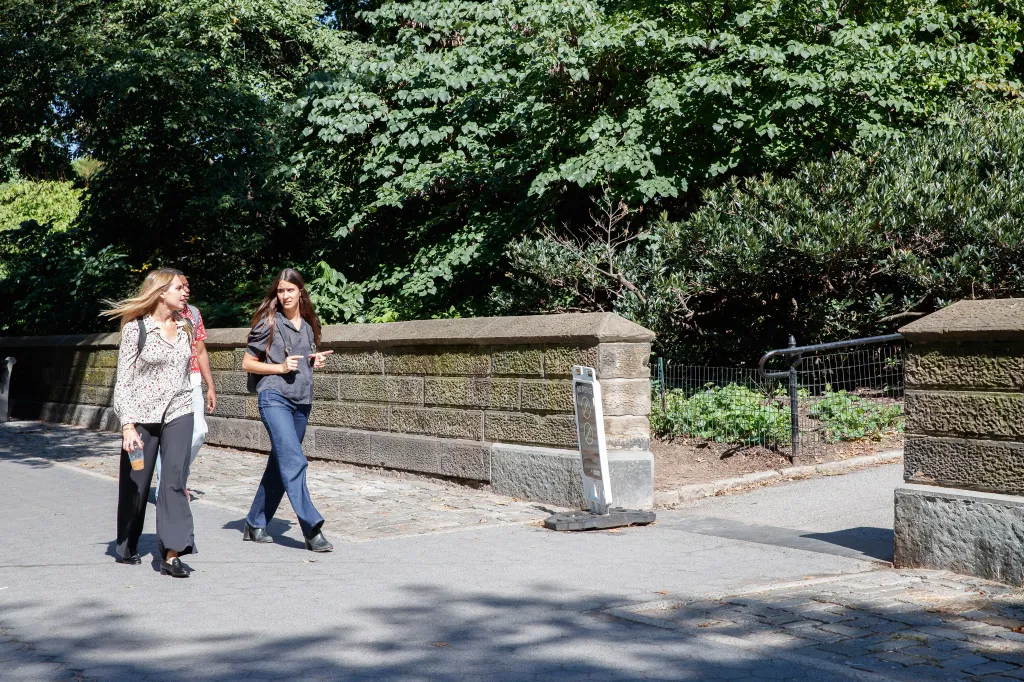
The “pests,” however, weren’t exactly deterred by city infrastructure. Shapiro said reports describe the animals “leaping over the wall to sneak into the grassy fields beyond.”
While they eventually disappeared, the wall stayed put — a 170-year-old reminder of this urban jungle’s very strange past.
The post The quirky, hidden oddities once essential to NYC that most New Yorkers walk right past appeared first on New York Post.