
On the surface, it looks like something unusually positive in New York City politics: a City Council proposal that would directly improve quality of life for the poor at little cost.
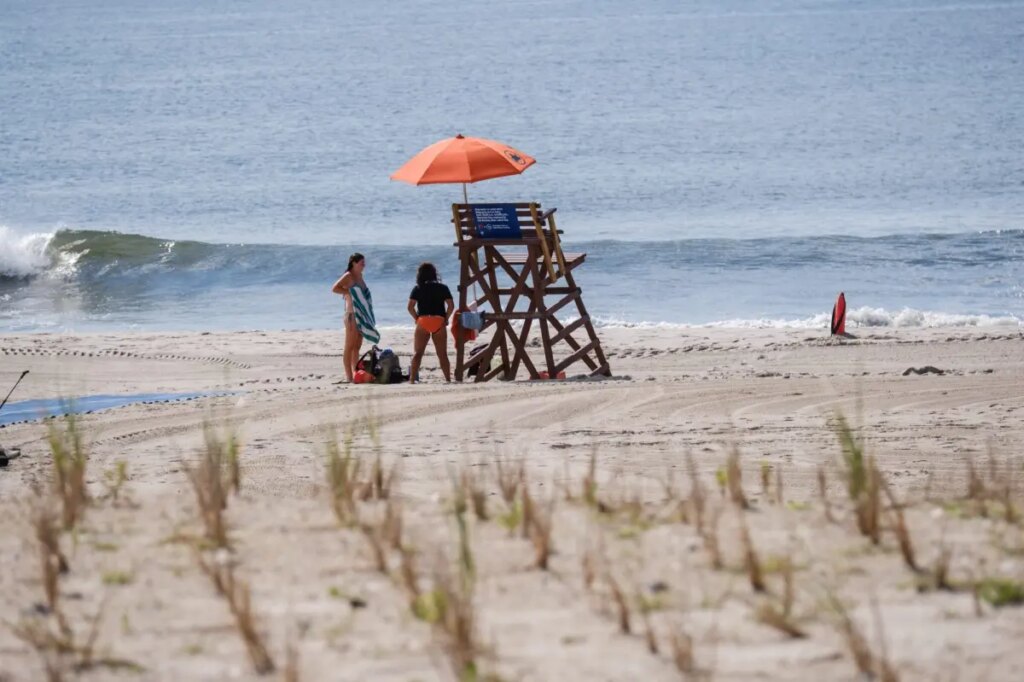
Queens Democrat Shekar Krishnan, along with 19 co-sponsors, is pushing a bill that would open NYC beaches and outdoor pools for swimming in mid-May and extend beach season into October.
Naturally, Krishnan had to link his idea to global warming.
“As climate change lengthens our summers, we need to ensure people can enjoy the beach safely,” he said last week.
But it’s attractive for another reason: Good parks and healthy recreation are key amenities for lower-income neighborhoods like the one he represents.
It’s an example of what progressives are calling “pre-distribution” — programs that mitigate the experience of inequality by changing the rules of the game.
Some such strategies are counterproductive: Think raising the minimum wage, which only suppresses entry-level employment.
But improving parks and recreation is a constructive approach, because these public amenities boost the livability of lower-income neighborhoods.
Poor neighborhoods can and should be good neighborhoods — if they have clean, safe parks and playgrounds (not to mention good schools and safe streets).
Typically, however, the beach bill’s progressive sponsors — including many who should know better, like Speaker Julie Menin — have failed to consider the practicalities.
There’s a good reason existing beach season is closely tied to the school calendar: That’s when the lifeguards are available.
“Our staffing ranks begin to decrease as the season nears its end, since most of our seasonal lifeguards are students that need to return to school or . . . teachers” who must go back to the classroom, the Parks Department told me.
Beaches without lifeguards are no better an idea than city-owned supermarkets.
And the need is vast: The city boasts eight public beaches — encompassing 14 miles of shoreline — and 79 outdoor swimming pools.
Staffing it all required 1,100 seasonal lifeguards this year.
How to fill those chairs once school starts again goes unmentioned in the council bill, and Krishan’s office did not return inquiries about how he suggests doing so.
So while extended beach and pool hours should be acknowledged as impractical, let’s hope the bill’s sponsors remember the concept that modest, low-cost steps can make a big difference in New Yorkers’ quality of life.
That would mean fewer harebrained anti-capitalist schemes (like rent freezes and city-subsidized groceries) and more investment in core amenities.
Even uber-progressive Mayor Zohran Mamdani set aside just $709 million of his $124 billion operating city budget — around 0.6% — for the Parks Department.
Advocates have long demanded a “1% for parks” budget goal, without success.
The chronic lack of investment means “skeleton staffing” and “a dire shortage of skilled workers to perform maintenance and administration,” the advocacy group New Yorkers for Parks says.
The right kind of spending would ensure parks and pools are in safe condition — and keep drug dealers and thugs out.
Mamdani should understand that such spending is inherently progressive: Wealthier New Yorkers who summer in the Hamptons can pay for a pool in Red Hook.
He can call it sewer socialism if he likes — but basic government service well-delivered should be his priority.
New York’s parks budget is not atypical; as Governing magazine has put it, “the hardest season for parks is budget season”.
But there’s significant regional variation: Historically populist Midwest and Western cities spend much more.
Chicago, with its great lakefront beaches and a parks “district” with its own taxing authority, spends $249 per capita on parks, compared to New York’s $202.
Every type of public spending has its own advocates who make the case that theirs is crucial.
But the benefits of clean and safe public beaches, pools, parks and playgrounds are tangible to all.
There was a time when progressives understood this.
Robert Moses, now villainized as nothing but a highway builder, was responsible for creating the breathtaking expanses at Jones Beach, Orchard Beach and Jacob Riis Park.
He upgraded the sands and boardwalks of Coney Island and viewed grand beach bathhouses as “palaces for the poor.”
In the Depression summer of 1936, he opened a new pool every week for 11 weeks in a row.
That’s the kind of progressivism Mamdani would do well to rediscover.
After all, unlike his stalled plan for city buses, the beaches are already free.
A longer beach and pool season could make climatic sense — but not without lifeguards.
Impracticality, the bane of progressivism, strikes again.
Howard Husock is a fellow at the American Enterprise Institute and author of “The Projects: A New History of Public Housing.”
The post NYC’s illogical leftists get slapped by beach-season reality appeared first on New York Post.