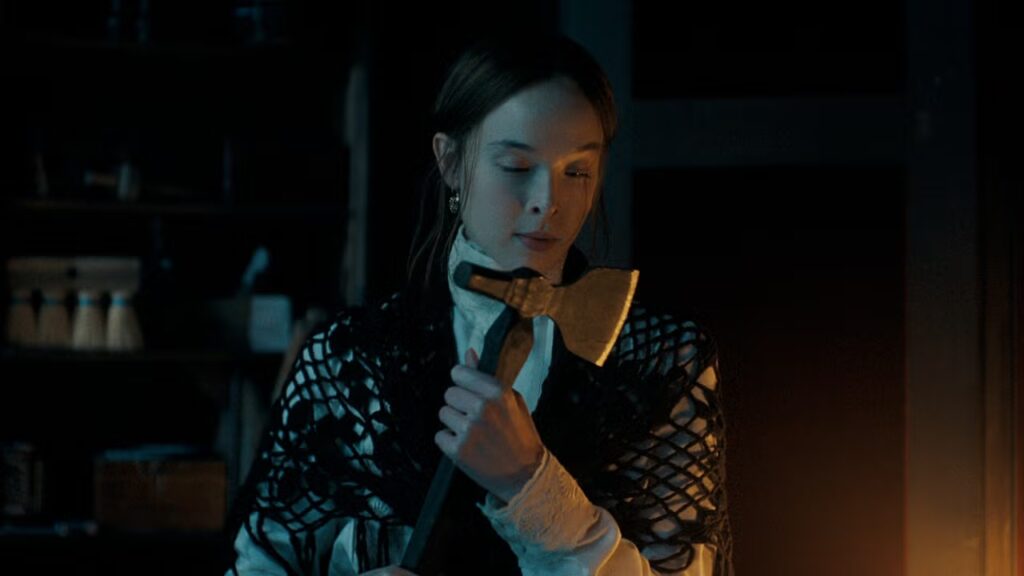
It’s not unusual for Ian Brennan’s “Monster” to take some liberties when it comes to what did and didn’t happen with it’s various killers. But in the case of “Monster: The Lizzie Borden Story,” there’s a lot more fiction than fact.
That’s partially because the fourth season of the Netflix crime thriller is more tonally ambitious than previous seasons, serving as more of a feminist exploration into why women kill rather than a compassionate ode to the Bordens. But more than that, the fourth season of “Monster” takes such wild swings because so little is known about this case. Even the central premise of this American crime story — whether or not Lizzie Borden killed her father and stepmother — is unclear. Before diving into this fourth season, here’s what to know about the Borden case.
Where did they film the Lizzie Borden house?
Shortly after the premiere of the Ed Gein season of “Monster,” the Lizzie Borden season began filming in Los Angeles. Most of filming took place in L.A., but it also occurred at various castles throughout Rome. These scenes were likely for a Season 4 subplot that revolves around Elizabeth Báthory (played by Vicky Krieps), a Hungarian noblewoman and alleged serial killer who was accused of torturing and killing girls and women from 1590 to 1610.
It’s unlikely that “Monster” filmed Season 4 in the real Lizzie Borden house. The house is now a bed and breakfast in Fall River, Massachusetts, and has been called one of America’s most haunted houses.
Did Lizzie Borden kill her parents?
That’s the question that’s haunted multiple centuries. Though she was tried for the murders of her father and stepmother, Borden was acquitted of the crimes.
Lizzie Borden was the third daughter of Sarah Anthony and Andrew Borden. Three years after her biological mother died, her father married Abby Durfee Gray. The Bordens were a wealthy household; at the time of his death, Andrew Borden’s estate was valued to be worth $300,000, which translates to about $10.8 million today. Despite the Borden family’s substantial wealth, Andrew was notoriously frugal, refusing to even install indoor plumbing in the house.
Lizzie Borden and her stepmother seemed to have a cordial if not chilly relationship, with Lizzie calling the other woman “Mrs. Borden” rather than some variation of mother. There was evidence of tension in the household; both Lizzie and her older sister Emma took extended vacations to New Bedford after Andrew killed Lizzie’s pigeons, only returning about a week before the murders. There was also financial discontent. In the months before the murders, Andrew bought a house for Abby’s half-sister, which infuriated both Lizzie and Emma. Andrew bought both his daughters property to appease them.
In the days before the murders, Lizzie and Emma’s maternal uncle John Morse visited the household and stayed for a few days to discuss business matters with Andrew Borden. It’s been speculated that this visit increased household tensions.
On August 4, 1892, Abby went upstairs between the hours of 9 a.m. and 10:30 a.m., which is when the first murder occurred. It was later determined that her killer struck her more than 17 times. Around 10:30 a.m., Andrew returned from his morning walk and was helped by the family’s maid, Bridget Sullivan, before taking a nap on the couch. His body was found in the downstairs sitting room after being struck between 10 and 11 times by a hatchet.
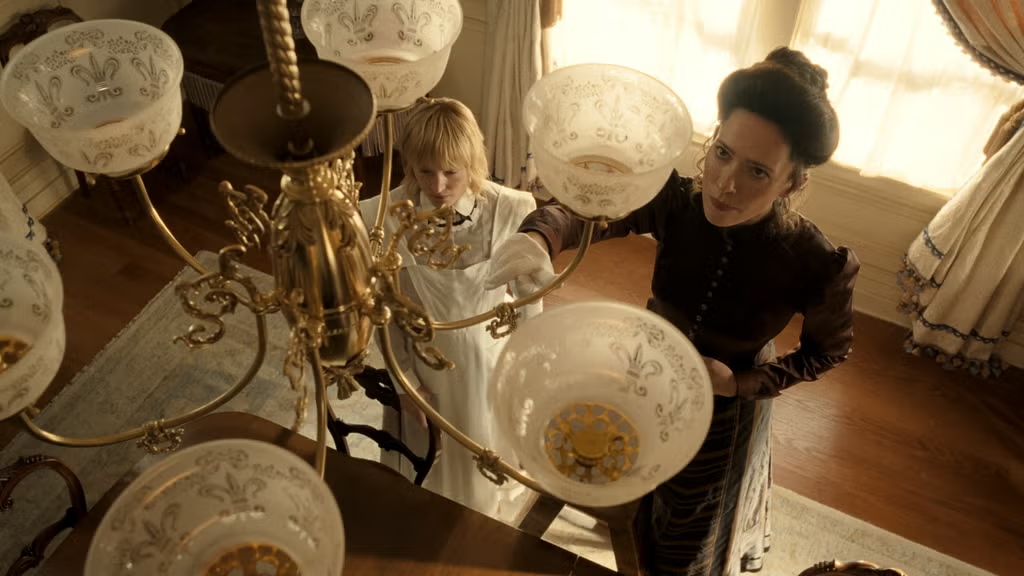
Soon after the murders were discovered, Lizzie became a suspect in the case, largely because the authorities did not like her attitude. During her reports, Lizzie gave contradictory answers and appeared unnervingly calm. However, the police did not check Lizzie for bloodstains and only did a cursory search of her room because Lizzie said she wasn’t feeling well. The police also allowed the crime scene to be tampered with. Their lack of diligence is a major reason why this case remains unsolved today.
Lizzie’s trial took place on June 5, 1893. Oddly enough, five days before Lizzie’s trial began, another axe murder took place, that of 22-year-old Bertha Manchester (Portuguese immigrant Jose Correa de Mello was later convicted for that crime). At the time, it was reported that the jury reached its verdict in only 40 minutes, acquitting Lizzie Borden of the crime. Part of the reason for Lizzie’s innocence had to do with attitudes towards women at the time as many believed that a woman, especially a high-class woman involved in the church and the temperance movement like Lizzie Borden, wouldn’t be capable of such violent crimes. But Lizzie Borden was mostly acquitted due to a lack of evidence.
Did Lizzie Borden have a baby?
No, Lizzie Borden never had children of her own. She died at the age of 66 in Fall River. Many have pointed to the fact that Lizzie Borden spent most of her life in her hometown as evidence that she really was innocent of the murders.
Was Lizzie Borden a lesbian?
There’s no historical evidence to support the pervasive theory that the real Lizzie Borden was a lesbian.
Though Lizzie has an intimate relationship with the family’s maid in the Netflix series, in real life, the two weren’t very close. Bridget Sullivan’s claims that she heard Lizzie laughing around the time of the murders was actually a big part of the evidence against Lizzie. The real Lizzie Borden did have a close friendship with the stage actress Nance O’Neil, which is also depicted in the show. However, the two reportedly became friends after she was acquitted of the murders.
The post ‘Monster: The Lizzie Borden Story’ Fact Check: What’s Real and What’s Not? appeared first on TheWrap.