Days after two deadly earthquakes struck northern Venezuela on June 24, killing at least 6,000 people and injuring tens of thousands more, the Venezuelan Seismological Research Foundation, known as Funvisis, made an unusual public plea: Could whoever had taken one of its GPS sensors please give it back?
For 13 years, the high-precision instrument had been bolted to a rocky outcrop in the hills of western Venezuela, quietly tracking the millimeter-scale movements of the Boconó fault, which was the likely source of the first of the two quakes. When Funvisis technicians went to recover the readings the sensor had stored, they found that the machine had gone missing. More than two months after the earthquakes, the organization still does not know who carried it off.
The absent sensor is but one gauge of a state that has lost the capacity to govern. Venezuela once operated 250 to 300 seismic-monitoring stations; today, no more than five still function. Many of the engineers, physicians, nurses, firefighters, and rescue workers a country depends on when disaster strikes have long since left Venezuela—part of a generation-long exodus of skilled professionals from state institutions.
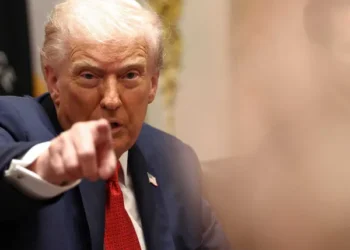
President Trump has said that the oil-rich country will be run “properly” and “professionally,” but the earthquakes exposed Venezuela’s deficits. The highest expectations and fondest hopes—whether of Wall Street, Houston, or Caracas—will not conjure up the people needed to rebuild a country that has thoroughly hollowed out its professional classes.
[Read: The vicious cycle Trump may restart in Venezuela]
In just 20 years, Venezuela went from Latin America’s wealthiest nation to one of its poorest thanks to the mismanagement, corruption, and poor governance that began under the populist president Hugo Chávez, who served from 1999 to 2013, and continued under his successor, Nicolás Maduro. Interim President Delcy Rodríguez, who took over Venezuela after the United States captured Maduro in January, inherited a state that cannot marshall the technical expertise to rebuild what the quakes destroyed or to reconstruct an economy that collapsed long before the ground did.
Rebuilding is a matter not merely of money and political will but of human capital. Bureaucrats, planners, regulators, and inspectors turn plans into functioning grids, ports, and clinics. Their absence may be the biggest obstacle facing American policy makers overseeing Venezuela’s reconstruction.
Venezuela is not the first country to suffer brain drain to the point of institutional collapse. Afghanistan has reportedly struggled to stand up its health-care sector and civil service ever since many of its professionals fled the return of the Taliban in 2021. Haiti has been losing doctors, judges, and engineers for decades. But Venezuela’s case is one of particularly deliberate self-destruction, in a country where oil wealth helped produce a sizable middle class.
Hostility toward the professional class was a hallmark of Chávez’s particular brand of socialism from the beginning. Adherents saw professional skills, when they were not explicitly placed in service of the revolution, as advancing the interests of capitalism and imperialism, the Venezuelan political scientist Guillermo T. Aveledo told me. In 2003, Guillermo García Ponce, a director at a pro-Chávez newspaper, went so far as to describe technocrats at state-owned companies as a “fifth column” to be “wiped out.”
“For Chavismo, privilege always comes cloaked in a PowerPoint presentation,” the journalist Francisco Toro wrote in 2007. By dismissing expertise and deliberation as ideologically suspect, Toro added, “Chavismo is left to rely on the will of the leader alone.”
The state’s public utilities were among the first institutions to confront the PowerPoint problem. Chávez replaced their professional managers with loyalists who were more compliant than competent, people who used to work in these companies told me. Jacqueline Faría, a Chavista engineer who took over the state-owned Caracas water company Hidrocapital in 1999, invested millions of dollars in a failed program to clean the Guaire River. Now she leads Rodríguez’s reconstruction efforts.
In addition to Hidrocapital, the Chávez government proceeded to dismantle the corporate-style leadership of the Caracas metro and Venezuela’s largest electricity company, Edelca, and to place these companies under the control of military officers. It eventually did the same with Funvisis. In 2009, Chávez took direct control of the country’s airports and seaports.
Water and power shortages, sometimes nationwide, became commonplace as mismanagement, corruption, and doctrinaire regulations gummed the works of nearly all of Venezuela’s public infrastructure. Consider Edelca’s two dam projects. The company began building the Caruachi dam in 1997, under Chávez’s predecessor, but finished it only after nine long years. It began building the Tocoma dam in 2007 and still has not finished it, despite almost $10 billion in investment. A Brazilian contractor involved in the work later admitted to paying Venezuelan officials and middlemen as much as $98 million in bribes from 2005 to 2016 to secure contracts. A U.S.-Argentine company will now take over the project.
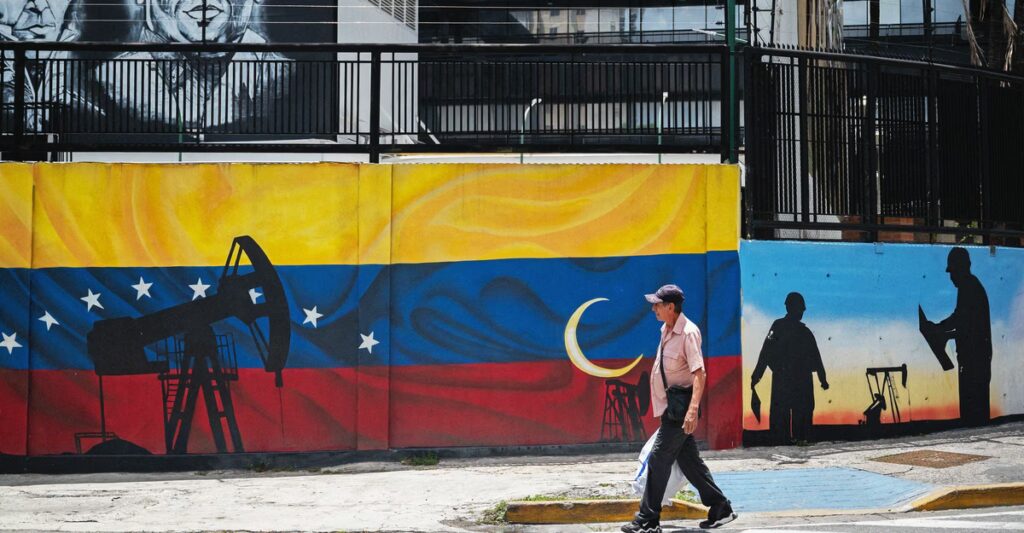
Perhaps no sector was more gravely affected by Chávez’s assault on professionalism than the oil industry. And no industry is more crucial to U.S. plans for Venezuela’s recovery—or more central to Washington’s interest in the country in the first place.
Before Chávez, Venezuela’s oil company, known by its Spanish acronym PDVSA, was owned by the state but autonomously governed as a commercial entity. It set the gold standard for such an arrangement, expanding into international markets and fully acquiring Citgo, a major Houston-based refinery, in 1991. Much of the Venezuelan state ran on clientelism, but the oil company was meritocratic. Its research arm, the Venezuelan Institute of Oil Technology, or INTEVEP, employed about 170 full-time Ph.D. researchers and held roughly 1,200 American patents in the period before 2003, according to Francisco Monaldi, an energy expert.
[Jonathan Chait: Trump meant it literally when he said he was taking the oil]
That was the year Chávez began meddling in PDVSA’s affairs. He fired its board on live television and appointed a military officer to run the company. PDVSA’s workers went on strike in protest. Chávez fired more than 18,000 of them—dismissing, in one stroke, 60 to 80 percent of all provisioning, planning, maintenance, and exploration staff.
The finance team was laid off almost entirely; state cronies took over an office that accounted for nearly all of Venezuela’s foreign-exchange earnings. INTEVEP’s scientists were replaced, Pánfilo Masciangioli, a researcher and manager at the institute from 1982 to 2010, told me, “with people who did not even know how important it was to publish a paper.” The institute’s patents fell to about 100 during the decade that followed.
“The company’s gray matter was lost,” Monaldi told me. In its place came party loyalists and military men, who filled PDVSA’s vacancies and directed its revenues into Chávez’s populist schemes. Former employees scattered abroad. The number of Venezuelans in Alberta—the epicenter of Canada’s oil industry—rose from 465 in 2001 to 3,860 in 2011, and in Colombia, former PDVSA oil experts helped nearly double national oil production by 2011. Meanwhile, across the border, clientelism swelled PDVSA’s payroll from 28,841 in 2003 to 177,770 in 2014.
The effect fully manifested a decade later: Global oil prices fell, and Venezuela’s ruined oil industry collapsed, its output falling from about 3 million barrels a day before Chavez’s PDVSA purge to an average of 512,000 a day in 2020.
Employees of Venezuela’s state institutions came under continual pressure. In 2004, more than 2 million Venezuelans signed a referendum to recall Chávez. A lawmaker close to the president drew up what would become known as the “Tascón List” to identify and fire the petitioners from state institutions and companies. Hundreds lost their jobs. At the National Library, “a clique decided who was leaving and who was staying,” Mario Di Giacomo, an information specialist there for nearly 20 years, told me. “Dissent was not acceptable.” Loyalists replaced the professionals, and the library’s collections descended into neglect. Millions of archival records are decaying, Di Giacomo said.
The Tascón List was but one way of identifying people for firing. At the Venezuelan Institute for Scientific Investigation, the country’s premier scientific-research center, the physicist Claudio Mendoza made a public comment mocking Venezuela’s nuclear ambitions in 2006 (he noted that the country would achieve little so long as it rejected scientific expertise). He was dismissed four days later. The Chavista zoologist Ángel Viloria took over the institute and systematically purged its scientists from 2006 to 2011.
“You were either fired or forced to retire,” Mendoza told me. Venezuela slid from Latin America’s fifth-largest producer of scientific papers in the early 2000s to its 11th by 2022. By 2016, researchers who had emigrated accounted for roughly 33 percent of the country’s scientific publications; at least 68 percent of these scholars held doctoral degrees.
Trump has promised that American investors will spend $100 billion to rebuild Venezuela’s “rotting” energy infrastructure, but he hasn’t said who will do the work. The simple truth is that Venezuela has rid itself of the technocrats who could deliver the recovery Washington has promised. Few will return to the bureaucracy that ejected them. Some have emigrated for good; among those who remain, many distrust the authoritarian government or do not wish to be associated with it.
[Read: The bizarre partnership between the U.S. and Venezuela]
The United States is currently overseeing talks between the Rodríguez government and the democratic opposition about the country’s recovery and reconciliation. It could use that platform to push for basing appointments to public institutions on relevant expertise rather than political loyalty and, in doing so, help restore confidence among the country’s professionals.
Among the hollowed-out agencies that should be high on the list for rebuilding is Funvisis—not only for reasons of public safety but also because the geophysical data that Venezuela no longer collects are the raw material of modern oil exploration. Companies use seismic surveys to image a reservoir before they spend a dollar drilling into it, and Venezuela’s archives are dated, its instruments are scarce, and the geophysicists who once operated both are now working in Calgary or Houston or Bogotá. A state that cannot say whether the fault lines beneath it are moving is poorly placed to tell an investor what lies within the Orinoco Basin.
Washington can disburse the oil money and lift the sanctions; it cannot staff the ministries. Only Venezuelans can do that. Ultimately, the country’s recovery will be measured less in barrels lifted or dollars banked than in how many of those professionals will go back to work for the state.
The post The Real Obstacle to Venezuela’s Recovery appeared first on The Atlantic.