The Russian and Ukrainian governments made clear on Tuesday that neither had agreed to an energy cease-fire that President Trump presented as a done deal a day before.
Dmitri S. Peskov, the Kremlin spokesman, said at a news briefing that, while Russia believed a halt to strikes against energy infrastructure would be “a very good idea,” such a deal would not have much effect on fuel markets, as Mr. Trump had claimed.
President Volodymyr Zelensky of Ukraine said in his overnight address that Mr. Trump’s proposal to halt strikes was “strong” but that Kyiv would only comply “if our American partners can ensure that Russia is genuinely ready to stop this war.”
Mr. Trump announced on social media on Monday that both sides had already agreed to the energy truce, adding that the rise in global diesel prices was mostly caused by the Russia-Ukraine war, not by the war in Iran. Energy experts have disagreed with that claim.
Mr. Trump and the Republican Party have come under pressure about rising U.S. gas prices before the midterm elections in November.
Mr. Peskov said that any easing of fuel markets would not happen without also ensuring the safety of Russian fuel tankers and the lifting of sanctions against Moscow’s energy exports.
“Only then will the world, the global markets, be saturated, and prices will go down,” Mr. Peskov said.
As during previous attempts to implement partial truces, Russia has tried to expand the scope of any agreement to include some core demands, such as the lifting of sanctions and the protection of its energy trade. Russia has repeatedly thwarted efforts to reach a deal to safeguard agricultural trade in the Black Sea, demanding that restrictions against its main agricultural bank be lifted and that its ships be allowed access to Western ports.
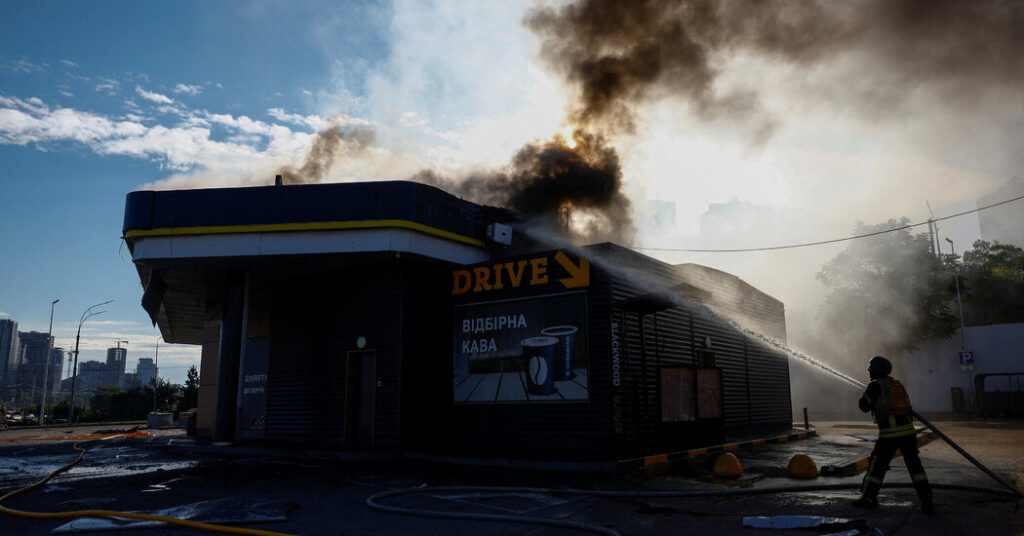
Overnight, both Russia and Ukraine continued to conduct strikes against each other. Russian drones hit gas stations in Kyiv, while Ukraine said that its forces had attacked an oil refinery in central Russia and a drone factory in Taganrog, a city on the Sea of Azov in southwestern Russia.
With frontline fighting largely stuck in a stalemate, Ukraine and Russia have escalated air campaigns against each other’s military, energy and logistics infrastructure. In Ukraine, Russian strikes have targeted warehouses and energy facilities, causing grocery shortages. Over recent weeks, Russia has begun using jet-propelled drones, which are more destructive and harder to shoot down.
In Russia, strikes by Ukraine have caused a significant fuel crisis, while Russia’s two biggest online retailers, Wildberries and Ozon, have suffered significant losses after warehouses were hit by drones.
The post Ukraine and Russia Deny Trump’s Claims of an Energy Truce appeared first on New York Times.