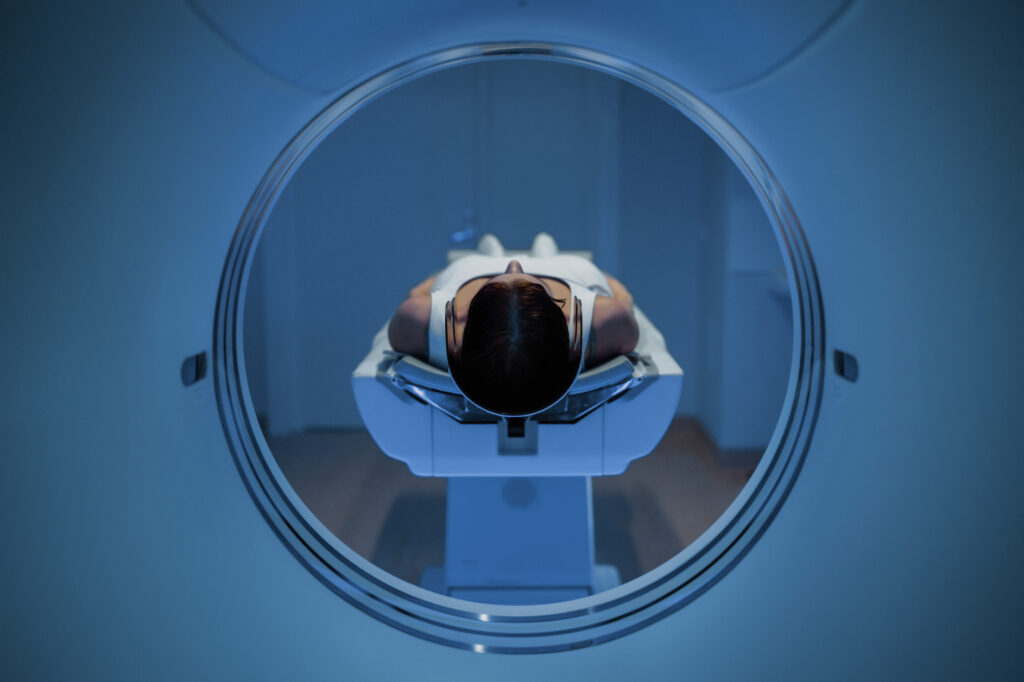
I keep seeing people promoting elective full-body MRI scans on social media, and have been thinking of getting one for some peace of mind. I am average risk and have no symptoms. Is it a good idea?
I’ll be honest. I’ve been tempted by whole-body MRIs, too. As an oncology fellow, I’m constantly reminded of rising cancer rates, particularly in people under 50, like me. And on social media, it seems like one influencer or celebrity after another is signing up for a scan that promises to look for conditions ranging from heart disease to osteoarthritis to cancer. A TikTok video about a trip to the MRI scanner has begun to seem as routine as makeup tutorials and Target hauls.
If all these famous people are getting them, should you splurge on one, too? Part of what makes an MRI an attractive screening tool is that it doesn’t have ionizing radiation like other scans (such as computed tomography, or CT), which makes it seem particularly risk-free. But there are other potential downstream effects I worry about.
At this moment in time, for a healthy individual without any specific symptoms, there just isn’t enough evidence that the benefits of full-body MRI scans justify the astronomical costs (since they’re elective and not covered by insurance, they can cost hundreds to even thousands of dollars, depending on the company and the protocol) and the potential risks. In fact, the American College of Radiology explicitly recommends against total body screening for people without clinical symptoms, risk factors or a family history to suggest they may have an underlying disease or injury.
It’s true that these scans are capable of detecting cancer and other conditions — a recent research review demonstrated a detection rate of confirmed cancer of 1.57 percent, a stat that’s difficult to interpret in isolation, though is actually higher than some recommended screenings like mammograms. But a huge difference is that there’s been no rigorous randomized control trials or other studies to date that demonstrate these scans save lives (unlike mammograms).
Beyond just the lack of data, here are three other reasons I wouldn’t get a full-body MRI and don’t recommend them for the vast majority of people.
They lack important detail
What most people don’t know about “whole-body” scans — and what the marketing usually omits — is that they’re not actually full-body scans. In fact, there’s not a strict medical definition for what “whole-body” MRIs even are (though there’s a movement among experts to standardize it). In practice, they generally scan from the skull to just the thigh, but that can vary.
Even if an area is included, it does not necessarily mean it’s scanned in a lot of detail. For example, the whole-body MRI does not get a good look at the intestines or breasts. A targeted scan of those areas (or in the case of the intestines, a colonoscopy), which your provider might order if you’re being screened for cancer or have a specific concern, is engineered specifically to catch even subtle and small abnormalities in these areas. This means that while a whole-body scan might be able to detect large, obvious lesions in these tissues, it could easily miss even not-so-subtle abnormalities, including advanced cancers.
To put this into perspective, colorectal cancer — cancer of the large intestine — is the number one cancer on the rise in young people, and a whole-body MRI could overlook it.
They can provide a false sense of security
As an oncology fellow, one of my biggest fears is that people might misconstrue a clean MRI for a clean bill of health. I worry that means people will ignore symptoms or other recommended screening tests that have rigorous evidence backing them up, thinking they’re already in the clear.
For example, mammograms have been proven to reduce breast cancer mortality. On the flip side, whole-body MRIs don’t get a good look at breast tissue. If you are going to go through with a scan, it’s important that you don’t neglect the usual recommended screening tests that have decades of evidence behind them.
Also, you have to consider that whole-body MRIs can make mistakes. An ongoing high-profile lawsuit alleges a commercial scanning company missed changes in a man’s blood vessels that would have indicated he was at higher risk for stroke. He subsequently had a stroke eight months after his scan.
They could lead to excessive testing
When we start screening lots of healthy adults who don’t have symptoms, there will be high rates of false-positives, indeterminate results and overdiagnosis. Overdiagnosis means detecting conditions that would likely never cause harm, like finding a small papillary thyroid cancer, which is generally incredibly slow growing (if it even grows at all), and highly unlikely to cause symptoms or death.
Those findings could lead to unnecessary testing and procedures, including those with radiation such as CT scans and invasive tests like biopsies, which also have risks. Additionally, they can cause unnecessary health anxiety and burn a significant amount of money and time.
What I recommend instead
Here’s what I’d recommend instead of a whole-body MRI scan for the average risk, asymptomatic individual who wants to be proactive about their health:
- Put your efforts into recommended cancer screening tests for the general population — like pap smears, mammograms and colonoscopies, all of which are validated by high-quality evidence and are proven to prevent cancer. And speak with your doctor about whether prostate cancer screening is right for you.
- Get tested for elevated blood sugar, which can be a sign of Type 2 diabetes, and stay on top of your cholesterol, which can cause plaque buildup and increase risk of diseases like heart attacks, stroke and dementia.
- Know your family history and speak with your healthcare provider about your personal and genetic risk to understand whether any additional screenings are recommended. Since I have a strong family history of breast cancer, including breast cancer diagnosed at a young age, my own doctors recommended I start “high-risk” breast cancer screening (including breast MRIs and mammograms) 10 years before it’s recommended for the general public. And I happily took their advice.
- Bring up any new or concerning symptoms to your healthcare provider so that they can assess you and recommend the best targeted diagnostic testing.
I get why people are chasing whole-body scans. We’re in an era of booming health tech and longevity-maxxing. And it’s frightening to think about having a potentially life-limiting disease and not knowing about it, particularly at a time when cancer rates are rising in young people.
There are a few important caveats. Guidelines recommend whole-body MRI for certain high-risk cancer predisposition syndromes — for example, Li-Fraumeni syndrome, where people have an exceptionally high risk of cancer throughout the body. These scans can also be useful for people already diagnosed with certain types of cancer, and in certain specific non-oncologic circumstances. But in these instances, your healthcare team would order the test rather than you signing up for an elective scan.
The bottom line is that, in 2026, I don’t think the evidence is there yet to justify the risks for a person with an average risk of developing cancer.
Do I see a future where whole-body scans could be recommended, potentially together with specialized blood tests? Possibly. I’m not saying whole-body MRIs will never have a more mainstream role, but I need to see more rigorous data on long-term outcomes before I’d ever recommend them to my patients.
Netana Markovitz, MD, is a board-certified internal medicine physician and current hematology/oncology fellow at Beth Israel Deaconess Medical Center.
The post I’m a doctor. Here’s why I wouldn’t get a full-body MRI scan. appeared first on Washington Post.