When France compared the United States to North Korea and Russia in July, the Trump administration responded by freezing the approval of a new French ambassador to Washington.
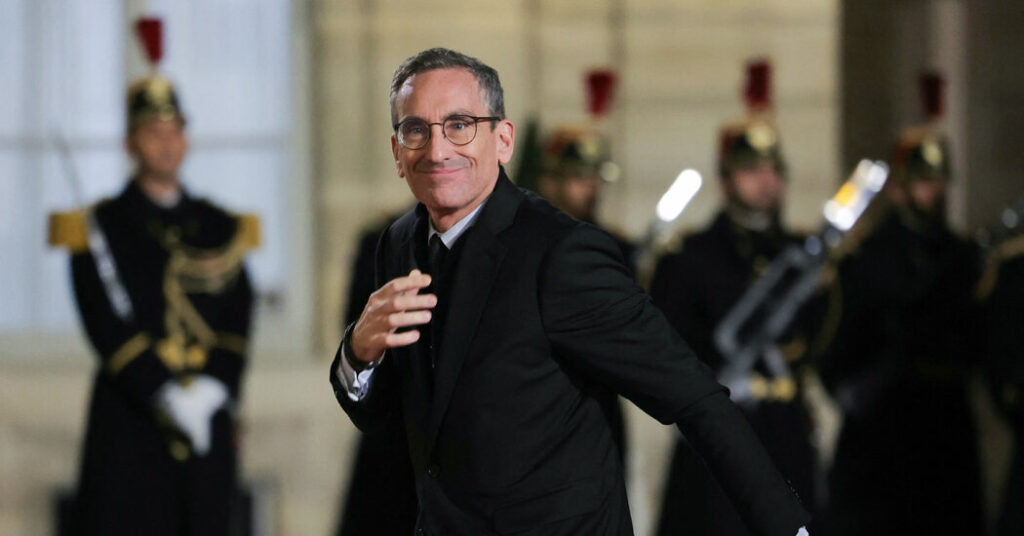
Now, after seven weeks of American pressure, France has backed down, apologizing on Friday for the social media post that set off the dispute. That will allow France’s nomination of Aurélien Lechevallier as its ambassador to Washington to move forward, according to a senior American official and a former French official with knowledge of the situation. The two spoke on the condition of anonymity, citing the delicacy of the negotiations.
The episode illustrated the strained nature of relations during the Trump era between Europe and the United States, which have diverged over the futures of Greenland, Ukraine and the postwar international order.
The dispute erupted on July 24 after the United Nations General Assembly voted 114 to 10, with 13 abstentions, to give a second four-year term to Volker Türk, an Austrian lawyer, as high commissioner of the U.N. human rights commission.
Like North Korea and Russia, the United States opposed Mr. Türk. It cited his criticism of the United States and Israel and what it said was his reluctance to condemn repressive governments in Iran and Cuba.
“The UN human rights system has been losing credibility for decades,” the United States mission to the United Nations said in a post on social media. “Volker Türk led it to its deathbed.”
Responding to that post, the French mission in Geneva posted: “The US used to be a beacon of human rights. Not anymore. Today, it stands alongside North Korea, Nicaragua, Mali & Russia, isolated. And the world no longer listens to it.” That message was reposted by the foreign ministry, which later deleted the reposting.
The State Department reacted indignantly to the post, lodging a protest with the French Embassy in Washington. At the U.N., the American delegation walked out on a French diplomat when he addressed the chamber. In Paris, the U.S. ambassador, Charles Kushner, texted President Emmanuel Macron to urge the French make a gesture to defuse the issue, according to the American official.
Mr. Kushner’s involvement as mediator was notable, given that he had himself inflamed American-French relations early in his tenure by publicly accusing France of not doing enough to combat antisemitism. He had been summoned twice to the ministry to be rebuked for interfering in France’s internal affairs, snubbing both requests.
Mr. Lechevallier, the chief of staff to the French foreign minister, Jean-Noël Barrot, had been scheduled to move to Washington this month to replace the outgoing ambassador, Laurent Bili. Like all envoys, his appointment requires approval from the host government, which American officials made clear to the French would not happen until the offending post was addressed.
Mr. Lechevallier, 50, is viewed as close to Mr. Macron, having been a classmate and adviser of his.
The State Department and the French Foreign Ministry declined to comment on the status of Mr. Lechevallier’s nomination, but both suggested that the apology would swiftly resolve the impasse.
A spokesman for the foreign ministry said, “We are committed to moving the bilateral relationship with our American partners forward.” A State Department official said, “We note and appreciate France’s statement, and look forward to working together to further shared values and interests.”
Since President Trump’s return to the White House, France’s foreign ministry has prided itself on using social media to hit back, often humorously, at the United States and other critics of Europe. It maintains a popular and sometimes snarky account on X, @FrenchResponse. In a speech last May, Mr. Barrot said the account “isn’t trolling. It’s a geopolitical tool, a real-time reframing tool.”
But this episode shows this edgy approach is not without risks, at least as far as the Trump administration is concerned. Gérard Araud, a former French ambassador to Washington, said the post complained about had crossed a line, and that France’s failure to address the situation immediately only compounded the damage.
“The French committed a mistake; they are paying the price. They should have done it earlier,” Mr. Araud said. “The U.S. has taken advantage of our ineptitude.”
The post France Mocked U.S. for Human Rights Vote, Then Quietly Apologized appeared first on New York Times.